Traditional Hungarian Foods to Try in Budapest
Budapest is one of Europe’s most exciting food destinations, combining hearty Hungarian traditions, elegant café culture, lively market halls, and a growing modern dining scene. Whether you are visiting for a weekend or planning a longer stay, deciding what to eat in Budapest is an essential part of the experience. Hungarian cuisine is known for warming spices, slow-cooked meats, rich pastries, seasonal vegetables, and generous portions, with paprika appearing in many of the city’s most famous dishes.
From comforting bowls of goulash to crispy street-food snacks and delicate layered cakes, Budapest offers memorable meals for every appetite. Many traditional dishes are affordable, especially when enjoyed at markets, family-run restaurants, and casual eateries away from the busiest tourist streets.
Classic Hungarian Main Dishes
Gulyás, the Famous Hungarian Goulash
Gulyás, often called Hungarian goulash, is one of the first dishes visitors should try in Budapest. Despite the thick stew many travelers expect, traditional gulyás is usually more like a substantial soup. It is made with beef, potatoes, carrots, onions, and paprika, then slowly simmered until deeply flavorful. The result is warming, aromatic, and ideal on a cool day spent sightseeing around Buda Castle or the Danube.
Look for gulyás at traditional Hungarian restaurants, known locally as éttermek or csárdák. It is often served with fresh bread and can be a satisfying lunch before exploring Budapest’s museums, thermal baths, or historic neighborhoods.
Chicken Paprikash
Chicken paprikash, or csirkepaprikás, is another essential Hungarian meal. Tender chicken is cooked in a creamy paprika sauce, often enriched with sour cream, and commonly served with nokedli. These small, soft dumplings are similar to spaetzle and are perfect for soaking up the sauce. The dish balances sweet paprika, savory chicken, and dairy richness without usually being overly spicy.
Stuffed Cabbage
Töltött káposzta, or stuffed cabbage, is a traditional favorite that appears frequently during the colder months and holiday season. Cabbage leaves are filled with seasoned minced meat and rice, then cooked with sauerkraut and often topped with sour cream. It is filling, tangy, and deeply rooted in Central European home cooking.
Best Budapest Street Food
Lángos
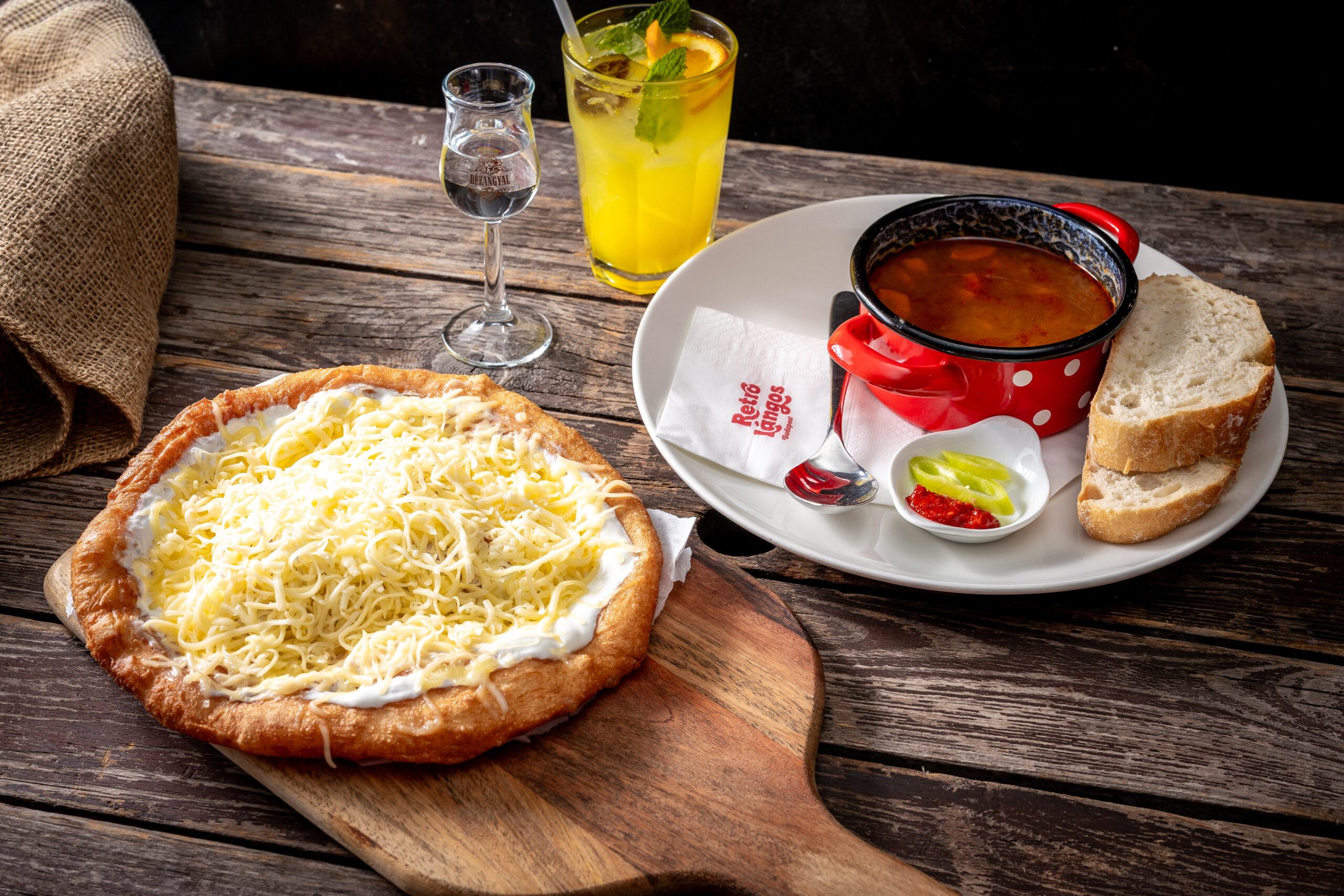
Lángos is one of the most popular Hungarian street foods and a must-eat in Budapest. This deep-fried flatbread is soft and airy inside with a golden, crisp exterior. The classic version is topped with garlic, sour cream, and grated cheese, but you can also find versions with sausage, mushrooms, ham, vegetables, or sweet toppings.
For a convenient and authentic experience near major landmarks, Retro Lángos Budapest serves traditional, gluten-free, and vegan lángos at Bajcsy-Zsilinszky út 25. and Vécsey utca 3. Its locations are close to St. Stephen’s Basilica and the Hungarian Parliament, making it a practical choice for tourists, families, and visitors searching for authentic Hungarian street food between sightseeing stops.
Kolbász and Sausages
Hungarian sausages are another excellent choice when you need a quick, flavorful meal. Kolbász is often seasoned with paprika, garlic, and pepper, giving it a smoky, rich character. You may find it grilled and served with bread, mustard, pickles, or sauerkraut at market stalls and casual food counters. Debreceni sausage, a lighter-colored and mildly spicy variety, is also worth trying.
Hurka
Hurka refers to Hungarian blood sausage or liver sausage. It is commonly served alongside roasted potatoes, pickles, and bread. While it may not appeal to every traveler, it is a traditional food experience for adventurous eaters who want to explore beyond the most familiar Budapest dishes.

What to Eat at Budapest’s Markets
Budapest’s food markets are excellent places to sample local ingredients and casual Hungarian meals. The Great Market Hall, near Liberty Bridge, is particularly popular for its colorful produce stalls, spice vendors, cured meats, cheeses, pastries, and upstairs food counters. While it can be busy, it is a useful introduction to the flavors that define Hungarian cooking.
- Pickles and fermented vegetables, which commonly accompany rich meat dishes.
- Paprika in sweet, hot, smoked, and ground varieties.
- Local cheeses, salamis, and smoked sausages.
- Fresh bread, pastries, and traditional savory snacks.
- Seasonal fruit, honey, jams, and Hungarian wines.
When visiting a market, consider ordering a simple plate of sausage, bread, and pickles or choosing a bowl of goulash. These options provide a satisfying introduction to everyday Hungarian flavors without requiring a formal restaurant reservation.
Hungarian Desserts and Café Favorites
Chimney Cake
Kürtőskalács, widely known as chimney cake, is a popular sweet treat in Budapest. Dough is wrapped around a rotating spit, baked until caramelized, and rolled in sugar. The hollow pastry can be flavored with cinnamon, walnuts, coconut, or cocoa. It is best eaten warm, when the outer coating is crisp and the inside remains soft.
Dobos Torte
Dobos torte is one of Hungary’s best-known cakes. It features multiple thin layers of sponge cake and chocolate buttercream, topped with a distinctive sheet of hardened caramel. Created in the nineteenth century, it is a refined dessert that pairs perfectly with coffee in one of Budapest’s historic cafés.
Somlói Galuska
Somlói galuska is a beloved Hungarian trifle-like dessert made with pieces of sponge cake, chocolate sauce, vanilla cream, walnuts, raisins, and whipped cream. It is rich, indulgent, and usually served in a generous bowl. If you enjoy layered desserts, this is one of the most rewarding things to eat in Budapest.
Rétes
Hungarian strudel, called rétes, is another classic choice. Thin pastry surrounds fillings such as apple, sour cherry, cottage cheese, or poppy seed. It is lighter than many cream-filled Hungarian desserts and makes a lovely afternoon snack with tea or coffee.

Vegetarian and Vegan Food in Budapest
Although traditional Hungarian cuisine is strongly focused on meat, Budapest has become increasingly welcoming to vegetarian and vegan travelers. Modern cafés, international restaurants, and plant-based eateries are easy to find, particularly in central Pest. You can enjoy vegan versions of goulash, stuffed cabbage, burgers, bowls, and pastries, alongside naturally meat-free dishes such as vegetable soups, salads, potato-based sides, and mushroom meals.
When ordering traditional food, ask whether dishes are prepared with meat stock, lard, or bacon, as these ingredients can appear in recipes that seem vegetarian at first glance. Lángos can also be a flexible option when topped with garlic, vegetables, plant-based cheese, or vegan sour cream alternatives.
Drinks to Pair with Hungarian Food
Hungarian wine deserves a place on every Budapest food itinerary. Tokaji, a sweet wine from northeastern Hungary, is internationally famous and pairs beautifully with desserts, foie gras, and cheese. For dry wine lovers, try a crisp Furmint or a bold red from Eger, including Egri Bikavér, known as Bull’s Blood.
For something stronger, sample pálinka, a traditional fruit brandy made from ingredients such as apricot, plum, pear, or cherry. It is often served as an aperitif or digestif and has a powerful flavor. Beer is also widely available, with Hungarian lagers and an expanding craft beer scene offering easy pairings for sausages, fried foods, and casual meals.
Conclusion: Enjoy Budapest One Bite at a Time
Budapest is a city where food tells a story of history, comfort, and creativity. Start with goulash or chicken paprikash, snack on a warm lángos, browse the market halls, and save room for chimney cake or Dobos torte. For travelers exploring the city center and looking for a classic street-food stop, visit Retro Lángos Budapest and enjoy one of Hungary’s most satisfying local specialties.