March 15 is one of the most important days in Hungarian history. The events of the Hungarian Revolution of 1848, the poems of Sándor Petőfi, and the stories of the famous Pilvax Café are all part of a legacy that Hungarians are still proud of today.
But have you ever wondered what people actually ate in Hungary during the spring of 1848?
Looking at the food of that time reveals a lot about everyday life in 19th-century Hungary and about the roots of many dishes that are still part of Hungarian cuisine today.
Hungarian Cuisine in the 19th Century
By the mid-19th century, Hungarian cuisine already shared many characteristics with what we know today. The food was hearty, simple, and built on locally available ingredients.
During the Reform Era, Hungarian cooking had strong rural roots. Common ingredients included flour, bread, pota oes, cabbage, and pork. Paprika was already used, although it only became one of the defining spices of Hungarian cuisine later in the century.
Meals were designed to be filling and practical foods that provided energy for everyday life, whether for farmers working the land, craftsmen in workshops, or citizens living in growing cities.
Everyday Food in Pest-Buda
In the mid-1800s, Budapest did not yet exist as a unified city. Instead, people lived in Pest and Buda, two bustling towns along the Danube. Even then, urban life was vibrant. Cafés, markets, and inns served as important meeting places for locals, students, writers, and merchants.
Typical everyday foods included:
- different types of bread and baked goods
- hearty soups such as meat broth or bean soup
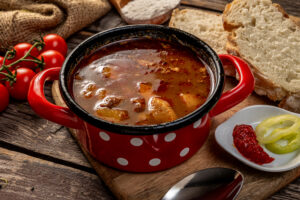
- meat stews such as pörkölt (Hungarian stew) and goulash
- cabbage-based dishes
- simple pasta dishes and vegetable stews
For students and craftsmen in particular, affordable and quick meals were essential. Markets and street vendors often offered simple food that could be eaten quickly during a busy day in the city.
Market Foods and the Early Relatives of Lángos
Markets and fairs played a central role in everyday life during the 19th century. They were not only places to buy ingredients but also places to enjoy freshly prepared food.
One common type of food sold at markets was simple fried or baked dough. Bakers often took small pieces from bread dough that was already being prepared for the oven and baked them quickly.
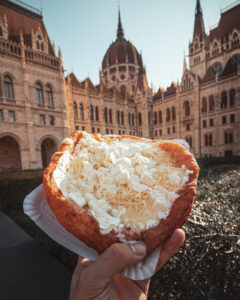
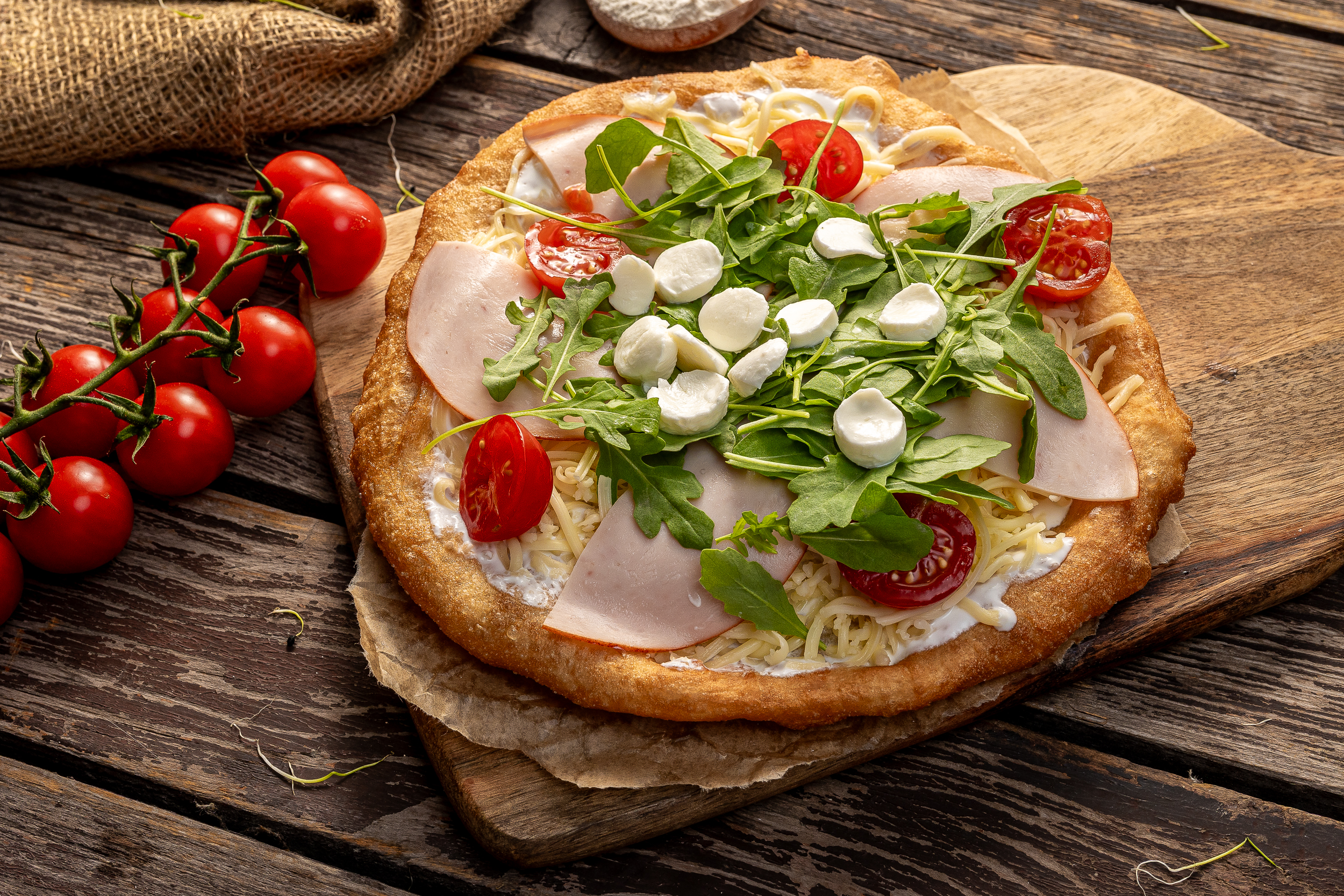
These pieces of dough are considered early relatives of today’s lángos, one of the most famous Hungarian street food.
Originally, lángos was a byproduct of bread baking. Small pieces of dough were torn from the bread dough and baked near the flames of the oven—this is where the name lángos comes from.
From Simple Dough to a Hungarian Street Food Classic
Over time, lángos became increasingly popular. The original oven-baked version eventually evolved into the oil fried version that most people know today. Frying made it quicker to prepare and gave it its characteristic crispy texture.
By the 20th century, lángos could be found everywhere from markets and beaches to street food stands. Today, it is one of the most iconic dishes of Hungarian street food and a must-try experience for visitors exploring Budapest food culture.
Remembering History and Culinary Traditions
On March 15, Hungarians remember not only the traditions of Hungarian cuisine but also the people who stood up for freedom and national unity during the revolution of 1848.
In honoring the heroes of the revolution, we also celebrate the cultural heritage that generations have passed down including food traditions.
Hungarian cuisine, with its simple yet beloved dishes like lángos, is part of this heritage. Today, on the streets of Budapest, lángos remains one of the most recognizable Hungarian foods.
At Retro Lángos Budapest, we work every day to continue this tradition with the highest quality ingredients and authentic preparation-sharing one of Hungary’s most loved street foods with guests from around the world.
For us, every lángos is also a tribute to Hungarian traditions to the flavors and stories that have accompanied everyday life for generations.