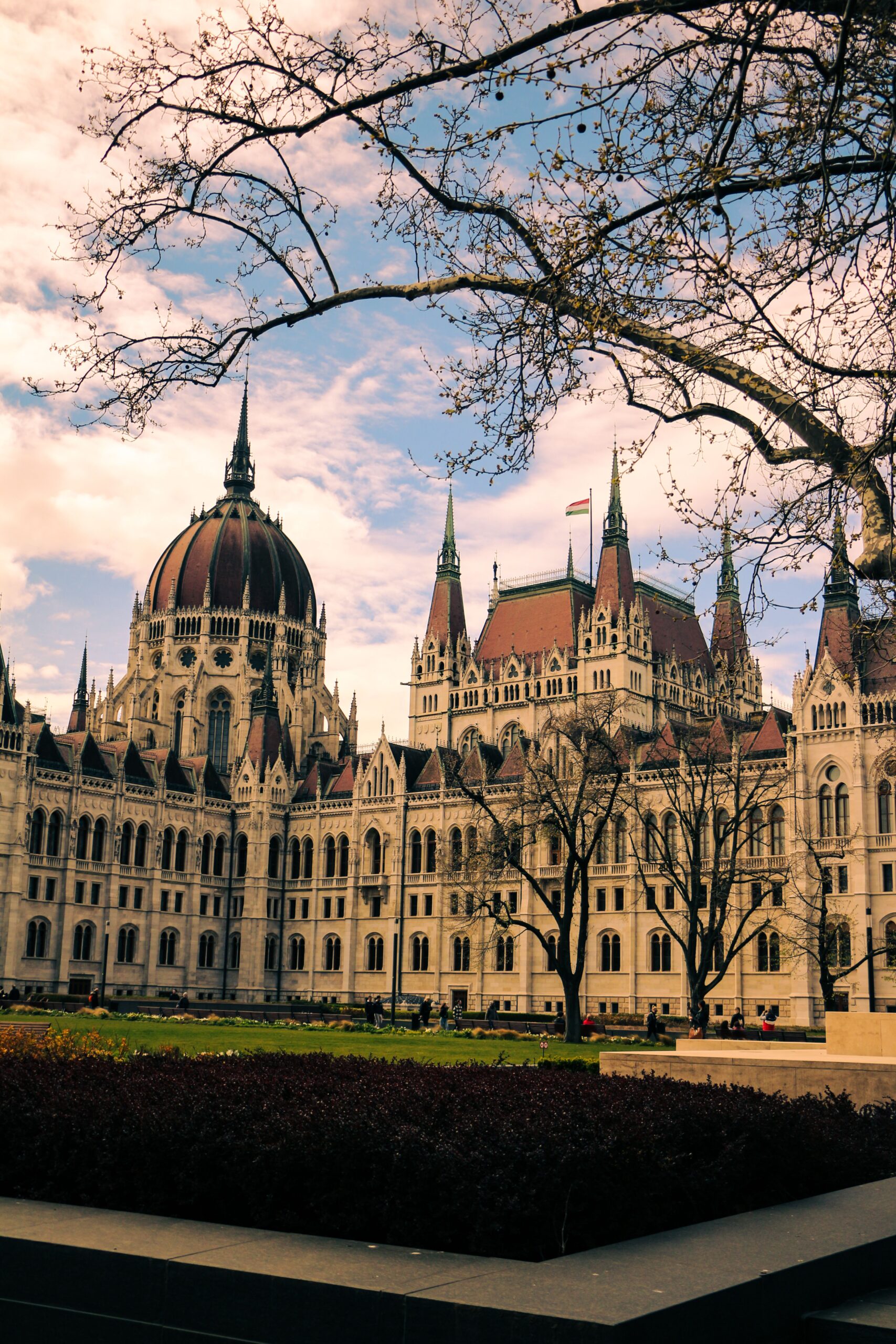
A Budapest weekend can feel satisfyingly full without becoming a race between landmarks. The city is compact enough for long walks, yet layered enough to reward a little planning: grand imperial architecture beside lived-in neighbourhoods, historic thermal baths, serious café culture and late-night bars in former courtyards. For a first visit, think in districts and river crossings rather than trying to tick off every attraction. Two or three well-shaped days will give you a clear sense of both Buda’s hills and Pest’s lively streets.
Start Friday evening along the Danube
Arrive, drop your bags and head straight for the river. The Danube is Budapest’s best orientation point, separating hilly Buda on the west bank from flatter, more animated Pest on the east. A walk along the Pest embankment around sunset gives you Parliament on one side, Buda Castle on the other and the Chain Bridge linking the two.
If time allows, cross to Clark Ádám Square and take the funicular or walk uphill towards Castle Hill. The steep approach is worth it after dark, when the city lights spread along the river and the Parliament building appears especially dramatic across the water. The castle district is quieter at night than during the day, and its cobbled streets make a pleasant introduction before a late dinner back in Pest.
For an evening with more energy, choose the Jewish Quarter, around Király utca, Kazinczy utca and Dob utca. This is the centre of Budapest nightlife, with ruin bars, wine bars and casual kitchens occupying old courtyards and converted buildings. A useful companion for planning the later hours is this guide to Budapest ruin bars, clubs and nightlife, particularly if you want to avoid wandering without a destination.
Saturday morning: Parliament, Basilica and central Pest
Begin Saturday early around Kossuth Lajos tér, where the Hungarian Parliament sits directly on the Danube. Its exterior is impressive at any time, but morning light is often kinder for photographs and the square is calmer before the main sightseeing crowds arrive. If you want to tour the interior, check availability and booking arrangements in advance; entry times can fill up.
From Parliament, walk south through the elegant streets of District V towards St. Stephen’s Basilica. The route takes in broad avenues, handsome façades and small squares that explain why central Pest is so enjoyable on foot. The Basilica’s dome is one of the city’s defining landmarks, and the surrounding streets are a convenient place for coffee or a slow breakfast.
Keep the morning flexible rather than treating it as a checklist. Budapest rewards pauses: a pastry at a traditional café, a browse in a bookshop, a short detour through a passageway. Visitors wanting a more detailed overview of routes, etiquette and practical habits can consult these Budapest travel tips for first-time visitors.
For lunch, Hungarian food is best approached with appetite but not too much ambition. Goulash soup, chicken paprikash, stuffed cabbage and pörkölt are filling dishes, while a simple lángos makes an excellent quick meal between sights. This fried flatbread is traditionally served with garlic, sour cream and cheese, although toppings now range far beyond the classic version.
Spend Saturday afternoon in a thermal bath
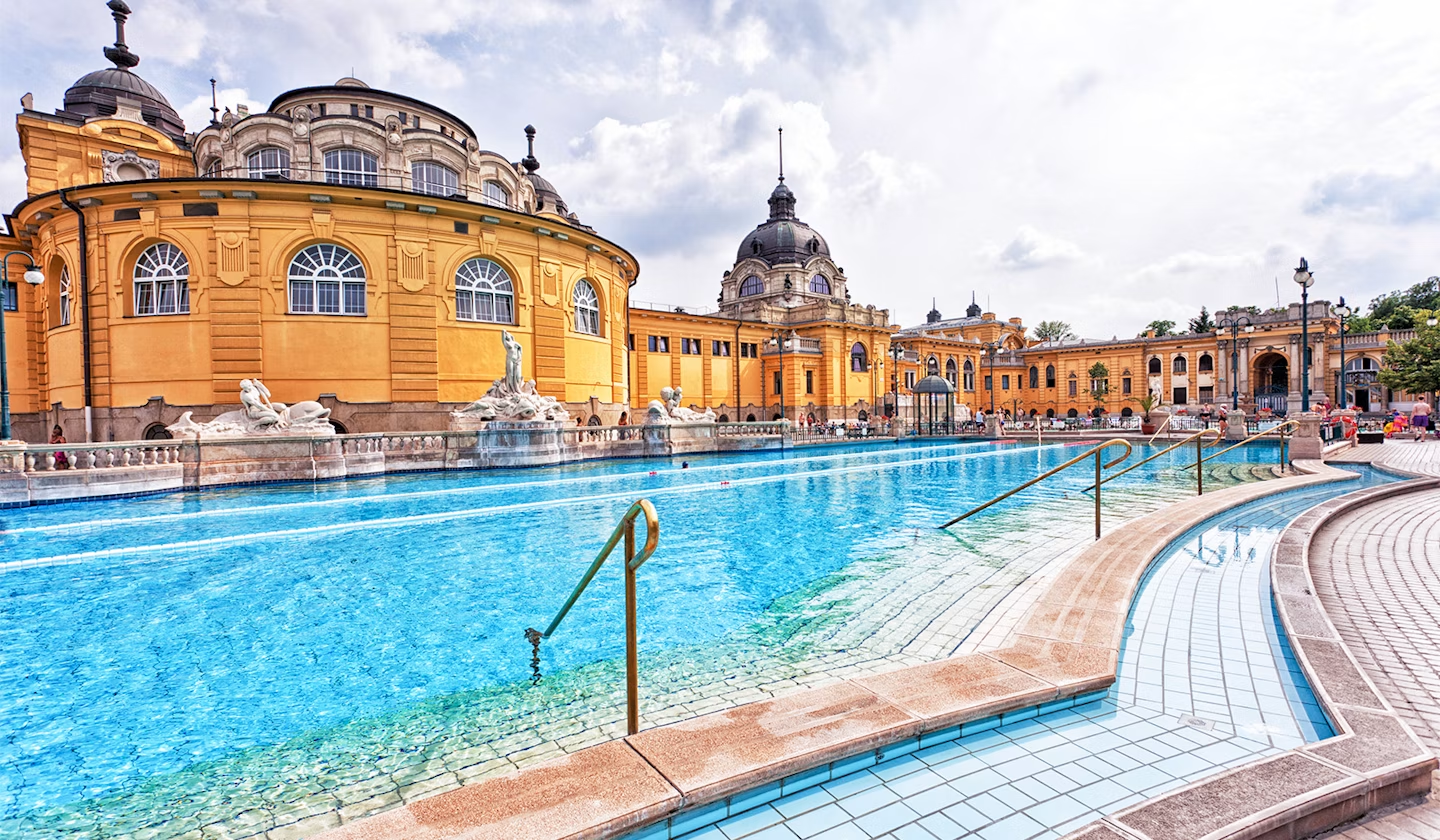
A thermal bath belongs in almost every Budapest weekend guide because bathing is woven into the city’s rhythm, not merely added for visitors. Széchenyi, in City Park, is the best-known large-scale option, with its outdoor pools and grand Neo-Baroque setting. Gellért is admired for its Art Nouveau interior, while Rudas has a more intimate Ottoman-era character and a rooftop pool with a river view.
Choose one bath rather than trying to compare several in a single weekend. Bring swimwear, flip-flops and a towel if your chosen bath does not include rental in your ticket. Check current opening hours, treatment schedules and any access rules directly before visiting, especially for evening sessions or weekends. Our Budapest thermal baths guide can help you decide which atmosphere suits your plans.
After a soak, resist over-planning. A walk through City Park, past Vajdahunyad Castle and Heroes’ Square, is an easy way to reset before dinner. In warmer months, the park has a relaxed local feel; in colder weather, it still offers a welcome stretch of open space after the heat and steam of the baths.
Saturday night: dinner and the Jewish Quarter
For a proper Hungarian dinner, book ahead if you have a particular restaurant in mind. Budapest’s food scene now covers old-school dining rooms, contemporary bistros and international kitchens, but local classics remain worthwhile when carefully prepared. Look for seasonal soups, duck, paprika-rich stews, freshwater fish dishes and Hungarian wines from regions such as Tokaj, Eger or Villány.
If you prefer something informal, stop for lángos before heading out. Retro Lángos Budapest has locations at Bajcsy-Zsilinszky út 25. and Vécsey utca 3., both handy for central sightseeing near St. Stephen’s Basilica and Parliament. Alongside traditional versions, it offers gluten-free lángos and vegan, plant-based options, useful for groups with different dietary needs. For broader context, see this guide to where to eat lángos in Budapest.
Later, the Jewish Quarter can be as low-key or as late as you want. Start with a wine bar, try a small craft-beer venue, or settle into a courtyard bar. Ruin bars are lively, often deliberately ramshackle spaces filled with mismatched furniture, murals and music. Go early if you want atmosphere without the densest crowds.
Sunday on Castle Hill and in Buda
Use Sunday for Buda, where the pace is gentler and the city opens into hills, viewpoints and residential streets. Start at Fisherman’s Bastion, whose terraces frame one of Budapest’s classic views across the Danube. Nearby Matthias Church is equally photogenic, with a patterned tiled roof that stands out against the pale stone of the castle district.
Castle Hill is best explored on foot. Beyond the main viewpoints, look for quiet lanes, courtyards and the medieval foundations embedded in the area’s architecture. Buda Castle itself houses major museums, so choose one only if it genuinely interests you; otherwise, save time for the walk downhill and a riverside lunch.
For a different perspective, take public transport towards Gellért Hill or ride the tram along the Danube. Budapest’s yellow trams are part of the experience as well as a practical way to connect the centre with outer neighbourhoods. Buy and validate the appropriate ticket before travel, and keep it with you for inspections.
Make the most of a short Budapest break
The best Budapest weekend itinerary leaves room for the city’s everyday pleasures: coffee at a marble-topped table, a tram ride with river views, a long bath, a late meal and an unhurried walk after dark. Group attractions by area, book only the things that need booking, and let the rest of the day develop around your energy level.
Before leaving, fit in one final Hungarian snack or a market visit. The Great Market Hall near Liberty Bridge is a useful stop for paprika, salami, pastries and souvenir ingredients, though it is busiest around midday. Budapest is a city that reveals itself in fragments, and that is precisely why a weekend often feels like the beginning of a return visit.