Traditional Hungarian meals and the flavours behind them
Traditional Hungarian meals are built for appetite, weather and long conversations around a shared table. Paprika gives many classics their familiar red colour, but the cuisine is far broader than heat: slow-cooked onions, sour cream, smoked meats, noodles, river fish, orchard fruit and excellent pastry all have a place. The result is food with deep regional character, shaped by Central European, Balkan, Ottoman and Austro-Hungarian influences.
For visitors, the practical challenge is knowing which dishes belong on a first Hungarian menu. A useful introduction includes a proper stew, a paprika-rich soup, a cabbage dish, something with noodles or dumplings, and one sweet course. For a broader overview before planning meals in the capital, this guide to traditional Hungarian dishes and local eats in Budapest offers helpful context.
Gulyás: Hungary’s best-known bowl
Gulyás, often called Hungarian goulash in English, is perhaps the country’s most recognised dish, though it is frequently misunderstood abroad. In Hungary, gulyás is generally a soup rather than the thick stew many international diners expect. Beef is simmered with onions, paprika, potatoes, carrots and caraway, creating a broth that is warming, savoury and gently spiced rather than aggressively hot.
Its roots lie in the cooking of cattle herders on the Great Hungarian Plain. A good gulyás should have tender meat and a clean, balanced broth, with paprika contributing sweetness, earthiness and colour. It is a hearty lunch, especially in cooler months, but not necessarily the heaviest item on a traditional menu.
Pörkölt, paprikás and nokedli
If you are looking for the richer, thicker preparation commonly associated with “goulash,” order pörkölt. This is a concentrated meat stew, usually made with beef, pork, veal or chicken, cooked down with onions, paprika and a modest amount of liquid. The sauce clings to the meat instead of filling a bowl like soup.
Chicken paprikás, or paprikás csirke, is another essential traditional Hungarian meal. Chicken is braised in a paprika-onion base, then finished with sour cream for a silky, mildly tangy sauce. It is often served with nokedli, soft irregular dumplings similar to German spaetzle. Together they make one of the most comforting dishes in Hungarian cooking.
The distinction matters on a menu: gulyás is soupy, pörkölt is stew-like, and paprikás is enriched with sour cream. All rely on paprika, yet each tastes and feels quite different.

Soups that set the tone
Soup remains an important part of a Hungarian lunch or family meal. Halászlé, the vivid red fisherman’s soup, is particularly associated with riverside towns and fish-cooking traditions. Freshwater fish, especially carp, is cooked with a generous amount of paprika; versions vary between regions, with Baja and Szeged among the best-known styles. It can be fiercely spicy, so asking about the heat level is sensible.
Jókai bableves is a substantial bean soup, commonly containing smoked pork, sausage and vegetables. It is named after the 19th-century writer Mór Jókai and has the fullness of a meal in itself. Lighter seasonal options include fruit soups, served chilled in summer, and clear broths with noodles or vegetables.
Cabbage, pork and other home-style favourites
Töltött káposzta, or stuffed cabbage, is a defining cold-weather dish. Cabbage leaves are wrapped around a filling of minced meat and rice, then cooked slowly with sauerkraut and often smoked meat. Sour cream is the customary finishing touch. The balance of smoky, sour and rich flavours explains why it appears so often at winter gatherings and holiday tables.
Another beloved classic is rakott krumpli, a baked layered dish of sliced potatoes, hard-boiled eggs, sausage and sour cream. It is straightforward, filling and found in many home kitchens. Főzelék deserves attention too: these thick vegetable preparations, made with peas, lentils, spinach, pumpkin or beans, occupy a category somewhere between soup and stew. Often served with a fried egg, meatball or sausage, főzelék reveals the everyday side of Hungarian food beyond restaurant showpieces.
For meat lovers, disznótoros dishes draw on pork butchery traditions and can include sausages, blood sausage and roasted pork cuts. Such meals are best approached with an appetite and, ideally, a sharp pickle on the side.
The role of paprika, sour cream and pickles
Hungarian paprika is not one uniform ingredient. It ranges from sweet and fragrant to hot, and cooks use it for colour as much as flavour. It is generally added carefully to fat and onions without scorching, since burnt paprika turns bitter. Caraway, black pepper, bay leaf, garlic and marjoram also appear regularly, giving many dishes their recognisable depth.
Sour cream, known as tejföl, is equally important. It softens paprika sauces, adds acidity to soups and tops dishes such as stuffed cabbage. Pickled vegetables, especially cucumbers, peppers and mixed vegetables, provide necessary contrast to rich meats and creamy sauces. On a traditional Hungarian table, those sharp, cold bites are rarely an afterthought.
Lángos and the everyday pleasure of Hungarian street food
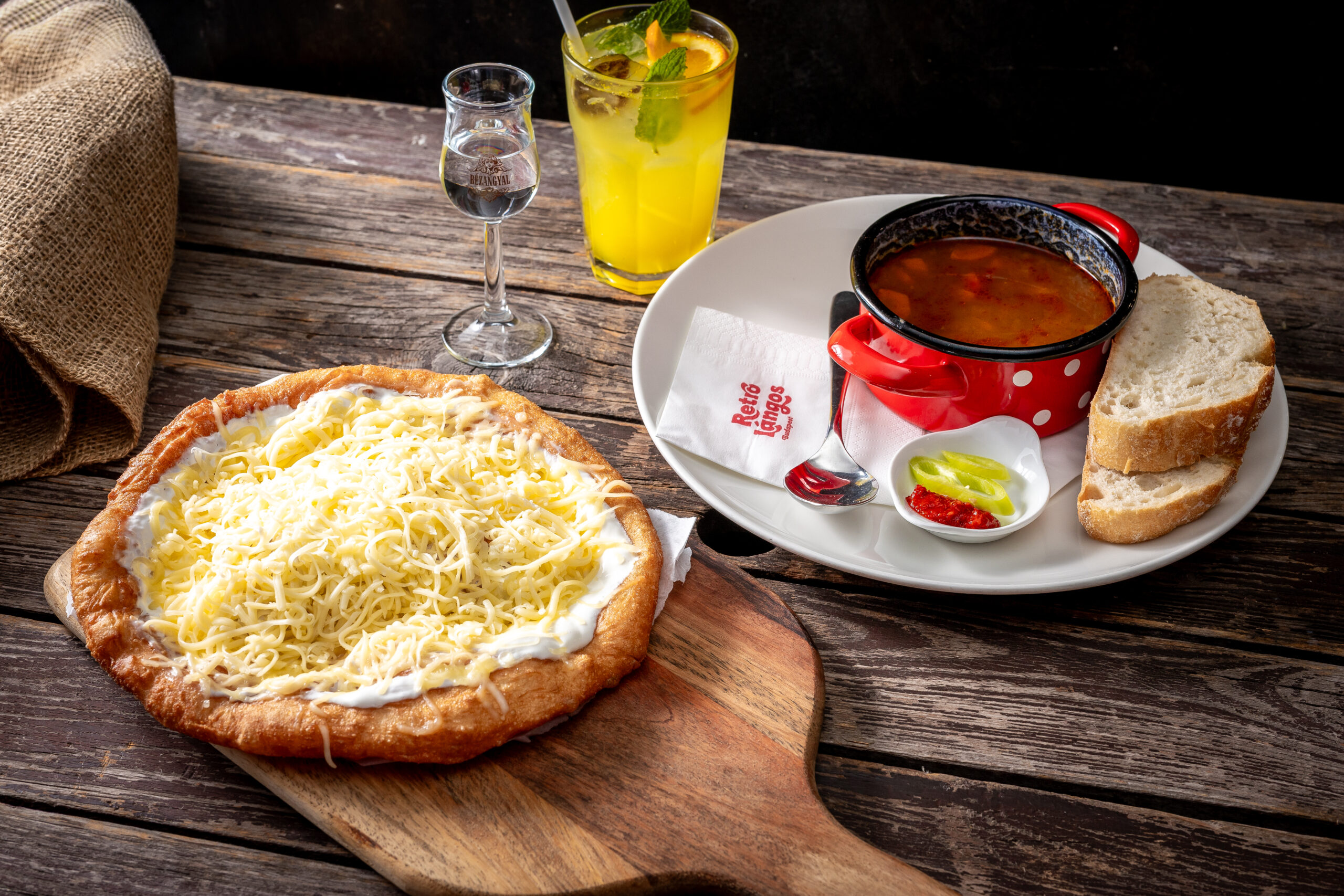
Lángos is one of the most immediate ways to taste Hungarian food culture. This fried flatbread is traditionally eaten hot, brushed with garlic, spread with sour cream and scattered with grated cheese. It is a snack rather than a formal main course, but its crisp edges and soft interior make it memorable after a market visit, a walk by the Danube or a day of sightseeing.
Modern toppings are common, but the classic garlic, sour cream and cheese version remains the benchmark. In central Budapest, Retro Lángos Budapest serves traditional lángos alongside gluten-free, vegan and plant-based options at Bajcsy-Zsilinszky út 25. and Vécsey utca 3., both convenient for visitors near St. Stephen’s Basilica and the Hungarian Parliament. For more background on the snack’s place in local life, explore Hungarian street food culture and its traditional flavours.
Save room for Hungarian desserts
Hungarian meals often finish with pastries that are far more varied than a single slice of cake suggests. Dobos torte layers thin sponge with chocolate buttercream and a crisp caramel top. Eszterházy torte is known for its nutty layers and distinctive icing pattern. Somlói galuska, a loose and indulgent trifle of sponge cake, chocolate sauce, walnuts, raisins and whipped cream, is a fixture on dessert menus.
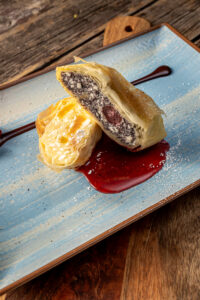
Rétes, the Hungarian relative of strudel, comes with apple, sour cherry, sweet cottage cheese or poppy-seed fillings. Gundel palacsinta, thin pancakes filled with walnuts and raisins and finished with chocolate sauce, is another classic worth sharing. Those with a sweet tooth can find a more focused introduction in this guide to traditional Hungarian desserts.
How to order traditional Hungarian meals in Budapest
Look for menus that identify the dish clearly rather than relying on a vague “Hungarian platter.” Start with gulyás or a seasonal soup, choose chicken paprikás, pörkölt or stuffed cabbage as a main, and order pickles or a simple salad to cut through the richness. Portions can be generous, so sharing several dishes is often a better way to sample the cuisine.
Traditional Hungarian meals reward curiosity. Learn the difference between gulyás and pörkölt, try a bowl of főzelék alongside the better-known meat dishes, and leave room for a warm lángos or a plate of rétes. The cuisine is substantial, certainly, but its appeal lies in the balance of paprika, smoke, acidity and patient cooking.