Holiday tables in Hungary: food shaped by ritual and season
Hungarian holiday foods are closely tied to the calendar, family traditions and the practical rhythms of winter cooking. Christmas Eve calls for meatless dishes in many homes, New Year’s Day begins with foods believed to bring good fortune, and Easter arrives with smoky ham, dyed eggs and sharp horseradish. Recipes vary by region and household, yet certain flavours recur: paprika, sour cream, poppy seeds, walnuts, cabbage, pork and the warming perfume of cinnamon.
A holiday meal in Hungary is rarely a single centrepiece. It is a succession of familiar plates, carefully prepared sweets and small customs that give the table its meaning. For visitors, these dishes offer a useful introduction to the country’s food culture beyond restaurant staples. For a broader overview, this guide to traditional Hungarian dishes provides helpful context for the classics found throughout the year.
Christmas Eve: fish, cabbage and poppy seeds
Christmas is the defining food holiday in Hungary. While customs differ, December 24 is traditionally a quieter evening, often centred on a family dinner before the larger Christmas Day meals. In Catholic households, a meatless Christmas Eve dinner has long been common, which explains the prominence of fish.
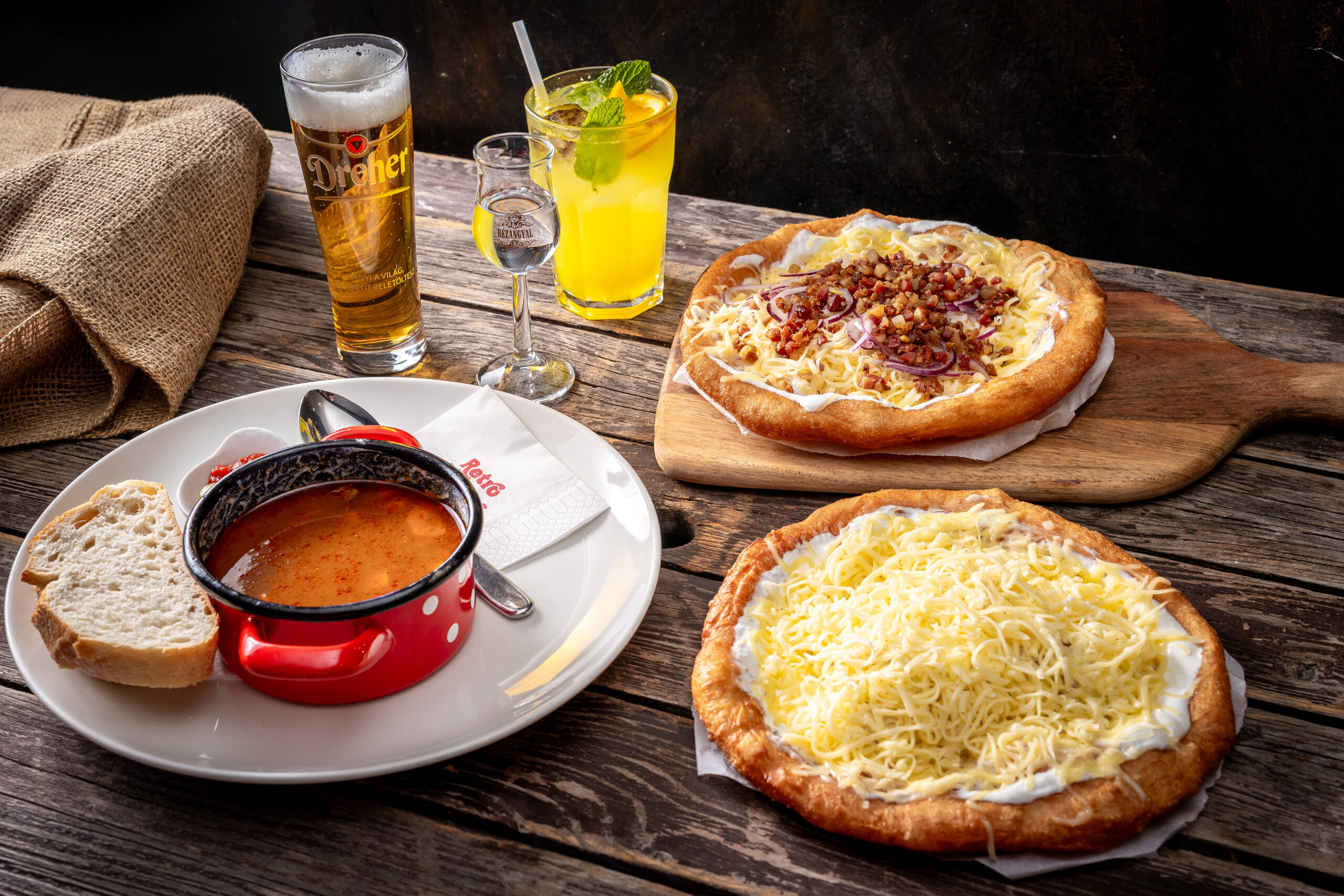
Fisherman’s soup, or halászlé, is one of the best-known Hungarian Christmas dishes. This vivid red soup is made with freshwater fish and generous paprika; carp is especially common. It can be spicy, rich and intensely savoury, with regional versions associated with the Danube and Tisza river areas. Some families serve it with bread, while others add thin noodles.
Fried carp is another familiar Christmas Eve choice, usually coated in flour or breadcrumbs and served with potato salad. The fish may be followed by stuffed cabbage, although this hearty dish also appears on Christmas Day. Hungarian stuffed cabbage combines fermented cabbage leaves with a filling of minced pork and rice, then cooks slowly with smoked meat, sauerkraut and paprika. A spoonful of sour cream is almost obligatory at the table.
Bejgli and other Christmas sweets
No discussion of Hungarian holiday foods is complete without bejgli. This rolled pastry has a fine, yeast-based dough wrapped around either a dense poppy seed filling or a walnut filling. Many Hungarian households serve both varieties, sliced thinly alongside coffee or tea for days after Christmas. Poppy seed bejgli is earthy and slightly bitter in a pleasant way; walnut bejgli is rounder, sweeter and warmly aromatic.
Other festive sweets include zserbó, a layered walnut-and-apricot jam cake covered in chocolate, and mézeskalács, honey-spiced gingerbread biscuits that are often decorated before Christmas. The emphasis is on baking enough to offer guests something with a drink, rather than presenting a formal dessert course.
New Year’s Day foods and the search for good luck
Hungarian New Year food traditions are full of symbolism. Lentils are widely eaten on January 1 because their coin-like shape is associated with prosperity. A pot of lencsefőzelék, a thick lentil stew often served with sausage, pork or a fried egg, is practical winter food with a hopeful purpose.
Pork is also considered lucky because pigs are said to root forward, unlike poultry, which can scratch luck away. Roast pork, sausage and pork knuckle may all appear on the New Year’s table. Poultry is therefore avoided by many families on the first day of the year, at least in a traditional household.
Sauerkraut soup, known as korhelyleves, is a popular remedy after a late New Year’s Eve. It usually combines sauerkraut, smoked meat or sausage, sour cream and paprika in a sharp, restorative bowl. The name suggests a cure for a hangover, though its appeal is just as much about its sour, smoky depth on a cold January afternoon.
- Lentils represent financial luck and abundance.
- Pork is associated with moving forward into the new year.
- Strudel is sometimes served because its long shape is thought to encourage a long life.
- Fish may be avoided by those who believe luck could swim away.
Easter brings ham, eggs and horseradish
After the restraint of Lent, Easter food in Hungary feels deliberately generous. The classic Easter breakfast or lunch centres on cooked smoked ham, hard-boiled eggs, fresh bread, horseradish and spring vegetables. The ham is often simmered rather than roasted, resulting in tender slices with a pronounced smoky, salty flavour.
Painted eggs are both food and decoration. Hungarian children still dye eggs in bright colours, and more elaborate methods use onion skins, leaves or wax-resist patterns. In many families, the eggs are served with the Easter ham after the traditional blessing of food at church on Easter Sunday.
Fresh grated horseradish cuts through the richness of the ham, while kalács, a lightly sweet braided bread, brings softness to the plate. The combination is simple but balanced: salt, smoke, heat, sweetness and the clean bite of radish. Easter Monday has its own custom, locsolkodás, when men and boys traditionally sprinkle women with water or perfume in exchange for decorated eggs, sweets or a drink.
Holiday soups and slow-cooked comfort dishes
Hungarian celebrations often begin with soup, particularly in colder months. Újházi chicken soup, loaded with vegetables, noodles and chicken, is a frequent choice for Sunday and special-occasion tables. Rich broth has a particular place in Hungarian home cooking, where a long-simmered soup signals care and preparation rather than speed.
For more formal Christmas or family gatherings, a clear beef soup may precede roast meats and side dishes. Paprikás chicken, beef stew and roast duck can also appear, though they are not tied to a single holiday in the way that fish is linked to Christmas Eve or ham to Easter. Regional habits, religious observance and family preference matter more than a fixed national menu.
Dumplings, potatoes and pickled vegetables often provide the supporting cast. Savanyúság, the Hungarian term for pickles and preserved vegetables, is essential beside fatty meats. Pickled peppers, cucumbers and cabbage add acidity that keeps an otherwise substantial meal from becoming too heavy.
Lángos at festive markets and winter walks
Lángos is not a ceremonial holiday dish in the same way as bejgli or Easter ham, but it belongs naturally to Hungary’s festive food landscape. During Advent markets and winter outings, the scent of fried dough is difficult to miss. Traditionally, lángos is served hot with garlic, sour cream and grated cheese, a substantial snack when temperatures drop.
Budapest visitors exploring seasonal markets, museums and riverside sights can find more ideas in this guide to Budapest in winter. A freshly made lángos makes particular sense between sightseeing stops: crisp at the edge, soft within and best eaten immediately.

For a central Budapest stop, Retro Lángos Budapest has locations at Bajcsy-Zsilinszky út 25. and Vécsey utca 3., close to St. Stephen’s Basilica and the Hungarian Parliament. Alongside traditional versions, it offers gluten-free lángos and vegan, plant-based options, useful for mixed groups trying Hungarian street food together. Its guide to eating lángos in Budapest explains the city’s enduring affection for this fried-dough classic.
How to experience Hungarian holiday foods in Budapest
Holiday menus are most visible in the weeks around Christmas and Easter, but many dishes can be found year-round in restaurants, bakeries and markets. Great Market Hall is a useful place to browse paprika, cured meats, pickles, pastries and other ingredients that appear on festive tables; this overview of what to eat at Budapest’s Great Market Hall can help visitors make sense of the choices.
The most memorable Hungarian holiday foods tend to be the least hurried: a bowl of halászlé shared before presents are opened, a slice of bejgli saved for breakfast, or Easter ham eaten with strong horseradish and fresh bread. Their appeal lies in the way practical winter ingredients become markers of celebration, luck and family continuity.