A table shaped by paprika, patience and the seasons
Traditional Hungarian dishes tend to arrive with a sense of purpose: a soup that warms a winter afternoon, a stew built for sharing, or a pastry made for a family celebration. Hungary’s cooking draws on the produce of the Carpathian Basin, with pork, beef, poultry, sour cream, onions, potatoes and peppers appearing again and again. Paprika is its most recognisable seasoning, but good Hungarian food is not simply “paprika-heavy”; sweetness, acidity, smoke, fresh herbs and slow-cooked depth all matter.
For visitors, the most rewarding way to explore Hungarian cuisine is to look beyond a single bowl of goulash. A market stall, a modest neighbourhood restaurant and a traditional confectionery each reveal a different part of the country’s food culture. For a wider overview of local eating, this guide to traditional Hungarian dishes and local eats in Budapest is a useful companion.
Gulyás: Hungary’s famous beef soup
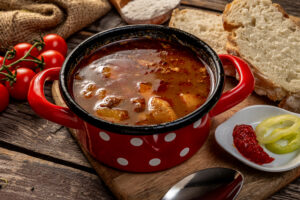
Gulyás, often called Hungarian goulash in English, is the dish most closely associated with the country abroad. In Hungary, though, it is usually a soup rather than the thick stew many international diners expect. Beef is simmered with onions, paprika, potatoes, carrots and other vegetables until the broth becomes rich and fragrant. Small pinched noodles, known as csipetke, are commonly added near the end.
The best versions are balanced rather than aggressively spicy. Paprika gives the soup its colour and mild earthy flavour, while caraway and the long-cooked onion base provide much of its character. Gulyás is especially welcome in cooler weather, but it appears on restaurant menus throughout the year.
Pörkölt and paprikás: the essential Hungarian stews
Pörkölt is closer to what many travellers imagine when they hear “goulash”: a thick, reduced meat stew with a substantial onion and paprika base. It can be made with beef, pork, chicken, veal or game, depending on the region and season. The sauce should cling to the meat rather than pool around it, and it is often served with nokedli, soft dumplings similar to German spaetzle.
Chicken paprikás, or csirkepaprikás, is one of the country’s most comforting home-style dishes. Chicken pieces are cooked in a paprika sauce, then finished with sour cream to create a gentler, silkier result than pörkölt. Nokedli is the classic accompaniment, ideal for catching every bit of sauce. It is a straightforward dish on paper, yet its success depends on good paprika, careful heat and sour cream that enriches without splitting.
Hearty classics for a proper meal
Several traditional Hungarian dishes are built around slow cooking and practical ingredients. They reflect a cuisine that knows how to turn inexpensive cuts, dried beans, root vegetables and preserved pork into meals with real depth.
- Jókai bableves is a substantial bean soup, commonly made with smoked pork, sausage and vegetables. It is named after the novelist Mór Jókai and is filling enough to stand in for lunch.
- Főzelék is a thick vegetable preparation, somewhere between a side dish and a stew. Pea, lentil, spinach, squash and green bean versions are common, often served with a fried egg, meatball or sausage.
- Rakott krumpli layers potatoes, hard-boiled eggs, sausage and sour cream in a baked dish that is a staple of Hungarian home cooking.
- Töltött káposzta, stuffed cabbage, wraps seasoned minced meat and rice in cabbage leaves, usually with sauerkraut and smoked meat in the pot. It is closely associated with winter and festive tables.
These dishes can feel generously rich, so a sharp pickle or lightly dressed cabbage salad is often more than an afterthought. Hungarian meals make frequent use of fermented or vinegar-bright accompaniments to cut through pork, sausage and creamy sauces.
Fish soup and regional flavours
Halászlé, Hungarian fisherman’s soup, is a vivid red river fish soup most closely linked with the Danube and Tisza regions. Freshwater fish, often carp, is cooked with a bold quantity of paprika; recipes and loyalties differ strongly by town and family. Some versions use strained fish stock for a smooth soup, while others are more rustic, with fish pieces served in the broth.
Another beloved regional dish is hortobágyi palacsinta. Despite its name, it is not a sweet pancake from Hortobágy in the usual sense. Savoury crêpes are filled with minced meat, folded into parcels and baked under a paprika sauce. It makes an excellent starter when shared, although the richness can easily turn it into a meal in its own right.
For those planning a more detailed food itinerary, the city’s food halls and market counters provide useful context on ingredients and regional specialities. A practical guide to Budapest’s Great Market Hall can help visitors navigate one of the best-known places to see paprika, cured meats, pickles and seasonal produce gathered under one roof.
Lángos and the pleasures of Hungarian street food
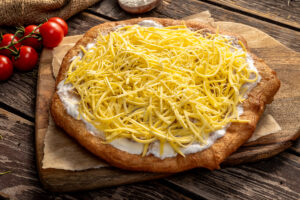
Lángos is among the most immediately satisfying traditional Hungarian foods: a disc of yeasted dough fried until crisp at the edges and soft within. The classic topping is garlic, sour cream and grated cheese, though simple garlic-brushed lángos remains a firm favourite. It is commonly associated with markets, thermal baths, festivals and quick lunches rather than formal restaurant dining.
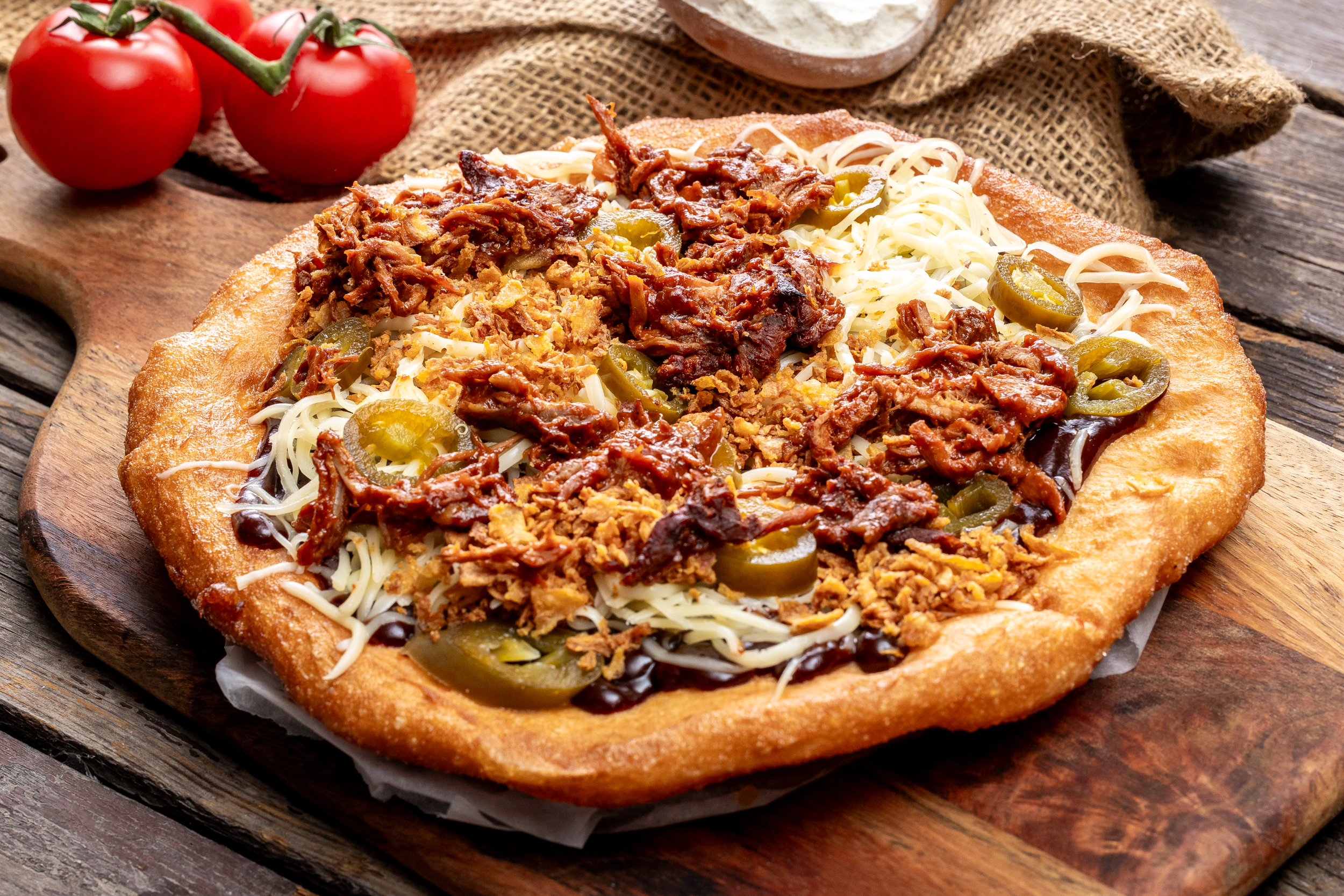
Modern toppings have widened the appeal of lángos, but the dough itself remains the point. It should be served hot, with a crisp surface that gives way to a tender, slightly chewy centre. In central Budapest, Retro Lángos Budapest has locations on Bajcsy-Zsilinszky út 25. and Vécsey utca 3., convenient for visitors near St. Stephen’s Basilica or the Hungarian Parliament. Alongside traditional choices, it offers gluten-free lángos and vegan, plant-based options. For more background on this enduring snack, explore the history and evolution of Hungarian lángos.
Meat dishes worth ordering
Hungarian cuisine has plenty to offer beyond stews. Rántott hús, a breaded and fried cutlet usually made with pork or chicken, is a familiar comfort-food choice, typically served with potatoes, rice or a simple salad. Its appeal lies in the contrast between a crisp coating and juicy meat, not elaborate seasoning.
Brassói aprópecsenye is another popular plate: small pieces of pork are cooked with garlic and served with fried potatoes. Its exact origin is debated, and recipes vary, but it remains a common restaurant favourite. Libamáj, or goose liver, is more celebratory and appears in several forms, including pan-fried slices and pâté-like preparations. Hungary’s traditions of goose and duck cooking also produce excellent roasted legs, especially in autumn.
Sweet endings: pastry, poppy seeds and cottage cheese
Hungarian desserts are often more substantial than their neat appearance suggests. Dobos torte, with its stacked sponge layers, chocolate buttercream and brittle caramel top, is the best-known cake in many cafés. Esterházy torte combines nut-rich layers with a pale icing traditionally patterned in chocolate.
For something less formal, try rétes, Hungary’s strudel, made with delicate stretched pastry and fillings such as sour cherry, apple, sweet cottage cheese or poppy seed. Mákos guba is a comforting dessert of bread or pastry pieces soaked in sweet milk and covered with ground poppy seeds. Túró rudi, a chocolate-coated cottage-cheese snack, is a familiar everyday treat rather than a restaurant dessert.
The country’s sweet repertoire deserves dedicated attention, particularly for travellers with time for a classic café stop. This selection of traditional Hungarian desserts offers a useful introduction to cakes, pastries and lighter sweet snacks.
How to order traditional Hungarian food with confidence
Start with a soup or share one, then choose either a stew, a baked dish or a meat course rather than attempting the entire canon in one sitting. Ask whether a dish contains pork, lard, flour or sour cream if you have dietary requirements; many classic recipes rely on one or more of them. Vegetarian options are easier to find with vegetable soups, főzelék and cheese-based dishes, while gluten-free choices need more careful checking because flour can appear in dumplings, coatings and thickened sauces.
Traditional Hungarian dishes reward an unhurried approach. Order gulyás for its broth, chicken paprikás for its sauce, stuffed cabbage in colder months and lángos when a market-side snack sounds better than a full meal. Together, they show a cuisine grounded in resourceful cooking, bold seasoning and the pleasure of feeding people well.