A well-paced route for one day in Budapest
Budapest rewards an early start. The city is broad, divided by the Danube, and packed with places that can easily fill a long weekend. Still, one day in Budapest is enough to see its defining views, eat well and understand the contrast between grand Pest and hillier, quieter Buda. The key is to avoid treating the day like a museum checklist. Pick a logical route, use public transport when the distances grow, and leave time for coffee, a proper lunch and a sunset by the river.
This itinerary begins on the Pest side, crosses to Buda in the afternoon and returns to the riverfront for the evening. It suits first-time visitors, but it also works for anyone stopping over before continuing through Central Europe.
Start the morning around St. Stephen’s Basilica
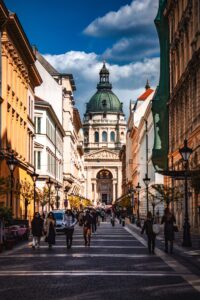
Begin near St. Stephen’s Basilica, one of the most recognisable landmarks in central Budapest. The streets around the basilica are compact and easy to navigate before the city becomes busy. Take a few minutes to walk around Szent István tér, where café terraces face the church’s broad façade, then step inside if it is open. The interior is richly decorated, though the exterior and the square are just as much part of the experience.
From here, walk towards Andrássy Avenue. This elegant boulevard leads northeast from the city centre, lined with handsome late-19th-century buildings, embassies and theatres. You do not need to walk its entire length in a one-day Budapest itinerary, but a short stretch gives a sense of the city’s imperial-era scale. Nearby, the Hungarian State Opera House is worth seeing from outside, even if there is no time for a tour.
For a more focused historical stop, consider the House of Terror Museum on Andrássy Avenue. Its exhibitions address Hungary’s fascist and communist dictatorships, making it a substantial visit rather than a quick diversion. If you choose to go inside, allow enough time and shorten the afternoon elsewhere. Visitors who prefer to stay outdoors can continue towards the river instead.
Walk through the heart of Pest before lunch
Head west towards the Danube, passing through streets where everyday city life sits beside monumental architecture. Liberty Square is a useful stop en route. It contains memorials, formal gardens and several striking buildings, including the Hungarian National Bank and the former television headquarters. It is a place where Budapest’s complicated 20th-century history is visible in public space rather than confined to a museum.
From Liberty Square, the Hungarian Parliament Building is an easy walk. Seen from the Pest riverbank, its neo-Gothic silhouette remains one of Budapest’s great spectacles. The broad Kossuth Lajos Square in front of it is particularly effective in the morning light, and the Danube promenade beside it gives a clear view across to Castle Hill.
Continue south along the river to the Shoes on the Danube Bank memorial. The bronze shoes commemorate Jews murdered by Arrow Cross militiamen during the Second World War. It is a quiet, affecting site, best approached with patience rather than hurried photography. A few minutes here changes the tone of the river walk and adds necessary depth to a day otherwise filled with grand facades and food stops.
Eat Hungarian street food for lunch
A midday break is a good moment to try lángos, Hungary’s famous fried flatbread. Traditional lángos is often served with garlic, sour cream and grated cheese, though toppings vary widely. It is filling enough to count as lunch, especially after a morning on foot, and eating it fresh matters: the dough should be hot, crisp at the edges and soft in the middle.
For a central option, Retro Lángos Budapest has locations at Bajcsy-Zsilinszky út 25. and Vécsey utca 3., both convenient for visitors exploring the basilica, Parliament and nearby riverfront. Alongside traditional versions, it offers gluten-free lángos and vegan, plant-based options, making it a practical choice for mixed groups or travellers searching for vegan lángos Budapest. The Vécsey utca location is especially handy after visiting Parliament.
If you would rather make lunch part of the sightseeing route, the Great Market Hall at the southern end of Váci Street is another classic Budapest food stop. The market is more useful for browsing than for a rushed meal, but its upper-floor food counters and stalls offer a lively introduction to paprika, cured meats, pastries and other Hungarian staples. Go earlier in the afternoon if you want time to explore rather than simply eat.

Cross the Chain Bridge and explore Castle Hill
After lunch, make your way to Széchenyi Chain Bridge, the historic suspension bridge linking Pest with Buda. Check local access arrangements before your visit, as bridge conditions and pedestrian routes can change during maintenance or city works. Even when a direct crossing is not possible, the views of the bridge, Parliament and Castle Hill from the riverbanks are central to the Budapest experience.
On the Buda side, take the funicular or walk uphill towards Buda Castle. The climb is manageable for reasonably fit visitors, although the funicular saves time and offers a fine view over the Danube. The castle complex now houses major museums, including the Hungarian National Gallery and the Budapest History Museum. With only one day in Budapest, it is usually better to choose one museum or spend the time walking around the district.
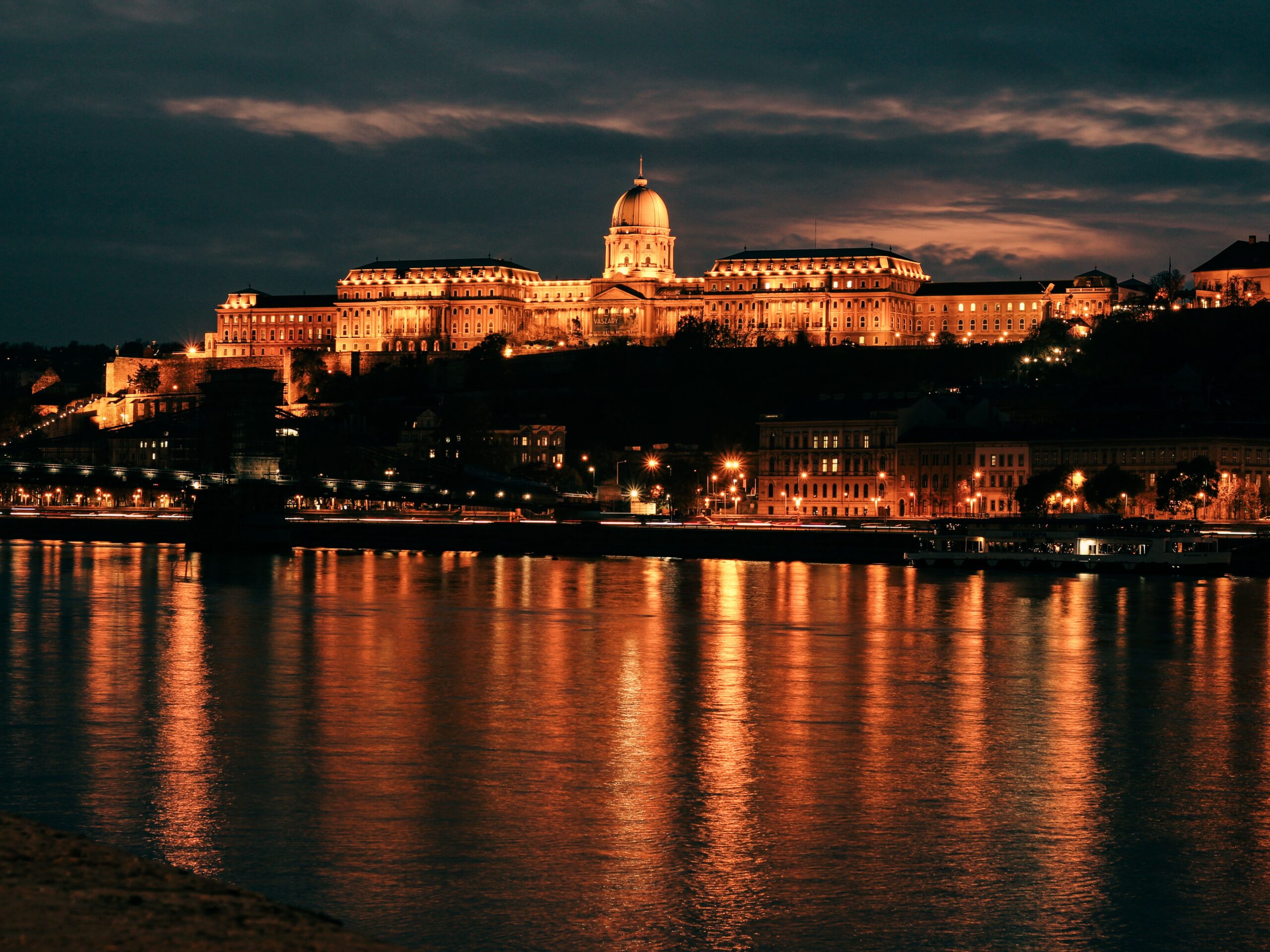
The cobbled lanes behind the palace lead towards Matthias Church and Fisherman’s Bastion. Matthias Church has a distinctive patterned roof and a long, layered history, while Fisherman’s Bastion is best known for its terraces overlooking Pest. The view takes in Parliament, the Danube bridges and the long sweep of the city beyond. Late afternoon is often a good time to be here, when the strongest midday glare has softened.
Castle Hill can become crowded, particularly in high season. Move beyond the main lookout points to find residential lanes, small squares and fragments of medieval walls. The district feels calmer once you leave the busiest terrace areas, and that contrast is part of its appeal.
Finish beside the Danube after dark
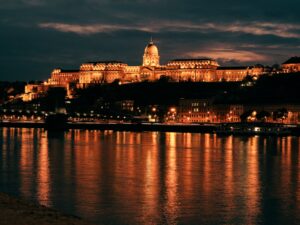
Return to Pest before evening if possible. Budapest changes character after sunset, when Parliament, Buda Castle and the bridges are illuminated across the water. The river promenade between the Chain Bridge and the Elizabeth Bridge is an easy place for a final walk, especially if you want broad views without committing to a long evening programme.
Dinner can be as formal or casual as your energy allows. For traditional Hungarian cooking, look for dishes such as chicken paprikash, goulash soup, stuffed cabbage or pörkölt, a slow-cooked meat stew usually served with dumplings. Reservations are sensible for popular restaurants in the centre, particularly on Friday and Saturday evenings. If the day has included a substantial lángos lunch, a lighter meal and a glass of Hungarian wine may be enough.
A Danube cruise is an optional final addition, but it is not essential. The same illuminated skyline can be enjoyed from the riverbank, and walking leaves room for spontaneous stops in the streets around the basilica or Deák Ferenc tér. For one day in Budapest, that flexibility is valuable: the best itinerary leaves space to pause, look up and let the city’s scale sink in.