Classic dishes that define Budapest’s food culture
Choosing the must try food in Budapest means looking beyond restaurant menus designed for visitors and paying attention to the dishes Hungarians return to in everyday life. The city’s cooking is hearty, paprika-led and shaped by Central European, Ottoman, Jewish and Austro-Hungarian influences. Soups arrive with real substance, pastries are taken seriously, and street food is often best eaten hot, quickly and standing up.
Hungarian food can be rich, especially in colder months, but Budapest offers plenty of contrast. A traditional lunch might begin with a clear broth and end with a sweet dumpling, while a market breakfast can be as simple as fresh bread, cheese, sausage and a pickled pepper. The following dishes provide a useful route through the city’s most distinctive flavours.
Start with gulyás, Hungary’s famous paprika soup
Gulyás, often called goulash outside Hungary, is one of the first foods visitors seek in Budapest. It is important to know that traditional Hungarian gulyás is usually a soup rather than the thick stew many international diners expect. Beef is simmered with onions, paprika, potatoes, carrots and small pinched noodles known as csipetke. The broth should be savoury and warming, with paprika bringing colour and depth rather than overwhelming heat.
Gulyás developed from the food of cattle herders on the Great Hungarian Plain, and it remains a practical, unfussy dish. In Budapest, look for versions served in traditional Hungarian restaurants, often alongside crusty bread. A good bowl feels balanced: tender meat, sweet paprika, a little caraway and a broth substantial enough to count as lunch.
Try pörkölt and paprikás for deeper, slower flavours
If gulyás is Hungary’s iconic soup, pörkölt is the dish to order when you want a concentrated stew. Meat, commonly beef, pork or chicken, is cooked slowly with onions and paprika until the sauce turns thick and glossy. It is usually served with nokedli, small soft dumplings similar to spaetzle, or with boiled potatoes.
Chicken paprikás is another Budapest essential. The chicken is cooked in a paprika sauce finished with sour cream, creating a gentler, creamier dish than pörkölt. Nokedli is the traditional accompaniment, useful for catching every bit of sauce. These dishes show why paprika is central to Hungarian cooking: it is not a single flavour, but a foundation that can taste earthy, sweet, fruity or softly smoky depending on the pepper and preparation.
Lángos belongs on every Budapest street food list
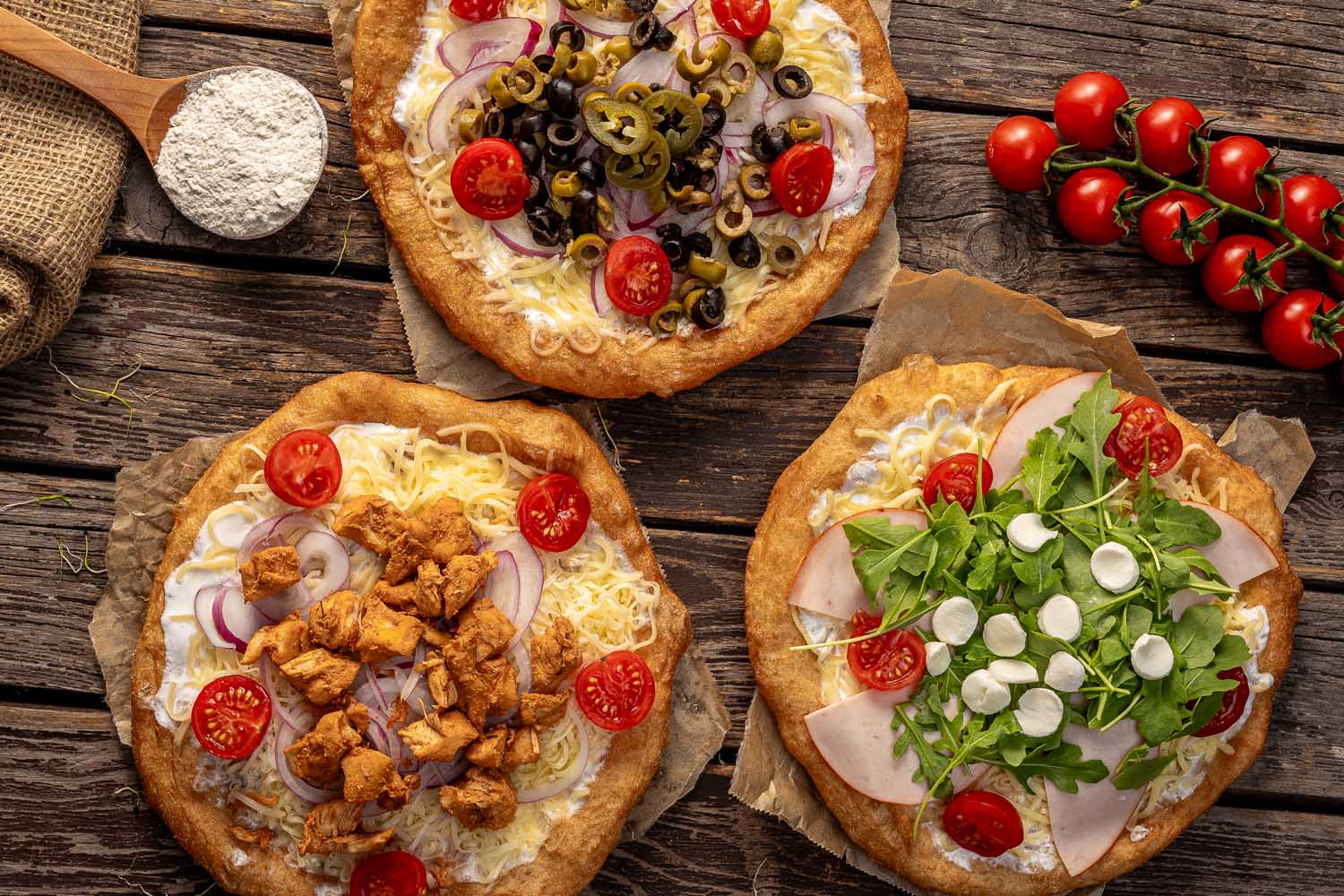
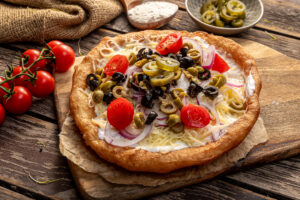
No exploration of Budapest street food is complete without lángos. This deep-fried flatbread is crisp at the edges, tender in the middle and traditionally topped with garlic, sour cream and grated cheese. It is messy in the best possible way, particularly when eaten fresh from the fryer. Garlic may be brushed on with oil or applied as garlicky water, so the flavour can be surprisingly intense.
Modern lángos toppings can include sausage, ham, vegetables or sweeter combinations, but the classic version remains the clearest introduction. For a convenient stop near central sights, Retro Lángos Budapest has locations at Bajcsy-Zsilinszky út 25. and Vécsey utca 3., close to St. Stephen’s Basilica and the Hungarian Parliament. It serves traditional and gluten-free lángos, alongside vegan and plant-based options, making it a useful choice for mixed groups exploring central Budapest.

What to eat at Budapest’s markets
Budapest’s market halls are good places to understand the building blocks of Hungarian food. The Central Market Hall, near the Liberty Bridge, is the best-known example, with stalls selling paprika, cured meats, cheeses, seasonal produce, pickles and baked goods. It can be busy, but it offers a broad view of ingredients that appear across local kitchens.
Look for kolbász, Hungarian sausage seasoned with paprika, garlic and sometimes caraway. Pickles, called savanyúság, are equally important at the table. Cabbage, cucumbers, peppers and mixed vegetables provide sharpness beside rich stews and roasted meats. A simple market meal of sausage, bread, mustard and pickled vegetables can be more revealing than an oversized tourist platter.
Cold cuts, stuffed cabbage and comforting winter dishes
Töltött káposzta, or stuffed cabbage, is one of the most comforting Hungarian dishes to order in Budapest during cooler weather. Cabbage leaves are filled with minced meat and rice, then cooked with sauerkraut and often served with sour cream. The sourness of the cabbage keeps the dish from becoming too heavy.
Another traditional favourite is rakott krumpli, a baked layered casserole of potatoes, eggs, sausage and sour cream. It is home-style food rather than elaborate restaurant cooking, but that is precisely its appeal. For a more dramatic plate, try hortobágyi palacsinta: savoury pancakes filled with minced meat, folded and covered in a paprika sauce.
Sweet foods worth saving room for
Hungarian desserts tend to be generous, nostalgic and built around pastry, poppy seeds, walnuts, fruit and custard. Dobos torta is Budapest’s most recognisable cake: multiple thin sponge layers are filled with chocolate buttercream and topped with a hard sheet of caramel. Its clean slices and caramel crown have made it a classic in old-fashioned coffeehouses.
Somlói galuska is less tidy but equally loved. This layered dessert combines sponge cake, chocolate sauce, walnuts, raisins and whipped cream. It is usually served as a soft, spoonable mound rather than a neat slice. Gundel palacsinta, thin pancakes filled with walnut mixture and covered in chocolate sauce, are another memorable choice for diners with a serious sweet tooth.
For something portable, seek out rétes, Hungary’s version of strudel. Fillings commonly include apple, sour cherry, sweet cottage cheese or poppy seed. Freshly baked rétes is ideal with coffee, especially in the afternoon when a full restaurant meal feels unnecessary.
Vegetarian and vegan food in Budapest
Traditional Hungarian cooking relies heavily on meat, dairy and eggs, yet vegetarian and vegan food in Budapest is far easier to find than it once was. Central neighbourhoods have dedicated vegan cafés, contemporary restaurants and bakeries, while many Hungarian dishes can be adapted with mushrooms, beans, potatoes or seasonal vegetables.
Vegetarians should look for mushroom paprikás, vegetable soups, cheese-filled pastries and dishes based on roasted roots or legumes. Vegan travellers can find vegan lángos Budapest options, dairy-free pastries and plant-based takes on familiar local flavours. It is still worth asking how sauces and doughs are made, particularly in traditional establishments where sour cream, butter and egg can appear unexpectedly.
Eat with the rhythm of the city
A satisfying Budapest food itinerary does not need to involve a heavy three-course meal at every stop. Have a lángos as a late-morning snack, eat gulyás or chicken paprikás for lunch, pause for coffee and rétes, then leave room for a slower dinner. Markets reward early visits, while pastry shops and cafés suit the quieter middle of the afternoon.
The best food in Budapest often makes sense in context: hot soup on a cold day, pickles beside sausage, a square of Dobos torta with strong coffee, or fried dough after a walk around the Basilica. Follow those rhythms and the city’s most familiar dishes will feel less like a checklist and more like part of the journey.