Discovering Hungarian Traditions
Hungarian traditions reflect a rich cultural heritage shaped by Central European history, rural life, royal influences, and centuries of regional exchange. From colorful folk embroidery and energetic dance to warming soups and seasonal celebrations, Hungary offers visitors a fascinating blend of old customs and modern national pride. These traditions are not limited to museums or villages; they remain visible in family gatherings, holiday meals, local markets, music festivals, and everyday life in Budapest.
For travelers interested in authentic Hungarian culture, understanding these customs creates a deeper connection with the country. Whether you are exploring historic towns, visiting a traditional festival, or tasting classic Hungarian food, Hungarian traditions reveal the warmth, creativity, and resilience of the people who have preserved them across generations.
Folk Culture and Traditional Hungarian Dress
Colorful Embroidery and Regional Costumes
Hungarian folk costumes are among the most recognizable symbols of the nation’s heritage. Traditional clothing varies by region, with distinctive colors, embroidery patterns, fabrics, and accessories. Women’s costumes often feature richly decorated blouses, full skirts, aprons, shawls, and floral headpieces, while men may wear embroidered shirts, fitted vests, boots, and wide-brimmed hats.
The Matyó community, centered around the town of Mezőkövesd, is especially famous for its elaborate floral embroidery. Matyó designs use vivid reds, blues, yellows, and greens to create detailed flower patterns on clothing, textiles, and decorative objects. This craft has gained international recognition and is listed by UNESCO as part of Hungary’s intangible cultural heritage.
Folk Music and Dance
Hungarian folk music is known for its emotional melodies, fast rhythms, and strong connection to rural traditions. Instruments commonly associated with Hungarian music include the violin, cimbalom, flute, clarinet, and double bass. The cimbalom, a large hammered dulcimer, produces a bright and distinctive sound that is strongly linked with Hungarian and Romani musical traditions.
Traditional Hungarian dance is equally expressive. The csárdás is the best-known national dance, beginning slowly before building into a lively, fast-paced sequence. Folk dance events, known as táncház gatherings, remain popular today and allow participants to learn regional dances in a social, welcoming atmosphere.
Hungarian Holidays and Seasonal Celebrations
Many Hungarian traditions are closely tied to the changing seasons and the Christian calendar. These celebrations combine religious observance, family customs, folk beliefs, food, music, and community events. Visiting Hungary during a public holiday can be an excellent way to experience local culture beyond the major tourist attractions.
Easter Customs in Hungary
Easter is one of the most distinctive times to experience Hungarian folk traditions. In many regions, Easter Monday includes locsolkodás, a playful custom in which boys sprinkle girls with water or perfume. Historically, the water symbolized purification and renewal. In return, girls often offer painted eggs, sweets, or a small gift.
Decorated Easter eggs, called hímes tojás, are an important part of the celebration. Eggs may be painted, dyed, wax-resisted, scratched, or decorated with traditional geometric and floral designs. Families also gather for festive meals featuring ham, eggs, horseradish, sweet bread, and seasonal pastries.
Christmas and Winter Traditions
Christmas in Hungary is centered on family, food, and religious customs. The main celebration takes place on December 24, when families decorate the tree, exchange gifts, and enjoy a special evening meal. Popular Christmas dishes include fish soup, stuffed cabbage, bejgli rolls filled with poppy seeds or walnuts, and gingerbread cookies.
Christmas markets in Budapest and other Hungarian cities bring traditional crafts, mulled wine, roasted chestnuts, and local dishes to the streets. These markets are also a wonderful place to find handmade ornaments, embroidered textiles, ceramics, and other Hungarian souvenirs.
Hungarian Food Traditions
Food is one of the most accessible and memorable parts of Hungarian culture. Hungarian cuisine is known for hearty ingredients, slow-cooked dishes, seasonal vegetables, sour cream, paprika, and generous hospitality. Meals often bring families together, especially on Sundays, holidays, and important celebrations.
Classic Hungarian Dishes
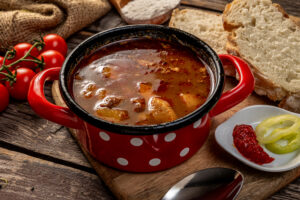
Goulash, or gulyás, is perhaps Hungary’s most internationally recognized dish. Traditionally, it is a soup or stew made with beef, onions, paprika, potatoes, and vegetables. Another popular meal is chicken paprikash, prepared with paprika sauce and often served with dumplings. Fisherman’s soup, known as halászlé, is a spicy river fish soup strongly associated with the Danube and Tisza regions.
Hungarian street food also has deep roots in local culinary traditions. Lángos is a fried flatbread usually served hot with garlic, sour cream, and grated cheese, although modern versions include many creative toppings. For an authentic experience in central Budapest, Retro Lángos Budapest serves traditional, gluten-free, and vegan lángos at Bajcsy-Zsilinszky út 25. and Vécsey utca 3., conveniently close to St. Stephen’s Basilica and the Hungarian Parliament.
The Importance of Paprika
Paprika is essential to Hungarian cooking and remains one of the country’s most famous culinary symbols. It is made from dried peppers and comes in several varieties, ranging from mild and sweet to hot and smoky. Hungarian paprika adds color, depth, and warmth to soups, stews, sauces, meat dishes, and even some snacks.
Visitors often buy paprika as a practical souvenir, but it is worth choosing high-quality varieties from markets or specialty shops. Regions such as Szeged and Kalocsa are particularly well known for paprika production and decorative folk art connected to the spice.
Traditional Crafts and Folk Art
Hungarian traditions are also preserved through skilled craftsmanship. Pottery, weaving, woodcarving, embroidery, painted furniture, and lace-making have long played important roles in rural communities. Many handmade objects were originally created for practical household use, but they also displayed regional identity and artistic talent.
Kalocsa is famous for its bright floral embroidery and painted motifs, while the town of Herend is internationally celebrated for fine porcelain. Hungarian ceramics often include floral designs, bold colors, and hand-painted details. Folk art markets and cultural festivals provide excellent opportunities to meet artisans and purchase meaningful handmade gifts.
- Embroidered tablecloths and blouses
- Hand-painted ceramics and porcelain
- Wooden kitchenware and carved ornaments
- Traditional dolls in regional costumes
- Decorative paprika strings and folk-inspired textiles
Hospitality, Family, and Everyday Customs
Hospitality is a valued part of Hungarian culture. Guests are often offered food, coffee, cake, or homemade spirits, particularly in smaller towns and family homes. Sharing a meal is considered an important way to welcome visitors and strengthen relationships. Even a casual gathering can include generous portions and lively conversation.
Family remains central to many Hungarian traditions. Sundays are often associated with family lunches, while holidays bring relatives together for long meals and shared recipes. Grandparents frequently play an important role in passing down cooking methods, folk stories, language expressions, and cultural customs to younger generations.
Hungarians also have a strong café culture, especially in Budapest. Historic coffeehouses have served as meeting places for writers, artists, students, and professionals for generations. Today, visitors can enjoy both elegant old-world cafés and relaxed modern spaces while observing this enduring social tradition.
Experiencing Hungarian Traditions in Budapest
Budapest is an ideal starting point for discovering Hungarian traditions because it combines historic architecture, museums, markets, restaurants, and cultural events. Visitors can explore the Great Market Hall, attend a folk music performance, browse craft stalls, or visit museums dedicated to Hungarian history and art. The city also hosts seasonal festivals that celebrate wine, food, folk culture, and national holidays.
Although Budapest is modern and international, its traditions remain easy to find. Try local dishes, listen for live folk music, visit a traditional bathhouse, and look for family-run businesses that celebrate Hungarian ingredients and recipes. These experiences offer a more personal understanding of the country than sightseeing alone.
Hungarian traditions continue to evolve while keeping a strong connection to the past. For tourists, families, and curious food lovers exploring Budapest, a stop at Retro Lángos Budapest is a simple and delicious way to enjoy authentic Hungarian street food alongside the city’s cultural landmarks.