The character of Hungarian street food
Hungarian street food culture is built around food that is filling, direct and deeply tied to everyday life. It thrives in market halls, small takeaway counters, festival stalls and busy city streets, where meals are made to be eaten promptly and without ceremony. The country’s cooking is known for paprika, sour cream, pork, potatoes, cabbage and fresh bread, and many of those familiar ingredients find their most casual expression in hand-held snacks.
For visitors, street food in Hungary offers an accessible way into local flavours without committing to a long restaurant meal. A hot lángos after a morning of sightseeing, a paper cone of roasted chestnuts in winter, or a sausage with mustard at a market can reveal plenty about the way Hungarians eat. The appeal lies in contrast: crisp dough and soft cheese, smoky meat with sharp pickles, rich stew balanced by fresh bread.
Budapest is the natural starting point for exploring Hungarian street food, though regional markets and summer festivals across the country have their own strong traditions. The capital has preserved the practical character of these dishes while making room for contemporary toppings, dietary adaptations and international influences. For a useful overview of dishes beyond the snack counter, see this guide to traditional Hungarian cuisine.
Lángos and the pleasure of fried dough
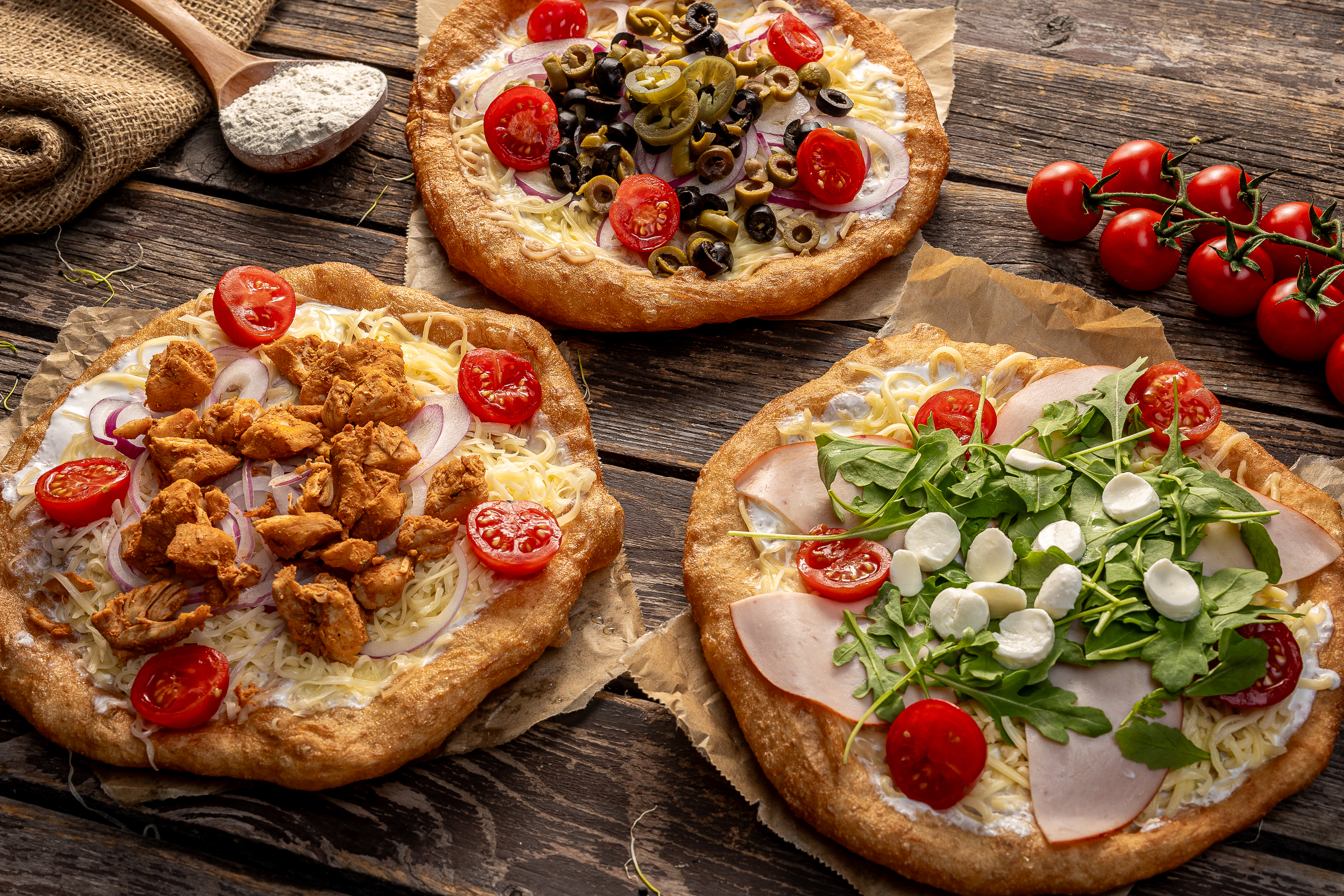
Lángos is the best-known Hungarian street food abroad, and rightly so. The classic version is a round piece of yeasted dough fried until puffed and golden, with a crisp outer edge and a tender, chewy centre. It is traditionally rubbed with garlic, then topped with sour cream and grated cheese. The result is messy in the best possible way: salty, warm and substantial enough to count as lunch.
The name is linked to the Hungarian word láng, meaning flame, recalling an earlier method of baking bread dough near the heat of a brick oven. Today, the deep fryer is the familiar setting, especially at markets, lakeside kiosks and food stalls. Lángos is often eaten standing up, folded slightly to manage the toppings, and best enjoyed while the dough is still hot.

Traditional garlic, sour cream and cheese remains the benchmark, but the modern Budapest lángos scene is broader. Toppings can include sausage, bacon, onions, smoked salmon or meat, while sweet versions may be finished with sugar, jam or chocolate spread. A good stall respects the dough first: it should not taste oily or sit heavily after a few bites.
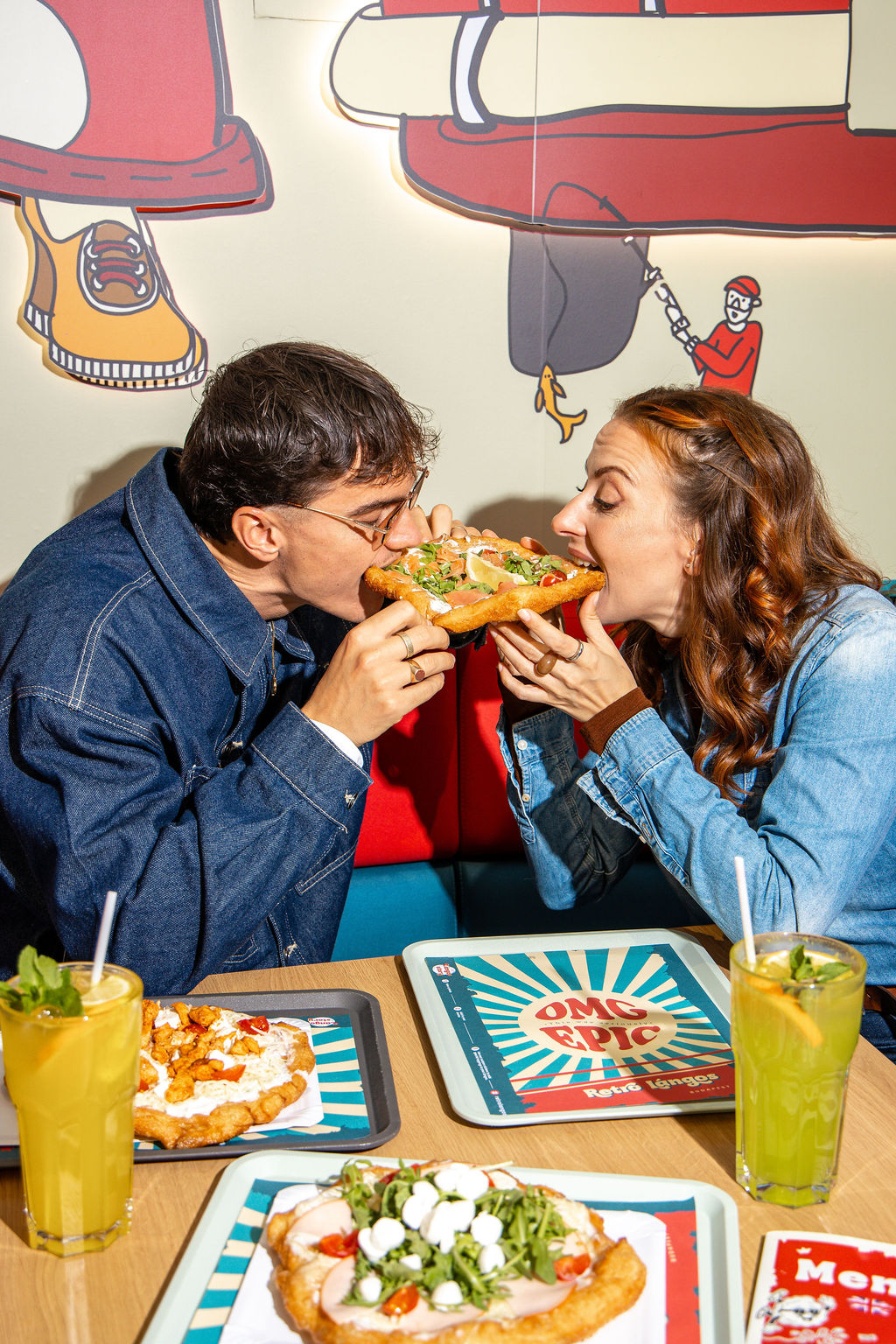
Dietary needs are increasingly part of the conversation. Visitors looking for gluten-free or vegan lángos Budapest options should ask clearly about ingredients and preparation, particularly about shared fryers and toppings. Retro Lángos Budapest, near St. Stephen’s Basilica and the Hungarian Parliament at Bajcsy-Zsilinszky út 25. and Vécsey utca 3., serves traditional and gluten-free lángos alongside vegan and plant-based choices. Its approach reflects how a traditional snack can remain recognisable while becoming easier for more people to enjoy.
Market stalls, kiosks and festival kitchens
Hungarian street food is inseparable from the places that sell it. Markets are especially important: shoppers may come for vegetables, cured meats and cheese, then stop for a warm snack before leaving. Budapest’s Great Market Hall is the city’s best-known market building, but it is only one part of a wider culture of neighbourhood markets, station kiosks and seasonal food stands. A closer look at what to eat at Budapest’s Great Market Hall can help visitors navigate its classic dishes.
At summer events, the food often becomes more festive and regional. Sausages sizzle over grills, pancakes are filled to order, and large pots of goulash or bean stew feed groups at communal tables. Wine festivals, village days and Christmas markets create a setting where eating is part of the event rather than a quick interruption to it.
That social aspect matters. Hungarian street food is not usually designed around grazing all day; it tends to be practical food with a clear sense of occasion. People gather around a counter for a particular dish, eat it while it is fresh, then move on. The pace is informal, but the expectation of a proper portion remains.
Essential Hungarian street foods beyond lángos
Lángos may dominate travel guides, but it is only one part of the picture. Hungarian street food culture includes baked pastries, grilled meats, soups and sweets, each suited to a different time of day or season.
- Kolbász: Hungarian sausage, often smoked or grilled, served with bread, mustard and pickles. Paprika and garlic give it a distinctive depth.
- Hurka: A cooked sausage that may contain liver or rice and is usually sold with bread, mustard and tangy pickled vegetables.
- Kürtőskalács: Chimney cake, made by winding sweet dough around a spit and baking it until caramelised. It is commonly coated in cinnamon sugar, walnut or coconut.
- Palacsinta: Thin Hungarian pancakes filled with jam, cocoa, sweet cottage cheese or, in savoury versions, meat and sauce.
- Rétes: Strudel with delicate pastry and fillings such as apple, sour cherry, poppy seed or cottage cheese.
- Roasted chestnuts: A cold-weather staple, sold in paper bags when Budapest’s streets turn wintry.
Then there are dishes that sit on the border between street food and a quick casual meal. Gulyás, the soup known internationally as goulash, is often sold at festivals and market counters. Főzelék, a thick vegetable stew served with a fried egg or meat patty, is a weekday favourite in canteen-style spots. These foods show that Hungarian casual eating is not limited to fried snacks.
How paprika, pickles and dairy shape the flavours
Hungarian food is frequently reduced to paprika, yet the spice has several roles. Sweet paprika brings colour and warmth; hot paprika adds heat; smoked paprika contributes a deeper, woodsy note. Street food vendors use it in sausages, stews, sauces and seasoning blends, but it rarely works alone. Garlic, caraway, black pepper and onions provide much of the background character.
Pickles are equally important. A rich sausage or fried lángos is often improved by the acidity of savanyúság, the broad Hungarian category for pickled vegetables. Cucumbers, cabbage, peppers and mixed vegetables cut through fat and add crunch. Sour cream and cheese create the opposite effect, lending coolness and richness to dishes that need a softer counterpoint.
This balance explains why Hungarian street food can feel hearty without being one-dimensional. It is based on bold flavours, but the best combinations make room for salt, acid, smoke and texture rather than leaning on richness alone.
Eating street food well in Budapest
Timing makes a difference. Lángos is at its best straight from the fryer, chimney cake when the sugar coating is still crisp, and grilled sausages when the casing has just browned. At a busy counter, watching what local customers order is often more useful than choosing the most elaborate item on the board. Turnover usually means food is being prepared continuously.
Markets are ideal for daytime eating, while festival food and casual bars come into their own later in the day. If you have only a short stay, work a snack stop into a walking route rather than treating it as a separate expedition. The central districts make this easy, and a detailed Budapest food guide can help put street food into a wider eating itinerary.
One practical rule applies across the city: do not judge a lángos by its topping list alone. Start with a classic version, ideally garlic, sour cream and cheese, to understand the baseline. After that, experiment with modern combinations, vegan fillings or a gluten-free dough if needed. Hungarian street food rewards an appetite, but it also rewards a little curiosity.
A living part of Hungarian food culture
Hungarian street food culture endures because the dishes are adaptable without losing their identity. A market sausage still tastes of smoke, paprika and mustard; a chimney cake still relies on warm dough and caramelised sugar; lángos remains instantly familiar even when served with unexpected toppings. These foods carry memories of markets, lake holidays, fairs and quick weekday lunches, yet they continue to fit the pace of a modern city.
For travellers, the best approach is simple: eat the classics hot, seek out busy local counters, and leave room for something sweet afterward. In Budapest, a stop for lángos can be as much a part of the day as visiting a landmark, especially when the city’s streets start to feel hungry around you.