The character of Hungarian culinary traditions
Hungarian culinary traditions are shaped by the country’s plains, rivers, market gardens and long history at the crossroads of Central Europe. The food is often described as hearty, but that only tells part of the story. Hungarian cuisine balances deep, slow-cooked flavours with sharp pickles, fresh herbs, fruit-based sauces and delicate pastries. A meal may begin with a clear soup, move to paprika-rich meat or vegetables, and end with a light, layered dessert.
The country’s cooking developed through rural household traditions as well as the influence of Ottoman, Austrian, Slovak, Serbian, Jewish and other neighbouring cultures. That mixture is visible in dishes built around peppers and paprika, Central European cakes, sour cream, noodles, dumplings and preserved seasonal produce. For visitors, exploring traditional Hungarian food is one of the clearest ways to understand everyday life beyond Budapest’s headline sights.
Pantry staples that define Hungarian cooking
Paprika is the ingredient most closely associated with Hungarian food. It appears in sweet, hot and smoked forms, lending colour and warmth to soups, stews, sausages and spreads. Good Hungarian cooking uses it with care: paprika is usually added briefly to fat or a moist base so it releases its flavour without burning and turning bitter.
Onion, garlic, lard or oil, sour cream, flour, potatoes and seasonal vegetables are equally important. Cabbage, beans, tomatoes, peppers, mushrooms and root vegetables recur throughout the year. Pork is prominent, though beef, chicken, duck, goose and freshwater fish have strong regional roles. Bread is rarely an afterthought; it is used to soak up the juices of pörkölt, soup and vegetable stews.
Hungarian culinary traditions also make generous use of fermentation and preservation. Pickled cucumbers, sauerkraut, sour cherries, plum jam and bottled peppers bring brightness to rich dishes, especially in colder months. These contrasts are central to the cuisine: a creamy sauce may be sharpened with lemon, while a substantial stew is often served with crisp pickles.
Soup, stew and the enduring importance of paprika
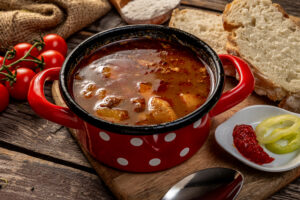
Gulyás, known internationally as goulash, remains one of Hungary’s best-known dishes. In Hungary it is generally a soup rather than the thick, sauce-heavy stew many travellers expect elsewhere. Beef, onions, paprika, potatoes and root vegetables simmer together in a fragrant broth, sometimes with small pinched noodles called csipetke.
Pörkölt is thicker and more concentrated, made by slowly cooking meat with onions and paprika until the sauce reduces. It can be prepared with beef, pork, chicken, veal or mushrooms. Paprikás follows a similar path but is finished with sour cream, producing the silky sauce associated with chicken paprikash. Nokedli, soft egg dumplings, are a classic accompaniment.
Another essential is halászlé, or fisherman’s soup, particularly associated with communities along the Danube and Tisza rivers. Freshwater fish and paprika create its distinctive red broth. Regional versions differ in texture and fish selection, which is a useful reminder that Hungarian dishes are not fixed recipes; family methods and local ingredients matter greatly.
For a wider introduction to these staples, this guide to traditional Hungarian meals offers a useful overview of the dishes that appear on restaurant menus and family tables.
Home-style dishes beyond the famous classics
Some of the most revealing Hungarian foods are everyday plates rather than restaurant showpieces. Főzelék is a thick vegetable dish, often made with lentils, peas, spinach, squash or yellow beans. It is neither soup nor a conventional side dish, and may be topped with a fried egg, sausage or meatball. Its satisfying texture comes from the vegetables themselves, sometimes lightly thickened with flour.
Töltött káposzta, stuffed cabbage, is a cold-weather favourite. Cabbage leaves are filled with a seasoned mixture of meat and rice, then cooked with sauerkraut. It is a dish of patience, improved by resting and reheating. Rakott krumpli, a baked potato casserole layered with eggs, sausage and sour cream, is another household classic whose modest ingredients produce serious comfort.
Vegetarian travellers should look for mushroom paprikás, cheese-filled dumplings, vegetable főzelék and seasonal market dishes. Menus can vary considerably, so it is worth asking about stock, meat fat and garnishes. Hungarian cuisine has long had vegetable-forward dishes, even if they are less visible than its celebrated meat stews.
Lángos and the social life of Hungarian street food
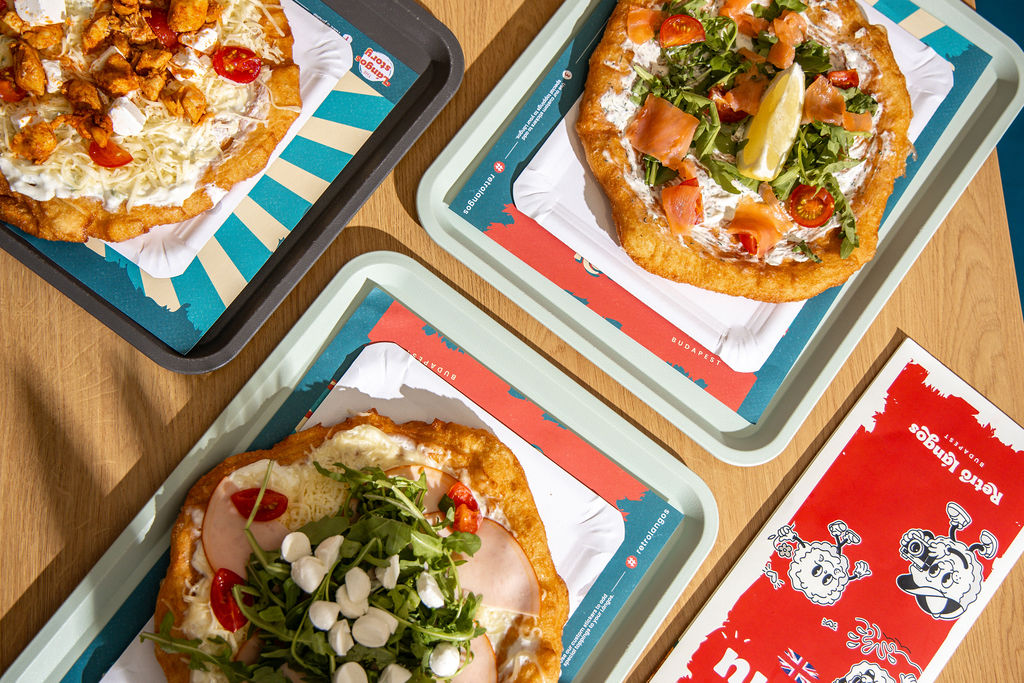
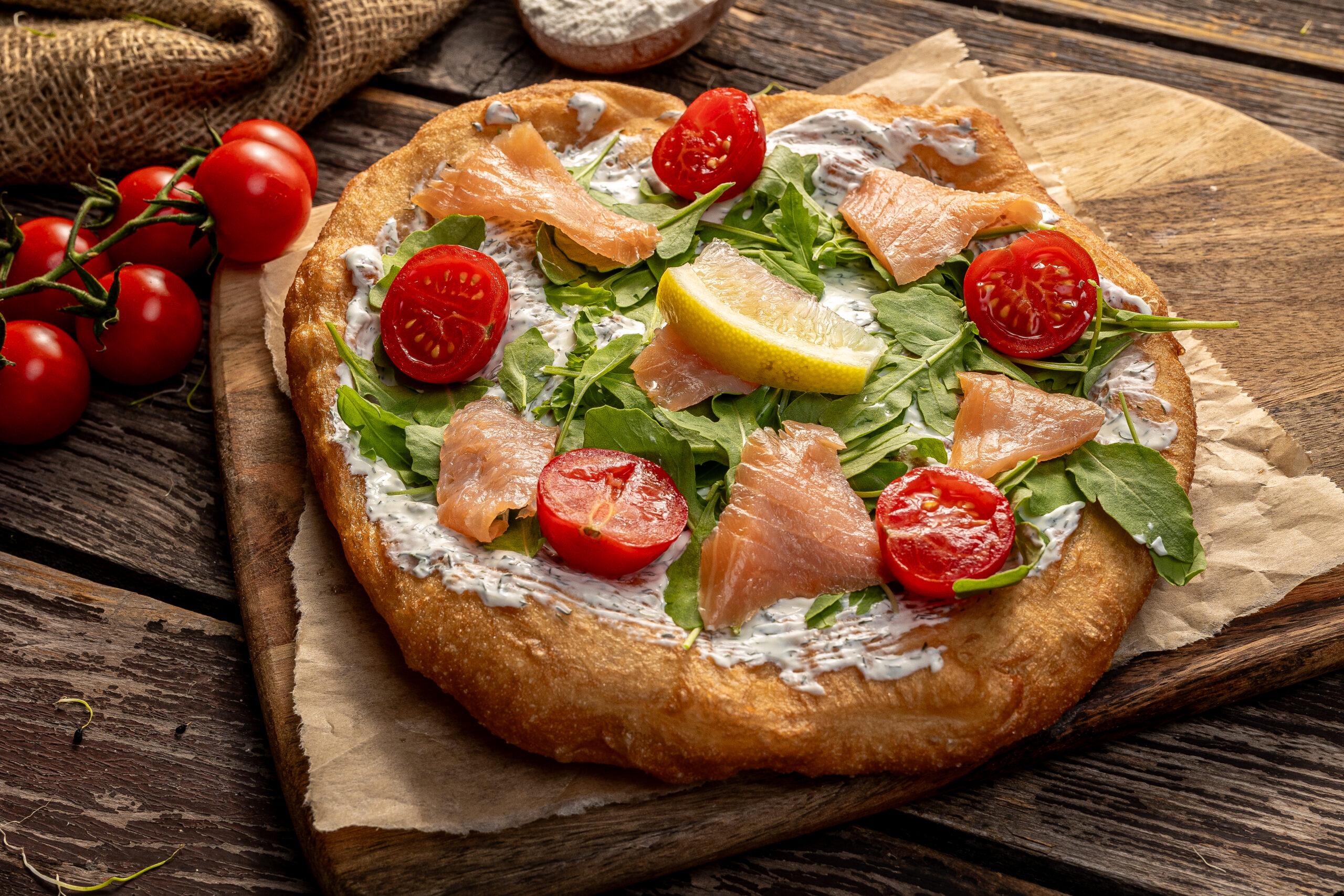
Lángos is among the most immediate expressions of Hungarian street food culture: a round piece of yeasted dough fried until crisp at the edges and soft within. The familiar traditional topping is garlic, sour cream and grated cheese, though plain lángos and sweet versions also have their loyal followers. It is best eaten hot, when the contrast between the blistered surface and warm dough is at its best.
Historically linked to bread-making traditions, lángos is now found at markets, fairs, lakeside resorts and city snack bars. It is an informal food, designed for a quick lunch, a post-market bite or a break during sightseeing. The country’s broader street-food repertoire includes sausages, chimney cake, fried dough, pogácsa savoury scones and rétes, the fine-layered pastry often filled with apple, sour cherry, poppy seed or cottage cheese.
In central Budapest, Retro Lángos Budapest offers traditional and gluten-free lángos alongside vegan and plant-based options at Bajcsy-Zsilinszky út 25. and Vécsey utca 3., both convenient for visitors near St. Stephen’s Basilica and the Hungarian Parliament. Its range reflects how a classic Hungarian street food can accommodate modern dietary needs without losing its essential appeal. For more context, explore this guide to Hungarian street food culture.
Sweet traditions, coffeehouses and celebration tables
Hungarian desserts reward anyone with a taste for pastry, walnuts, poppy seeds, chocolate and fruit. Dobos torte is recognised by its layers of sponge, chocolate buttercream and crisp caramel top. Somlói galuska combines sponge cake, cream, chocolate sauce, raisins and walnuts in a gloriously untidy dessert. Gundel palacsinta, filled pancakes with walnuts and chocolate sauce, belongs to the country’s grand café tradition.
Strudel-like rétes has roots shared across the former Habsburg world, but it has become deeply woven into Hungarian baking. Poppy seed, a much-loved ingredient, features in rolls and cakes, while cottage cheese is commonly used in both sweet and savoury baking. At Christmas, bejgli rolls filled with walnut or poppy seed are a fixture in many homes.
Budapest’s historic coffeehouse culture gives these desserts an appropriate setting. Cakes are often enjoyed slowly with coffee rather than treated as a rushed finale. A useful guide to traditional Hungarian desserts can help distinguish the classics when facing a long pastry counter.
Regional flavours and market habits
Hungarian food changes as you travel. The Great Plain is known for pastoral cooking, peppers and robust meat dishes. Around Lake Balaton, fish, wine and summer produce shape menus. The north-east has its own wine culture and dishes influenced by nearby Slovakia and Ukraine, while southern areas show Balkan and Serbian connections in spicy sausages, grilled foods and pepper-rich cooking.
Markets remain one of the best places to see the building blocks of Hungarian cuisine: strings of paprika, cured sausages, jars of preserves, seasonal fruit, cheese and fresh bread. Budapest’s Great Market Hall is especially useful for first-time visitors who want to compare ingredients and try simple local snacks. This practical guide to what to eat at Budapest’s Great Market Hall can help visitors navigate the choices.
How to eat Hungarian food with confidence
Start with a soup or shared appetiser, then choose one slow-cooked main dish rather than trying to order every famous item in a single meal. Look for restaurants that identify regional recipes or seasonal ingredients, and do not overlook daily specials. In traditional eateries, portions can be generous, so sharing is often sensible.
Hungarian culinary traditions are best understood through contrast: rich pörkölt beside sharp pickles, creamy paprikás with light dumplings, a fried lángos followed by coffee and a slice of cake. Leave room for the foods served casually as well as those presented formally. A market counter, neighbourhood bakery or hot lángos after a walk can be as memorable as a long restaurant lunch.