Gluten-Free Budapest: A Guide to Eating Safely and Deliciously
Budapest is an exciting destination for food lovers, and travellers following a gluten-free diet will find more choices here than ever before. From traditional Hungarian comfort food to modern cafés, international restaurants and dedicated bakeries, gluten-free Budapest dining can be both safe and memorable. With a little planning, visitors with coeliac disease, gluten intolerance or wheat allergies can enjoy the city’s famous flavours without missing out on its culinary culture.
Hungarian cuisine is known for pastries, bread, noodles, dumplings and flour-thickened sauces, so gluten can appear in many classic dishes. However, awareness of dietary requirements is growing rapidly in Budapest. Many restaurants now label allergens, offer gluten-free alternatives and understand the importance of avoiding cross-contamination. The key is to ask clear questions, learn a few useful Hungarian phrases and choose venues that take allergen safety seriously.
Understanding Gluten-Free Dining in Budapest
In Hungary, gluten-free products are often described as “gluténmentes.” This is the most useful word to know when reading menus, checking supermarket labels or speaking with restaurant staff. The abbreviation “GM” may also appear on menus, packaging and bakery signs. While many central Budapest restaurants have English-speaking staff, especially in tourist areas, showing a short dietary card in Hungarian can make communication easier.
What to Ask at Restaurants
For people with coeliac disease, it is important to ask more than whether a dish contains wheat. Shared fryers, preparation surfaces, utensils and oils can create cross-contact risks. Ask whether gluten-free food is prepared separately and whether fried items share oil with breaded dishes. A restaurant may offer naturally gluten-free ingredients but still be unable to guarantee a safe meal for someone with a severe allergy or coeliac disease.
- “Gluténmentes ételt szeretnék” means “I would like gluten-free food.”
- “Cöliákiám van” means “I have coeliac disease.”
- “Van keresztszennyeződés?” asks whether there is cross-contamination.
- “Ez búzalisztet tartalmaz?” asks whether something contains wheat flour.
When in doubt, choose simple dishes with clearly identifiable ingredients. Grilled meat, roasted vegetables, salads, rice, potatoes and fish can often be adapted more easily than complex sauces, soups or fried foods. Always confirm seasonings, stock cubes, marinades and sauces, as flour or barley-based ingredients may be used unexpectedly.
Traditional Hungarian Food That May Be Gluten-Free
Hungarian food is rich, warming and flavourful, with paprika appearing in many beloved dishes. Although many recipes traditionally contain flour, several local favourites can be naturally gluten-free or modified on request. This makes Budapest a rewarding place for travellers who want to experience authentic regional cuisine while staying within dietary needs.
Goulash and Hearty Soups
Gulyás, or Hungarian goulash, is usually a soup made with beef, vegetables, paprika and potatoes. It may be gluten-free, but recipes vary widely. Some kitchens thicken it with flour, use stock containing gluten or serve it with bread. Ask whether the soup is prepared without flour and request no bread on the side. Other soups, including bean soups and vegetable soups, should also be checked carefully before ordering.

Meat, Fish and Potato Dishes
Grilled chicken, pork, beef and fish are often good gluten-free options when served without breadcrumbs, flour-based sauces or marinades. Roast potatoes, mashed potatoes and rice can be suitable side dishes, although mashed potatoes should be checked for added flour or seasoning mixes. Hungarian stews such as pörkölt can sometimes be prepared without flour, but it is essential to confirm the recipe and avoid traditional noodles or dumplings.
Salads and Fresh Market Ingredients
Budapest’s markets and produce shops are excellent places to find fresh fruit, vegetables, cheese, cured meats and other naturally gluten-free foods. The Great Market Hall is especially popular with visitors, though travellers should read labels and ask vendors about seasonings in sausage, spreads and prepared foods. Fresh ingredients are ideal for a picnic along the Danube, on Margaret Island or in one of Budapest’s many green spaces.
Gluten-Free Breakfasts, Bakeries and Cafés
Breakfast can be one of the easiest meals to manage in gluten-free Budapest. Many modern cafés serve eggs, yoghurt, fruit bowls, smoothies, avocado dishes and salads. Some venues offer gluten-free bread or pastries, but availability can change, so it is wise to check in advance. Dedicated gluten-free bakeries are especially useful for stocking up on bread, cakes, biscuits and travel snacks.
Supermarkets across Budapest increasingly carry gluten-free packaged products. Look for the crossed-grain symbol, which is widely recognised as an indication of gluten-free certification. Larger branches of grocery chains often have separate free-from shelves with pasta, crackers, breakfast cereal, flour, sweets and baking supplies. Pharmacies and health-food shops can also be useful for specialist products.
If you are staying in an apartment, consider buying a few staples on your first day. Gluten-free oats, fruit, yoghurt, cheese, rice cakes and eggs can make breakfast simple and reduce pressure when exploring the city. Carrying a small snack is also helpful during museum visits, long walks and evening river cruises.
Gluten-Free Hungarian Street Food and Lángos
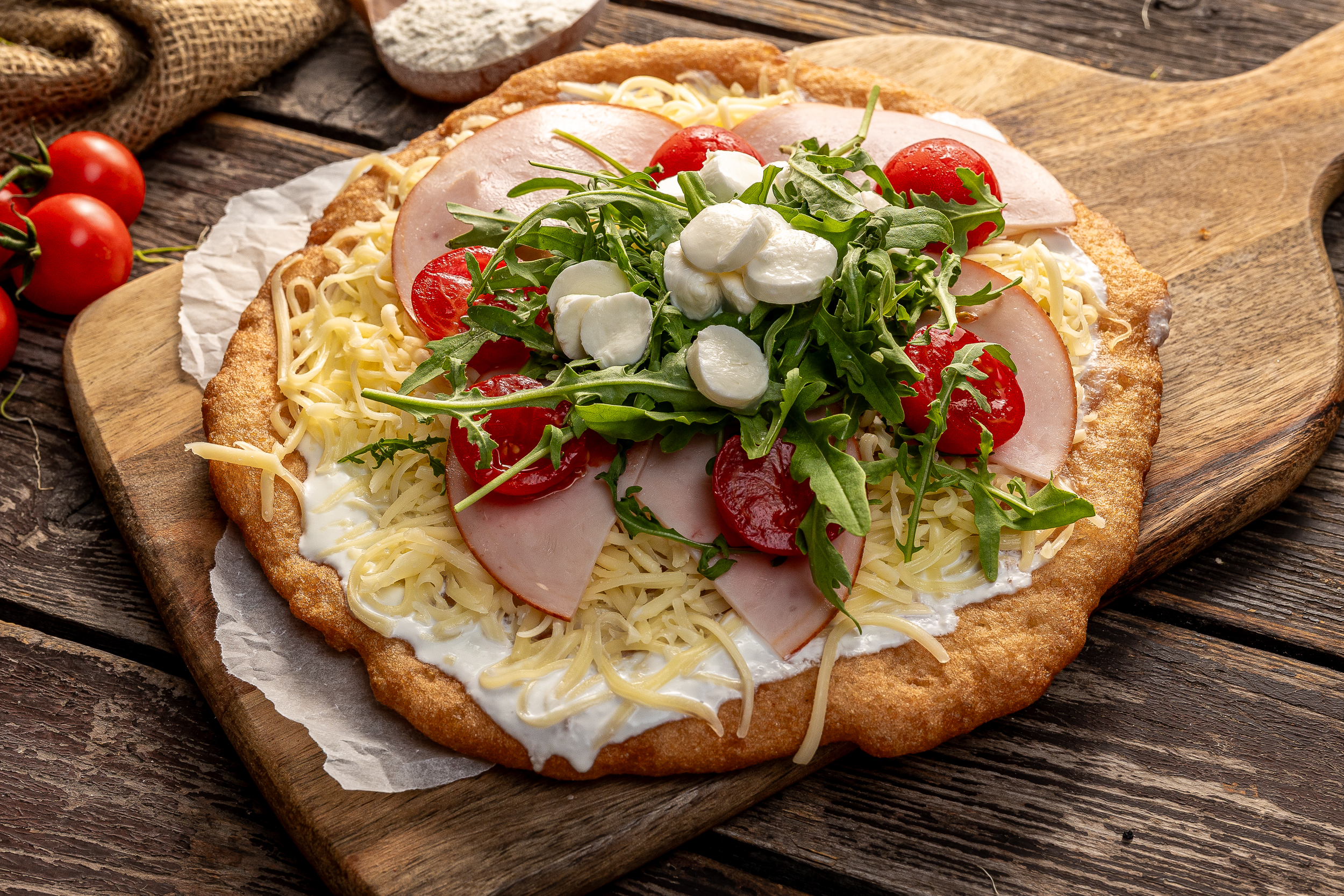
Lángos is one of Hungary’s most famous street foods. This deep-fried flatbread is traditionally made with wheat flour and commonly topped with sour cream, cheese, garlic or sweet ingredients. For gluten-free visitors, it is not enough to find a gluten-free dough option: the frying process and kitchen practices matter just as much. A shared fryer can make a dish unsuitable for people with coeliac disease.
For a memorable Hungarian street-food experience, Retro Lángos Budapest offers traditional, gluten-free and vegan lángos at Bajcsy-Zsilinszky út 25. and Vécsey utca 3. These central locations are convenient for visitors near St. Stephen’s Basilica and the Hungarian Parliament, making them a practical choice for tourists, families and anyone seeking authentic Hungarian flavours. Guests should still communicate their individual dietary needs and ask staff about current preparation procedures.
When ordering gluten-free street food anywhere in Budapest, ask whether the dough is made separately, whether toppings are safe and whether the fryer is dedicated to gluten-free items. This extra conversation is worthwhile, particularly during busy service periods when kitchen processes may change.

Best Areas for Gluten-Free Food in Budapest
Central Budapest is the easiest area for gluten-free dining because it has the widest range of restaurants, cafés and international cuisines. District V, around the Basilica, Parliament and Danube promenade, is particularly convenient for visitors. District VII, the Jewish Quarter, has a lively dining scene with many modern restaurants, while District VI along Andrássy Avenue and near Oktogon offers cafés, brunch spots and accessible transport connections.
Buda also has appealing options, especially around the Castle District, Batthyány Square and the riverside. However, dining choices may be more spread out than on the Pest side. If you are planning a day at Buda Castle, Fisherman’s Bastion or Gellért Hill, bring snacks and research restaurant menus before leaving your accommodation.
- Check online menus for “gluténmentes” labels before visiting.
- Reserve ahead for dinner, especially on weekends and holidays.
- Tell staff about coeliac disease when ordering, not only when paying.
- Keep emergency snacks in your bag for sightseeing days.
- Use map searches for gluten-free bakeries, cafés and health-food stores near your hotel.
Conclusion
Gluten-free Budapest is increasingly welcoming, with better labelling, specialist shops and restaurants that recognise the importance of allergen awareness. By asking the right questions and planning ahead, you can enjoy Hungarian classics, fresh market food and modern dining with confidence. If you are exploring Budapest and want to sample an iconic local snack, visit Retro Lángos Budapest for an authentic lángos experience with gluten-free and vegan options.