Budapest is unusually kind to hungry travellers on a limited budget. A filling lunch can still be found in a market hall, a neighbourhood bakery or a no-frills counter serving dishes that locals recognise immediately. The best cheap eats in Budapest are rarely hidden behind elaborate branding: look for lunchtime queues, handwritten menus, trays of pastries and places where people order quickly before heading back to work.
The city’s affordable food scene runs well beyond the familiar ruin-bar districts. Hungarian comfort food, Balkan grills, Asian canteens, pizza slices and vegetarian kitchens all have a place in a sensible daily food budget. Knowing what to order, and at what time, makes a considerable difference.
Start with Budapest street food classics
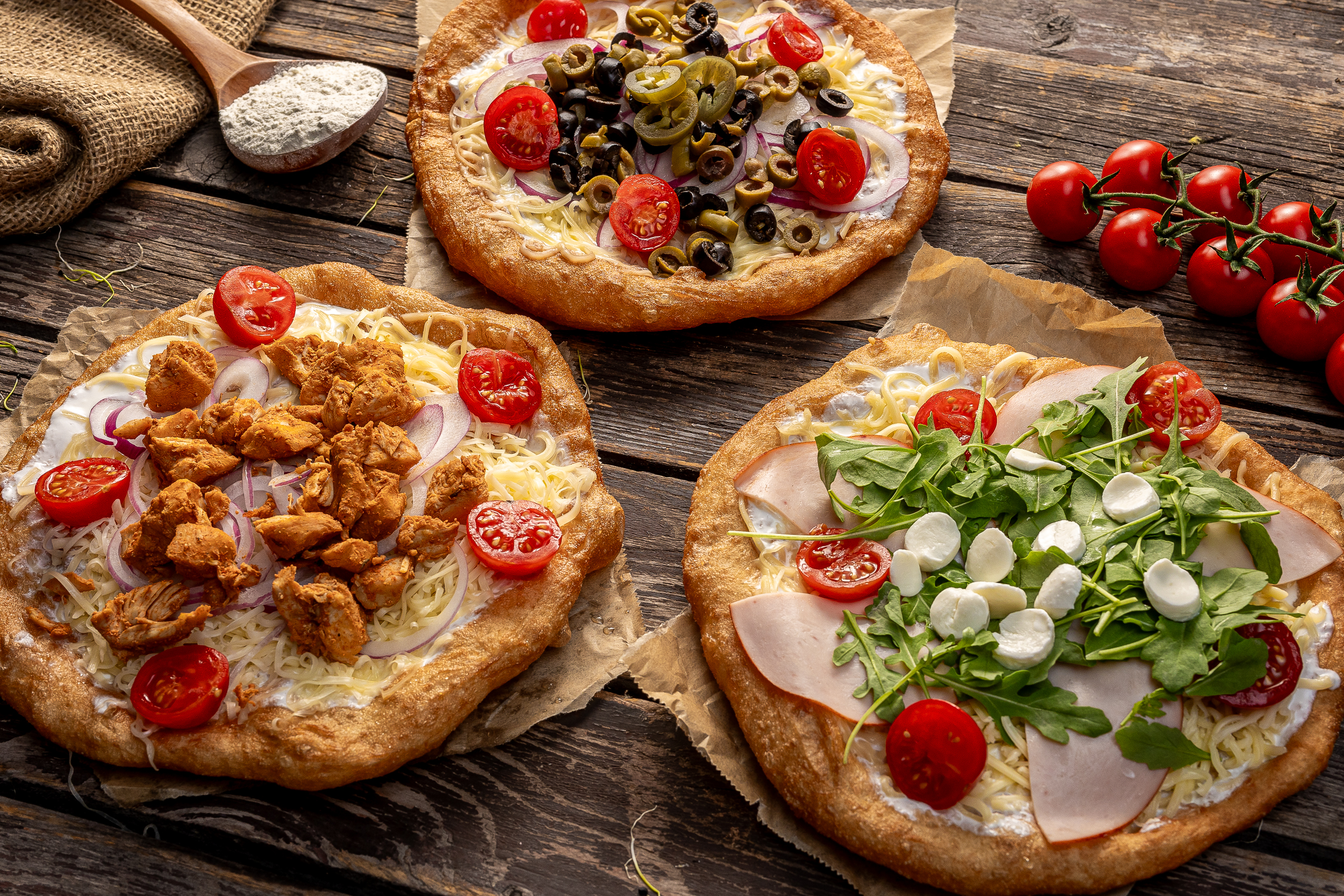
For many visitors, lángos is the essential Hungarian street food experience. The round fried dough is traditionally served with garlic, sour cream and grated cheese, a rich combination that is best treated as a meal rather than a snack. It is inexpensive by central-European capital standards, deeply filling and widely available around markets, food courts and busy pedestrian areas.
For a more central option near major sights, Retro Lángos Budapest has locations at Bajcsy-Zsilinszky út 25. and Vécsey utca 3., close to St. Stephen’s Basilica and the Hungarian Parliament. Alongside traditional versions, it offers gluten-free lángos and vegan, plant-based options, useful for mixed groups who want to try the dish without everyone ordering the same topping.
Other reliable budget choices include kürtőskalács, the chimney cake sold from stalls and bakeries, and pogácsa, a small savoury scone often made with cheese, potato or crackling. Neither replaces a proper lunch, but both are handy for an inexpensive breakfast or an afternoon gap between museum visits. At a bakery, look for savoury pastries rather than the more theatrical tourist-stall versions of familiar snacks.

Market halls for affordable Hungarian lunches
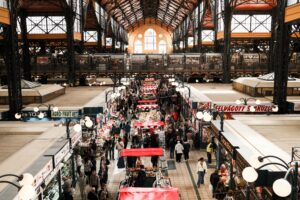
Budapest’s markets are useful because they combine groceries, baked goods and cooked meals under one roof. The Great Market Hall at Fővám tér is the best-known example, and its upper level has counters serving traditional dishes. It can be busy and some stalls are aimed squarely at visitors, yet it remains a practical place to compare options and eat a Hungarian-style lunch without booking a restaurant.
Look for dishes such as goulash soup, stuffed cabbage, chicken paprikash, sausages with mustard and bread, or layered potato casseroles. Portions are often substantial. A bowl of soup with bread can be the smarter order if dinner plans involve a wine bar or a late-night meal later on.
For a less tourist-heavy atmosphere, neighbourhood markets can be worth seeking out, particularly during weekday mornings and lunchtime. Their prepared-food counters tend to serve regular customers, so the offering is often straightforward: soup, stew, roast meat, pickles and pastries. Cash is still useful at smaller stalls, though card payments are increasingly common.
Eat like a local at a kifőzde
A kifőzde is a simple Hungarian canteen or home-style eatery, and it is one of the best answers to the question of where to find cheap eats Budapest visitors can actually rely on. These places generally focus on daily cooking rather than polished presentation. You may see trays of breaded cutlets, vegetable stews, pasta dishes, soups and desserts behind a counter, with a menu changing according to the day.
The useful Hungarian phrase is “napi menü,” meaning daily menu. It commonly involves a soup and main course offered at lunch, often for less than ordering two separate dishes. Arrive before the middle of the afternoon; many canteens are geared toward workers and may close earlier than restaurants in the nightlife districts.
Vegetarian travellers should inspect the menu rather than assume that a vegetable dish is meat-free. Hungarian cooking makes frequent use of pork fat, sausage and meat stock. Meatless options are easier to find in dedicated vegetarian restaurants, Indian eateries and the city’s growing vegan food Budapest scene.
Budget meals beyond Hungarian cooking
Budapest’s inexpensive dining landscape is international, particularly around universities, transport hubs and the inner districts. Gyros, döner, falafel, Vietnamese noodle soup, Chinese cafeteria dishes and Balkan grilled meat are common budget-lunch choices. The quality varies, but busy outlets with a compact menu are usually a better bet than sprawling menus illustrated with dozens of photographs.
Falafel wraps and hummus plates are especially useful for vegetarians looking for a quick meal, while Vietnamese restaurants often provide satisfying bowls of pho or rice noodles without the cost of a sit-down dinner. In Jewish Quarter streets, pizza by the slice and compact Middle Eastern counters can be convenient after an evening drink, though prices in the most heavily visited lanes may be higher than a few blocks away.
A good rule is to step off the main tourist route for five or ten minutes. Streets around Nyugati station, Astoria, Rákóczi út and parts of District VIII often offer better-value lunch counters than the immediately obvious places around Váci utca or the Danube promenade.
Cheap breakfast, coffee and bakery stops
Breakfast does not need to involve a hotel buffet. Hungarian bakeries sell fresh rolls, cheese-filled pastries, sandwiches and sweet baked goods at prices that leave room in the budget for a proper lunch. A simple coffee-and-pastry breakfast is common, but a savoury roll with a yoghurt or fruit can be more sustaining for a day spent walking between Buda Castle, the riverside and central Pest.
Specialty coffee shops are plentiful, especially in central Budapest, but they are not always the cheap option. For lower-cost caffeine, traditional cafés, bakeries and convenience counters can be perfectly adequate. Ask for an espresso or a longer coffee, then save the stylish brunch spot for a day when you actively want the experience rather than simply breakfast.
How to keep food costs low in Budapest
Lunch is usually the best value meal of the day. Restaurants that serve a weekday menu often offer better prices before mid-afternoon, while dinner menus in the same areas can rise sharply. Ordering tap water is less automatic than in some countries, so check whether it is available and whether there is a charge. A bottled soft drink or craft beer can quickly cost as much as an extra side dish.
It also pays to understand portion size. A main course with potatoes, dumplings or bread may be enough for two lighter eaters to share alongside soup or salad. Conversely, a cheap-looking pastry lunch can become expensive if followed by multiple coffees and snacks. The most satisfying budget approach is usually one proper meal, one bakery stop and a few inexpensive bites rather than constant grazing.

Finding good value without chasing the lowest price
The cheapest food is not always the most rewarding food, especially in a city with such a strong everyday cooking culture. Budapest rewards travellers who eat at ordinary hours, notice where office workers are queuing and order dishes that suit the setting. A steaming bowl of soup at a canteen, a paper-wrapped pastry from a bakery or a freshly made lángos can feel far more memorable than a discounted meal designed for tourists.
Build a route around neighbourhoods rather than a checklist of restaurants. Pick up breakfast near your accommodation, use a market or daily menu for lunch, then leave room for street food after sightseeing. That rhythm keeps cheap eats in Budapest varied, practical and closely connected to the city itself.