Budapest viewpoints worth climbing for
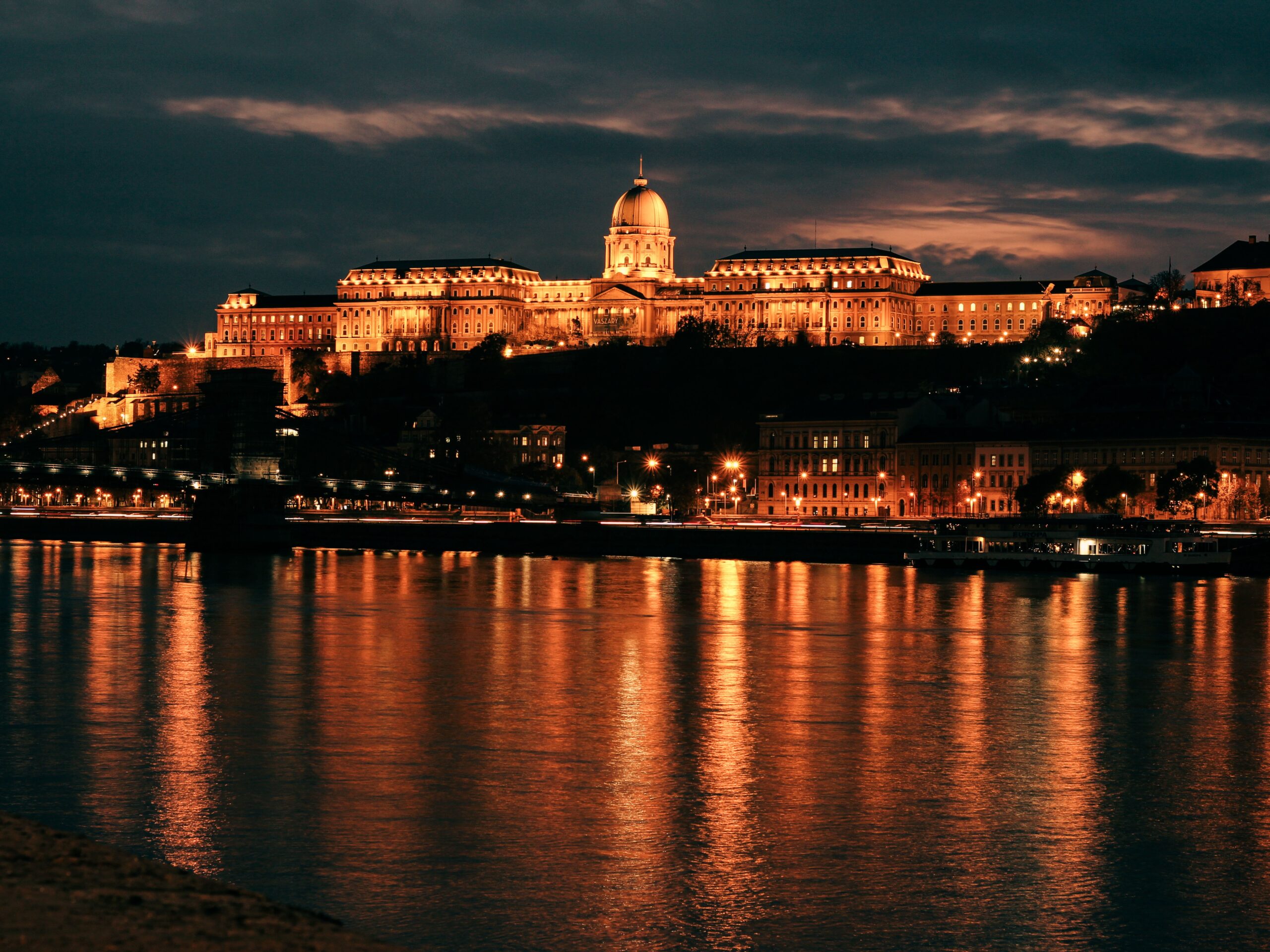
Budapest makes its strongest impression from above. The Danube bends through the middle of the city, joining hilly Buda to flat, densely built Pest; bridges cut across the water, church towers punctuate the skyline, and the Parliament’s long Gothic façade seems designed for distant viewing. The best Budapest viewpoints range from easy riverside terraces to woodland lookouts that require a proper walk, so it is worth choosing according to the light, weather and time you have.
For first-time visitors, the classic panorama is Buda Castle, Fisherman’s Bastion and the river-facing hills. Repeat visitors may prefer quieter places such as Gellért Hill at dawn, the rocky platforms of the Buda Hills or a rooftop bar after dark. A little planning matters: Budapest’s most photogenic views often face west or east, which changes what looks best at sunset.
Before setting out, it helps to get familiar with the city’s districts, transport and terrain. These practical Budapest travel tips for first-time visitors can make a day of climbing, sightseeing and eating considerably smoother.
Fisherman’s Bastion for the classic postcard panorama
Fisherman’s Bastion is among the most recognisable Budapest viewpoints, and for good reason. Its white-stone towers and arcades frame a broad outlook across the Danube toward the Hungarian Parliament, the Chain Bridge and the rooftops of Pest. The terrace sits beside Matthias Church in the Castle District, making it easy to combine with a stroll through Buda’s historic streets.
The upper areas of the bastion can be busier during the middle of the day, particularly in the main travel season. Arrive early if you want space to take photographs without a constant procession of people in the frame. Early morning light works well on the Parliament side of the river, while blue hour gives the city a softer, more theatrical feel as lights begin to appear along the embankment.
Do not rush straight back down after the main terrace. The smaller paths around the Castle District offer changing angles on the bridges and the river, often with fewer people around. This part of Buda is compact enough to explore on foot, though the approach uphill can feel demanding after a full day of walking.
Gellért Hill and the Citadella area
Gellért Hill provides one of the widest views in Budapest. Its high position south of Castle Hill brings the central Danube corridor into a single sweeping scene: the Liberty Bridge, the green slopes around Gellért Baths, the Castle District, the Parliament in the distance and the dense streets of Pest beyond.
The hill is steep, and the routes can involve steps and uneven paths, so sensible shoes are more useful than stylish ones. Start from the Gellért Square side if you want to pair the walk with the Liberty Bridge, or approach from the Elisabeth Bridge side for a more direct route from central Pest. Carry water in warm weather; exposed sections of the climb offer little shade.
The Citadella, a 19th-century fortress, has long been the focal point at the summit, but access arrangements and restoration works can affect which paths and viewpoints are open. Even when particular areas are closed, there are several lookouts on the lower slopes with excellent river views. For sunset, arrive with time to find a safe, comfortable spot rather than scrambling for a railing at the last minute.
Castle Hill’s lesser-known river-facing spots
Beyond Fisherman’s Bastion, Castle Hill rewards slow wandering. The elevated streets behind Buda Castle contain gateways, terraces and quiet corners that reveal Pest in fragments: a bridge tower here, a tram gliding along the Danube there, the dome of St. Stephen’s Basilica on the horizon.
The terraces around Buda Castle are particularly appealing later in the day. Look north for the Parliament and Chain Bridge, or south toward Gellért Hill and the broad river bend. The view has a different character from Fisherman’s Bastion: less decorative, more urban, with the castle’s monumental buildings and courtyards close at hand.
Castle Hill is also an efficient stop for travellers following a compact itinerary. If your time is limited, this one-day Budapest itinerary helps put the major sights into a realistic order without spending half the day crossing the city.
St. Stephen’s Basilica dome for a central city view
For a viewpoint in the middle of Pest, the dome of St. Stephen’s Basilica is hard to beat. Instead of looking across the river at the city, you are inside its central fabric: streets radiate outward, the Parliament stands to the north-west, Buda’s hills rise across the Danube, and the basilica’s own architectural details sit immediately below.
The perspective is especially useful for understanding Budapest’s layout. You can see how close the Basilica is to the river, how the flatness of Pest gives way to Buda’s ridges, and how the grand boulevards and smaller streets form distinct patterns. Opening times and access conditions can change, so check current visitor information before building your day around the climb.
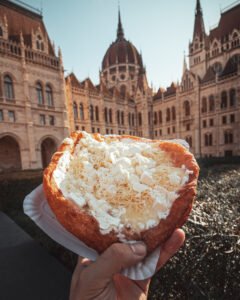
Because the viewpoint is in the city centre, it pairs naturally with a food stop. Retro Lángos Budapest, at Bajcsy-Zsilinszky út 25 and Vécsey utca 3, is close to major central landmarks and serves traditional, gluten-free, vegan and plant-based lángos. It is a convenient option for a filling Hungarian street-food break after the Basilica or before heading toward the Parliament.
Rózsadomb and the Buda Hills for quieter horizons
Travellers who want to leave the central sightseeing circuit behind should head farther into Buda. The Buda Hills offer a more spacious version of Budapest: wooded paths, residential slopes, distant city views and the sense that the capital’s busy core is much farther away than it really is.
János Hill is the best-known destination. The Elizabeth Lookout at its summit commands a broad panorama over the city and surrounding hills, although the centre of Budapest appears more distant than it does from Gellért Hill. The journey is part of the appeal, involving public transport and a walk through greener terrain. It suits a clear day, when the air is sharp enough to make the far skyline legible.
Rózsadomb, meanwhile, offers lower, more intimate viewpoints along quiet streets and parks. These are not formal tourist platforms, and that is their charm. The reward is a lived-in view of Buda’s villas, trees and rooftops, often with the Parliament or Castle Hill appearing unexpectedly between buildings.
Views along the Danube after dark
Budapest at night is best appreciated at river level as well as from above. The illuminated Parliament, Buda Castle and Chain Bridge create a sequence of landmarks that reads clearly from either embankment. The Pest promenade is easy to reach and generally busy, while the Buda side gives a more frontal view of the Parliament across the water.
For a short evening walk, start around the Basilica or Parliament, continue toward the river, and allow time to pause rather than treating the route as a checklist. The skyline changes with every bridge. The city’s night-time atmosphere also extends beyond the riverbanks; for ideas on continuing the evening, see this guide to Budapest nightlife, ruin bars and late-night activities.
A viewpoint need not always mean the highest possible place. In Budapest, the most memorable perspective may be a terrace above the Danube, a hillside bench in Buda, or a riverside stretch where the Parliament catches the last light. Leave room in the schedule for that unplanned pause; it is often when the city’s geography finally makes sense.