Getting Around Budapest by Public Transport
Budapest public transport is one of the easiest and most affordable ways to explore Hungary’s capital. The city has an extensive network of metro lines, trams, buses, trolleybuses, suburban rail services and river boats, making it simple for visitors to reach major attractions, historic districts, thermal baths, restaurants and shopping areas without relying on taxis or rental cars. Whether you are staying in central Pest, crossing the Danube to Buda Castle or heading farther out to see local neighborhoods, public transportation in Budapest is reliable, frequent and visitor-friendly.
The system is operated mainly by BKK, the city’s public transport authority. Tickets and passes are generally valid across most metro, tram, bus and trolleybus routes, allowing travelers to combine different services during a day of sightseeing. Understanding the basics before you arrive can save time, prevent fines and help you enjoy Budapest at a relaxed pace.
Budapest Metro, Trams and Buses
Using the Budapest Metro
The Budapest Metro is fast, efficient and particularly useful for reaching central landmarks. There are four metro lines, identified as M1, M2, M3 and M4. The historic M1 line, also known as the Millennium Underground, is the oldest metro line on continental Europe and is a sightseeing experience in its own right. It runs beneath Andrássy Avenue and connects central Budapest with Heroes’ Square and City Park.
Metro line M2 crosses the city from east to west and is helpful for reaching areas around Keleti Railway Station, Deák Ferenc tér and Széll Kálmán tér. M3 serves a long north-south route through Pest, while M4 links Kelenföld Railway Station with the inner city. Deák Ferenc tér is the main interchange station, where M1, M2 and M3 meet. Stations are clearly marked, and maps are available throughout the network.
Budapest Trams for Scenic Travel
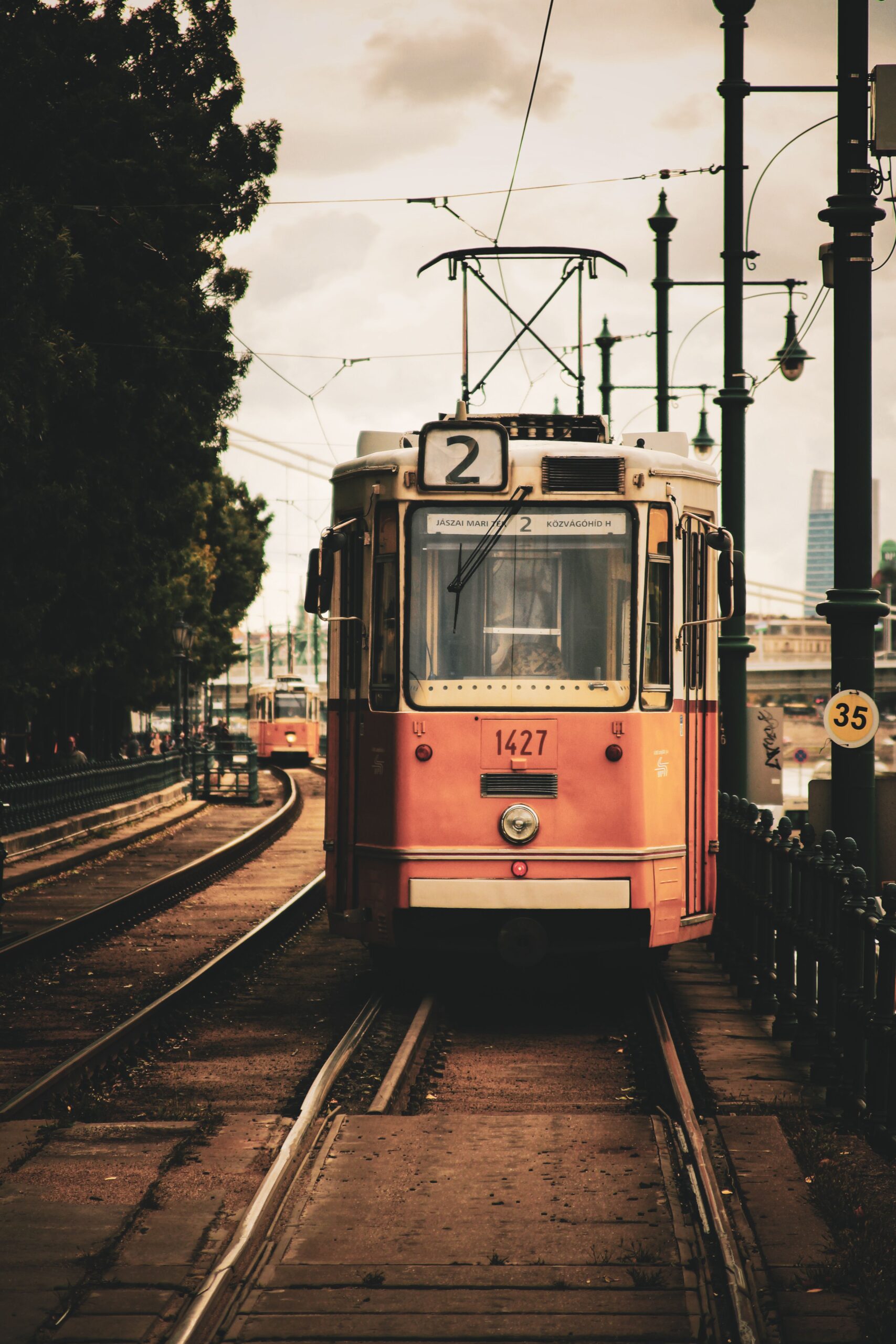
Trams are among the most enjoyable ways to travel around Budapest. Tram 2 is especially popular because it follows the Pest-side Danube embankment, passing views of the Hungarian Parliament, Chain Bridge, Buda Castle and Gellért Hill. Tram 4 and Tram 6 operate along the Grand Boulevard and are excellent for reaching districts with cafés, nightlife, theaters and shopping streets. These two routes run for much of the day and night, making them especially convenient for visitors.
Budapest’s famous yellow trams are easy to spot and often provide a more scenic alternative to underground travel. Always check the route number and destination display before boarding, as several tram lines share tracks in central areas.
Buses and Trolleybuses
Buses fill in the gaps between metro and tram routes, especially on the Buda side, where hills and residential streets make rail transport less practical. Bus 16 is a useful route for travelers visiting Castle Hill, while buses around the city center connect major hotels, stations and cultural attractions. Trolleybuses operate primarily in Pest and are powered by overhead electric lines. They function much like buses and use the same ticketing system.
Night buses are also available after metro and many tram services stop running. These routes are marked with numbers beginning with 9 and can be valuable if you are returning from an evening cruise, ruin bar or late dinner.
Tickets, Passes and Validation Rules
Choosing the right Budapest public transport ticket depends on how long you are staying and how often you plan to travel. Single tickets are suitable for occasional journeys, but most tourists benefit from travel passes. A 24-hour, 72-hour or longer Budapest travel pass can offer excellent value if you plan to use the metro, trams and buses several times per day. The Budapest Card may also be worth considering for visitors who want public transport alongside selected attraction discounts.
Tickets can be purchased from metro station machines, BKK customer service points, some newsstands and the BudapestGO mobile app. Ticket machines typically offer several language options, including English. Digital tickets can be convenient, but make sure you understand activation requirements before beginning your journey.
- Single tickets are generally valid for one uninterrupted journey and usually do not allow transfers between lines.
- Transfer tickets are designed for journeys requiring a change between eligible services.
- Day and multi-day passes allow unlimited travel on most BKK services during their validity period.
- Airport bus tickets may require a separate ticket, depending on the service you use.
Paper tickets must be validated before travel, usually using the small orange machines found at metro entrances or onboard vehicles. On the metro, inspectors may check tickets near escalators and station entrances. Failure to validate a ticket can result in an on-the-spot fine, even if you purchased it correctly. Keep your validated ticket or pass available until the end of your journey.
Traveling from Budapest Airport to the City Center
Budapest Ferenc Liszt International Airport is well connected to the city center by public transportation. The most straightforward option for many visitors is the 100E Airport Express, which travels directly between the airport and central Pest. It stops near key locations such as Kálvin tér, Astoria and Deák Ferenc tér. This service requires a dedicated airport shuttle bus ticket rather than a standard single ticket or regular travel pass.
A more budget-friendly alternative is to take bus 200E from the airport to the Kőbánya-Kispest metro station, then continue on Metro M3 toward central Budapest. This route takes longer and requires a regular ticket or pass arrangement that covers both stages, but it can be a practical choice for travelers watching their spending.
If you arrive late at night, check the current night bus schedule in advance. The BudapestGO app and official BKK journey planner provide real-time route guidance, estimated travel times and information about service changes.
Best Public Transport Routes for Budapest Sightseeing
Budapest’s transport network makes it easy to build an efficient sightseeing itinerary. Start around Deák Ferenc tér for access to the metro system, then walk to St. Stephen’s Basilica, Váci Street or the Danube promenade. Tram 2 is ideal for riverside views, while the M1 metro provides quick access to the Museum of Fine Arts, Széchenyi Thermal Bath and City Park.
For the Buda side, use Metro M2 to Széll Kálmán tér or take a bus toward Castle Hill. Once there, you can explore Fisherman’s Bastion, Matthias Church and the Royal Palace area on foot. The Funicular near Chain Bridge is another memorable way to reach Buda Castle, although it is a separate attraction rather than part of the standard public transport ticket system.
Visitors exploring the area around St. Stephen’s Basilica or the Hungarian Parliament can also stop for a classic Hungarian snack at Retro Lángos Budapest. With locations at Bajcsy-Zsilinszky út 25. and Vécsey utca 3., it offers traditional, gluten-free and vegan lángos options in convenient central locations for tourists, families and street-food lovers.
Practical Tips for Using Public Transport in Budapest
Budapest is generally safe and straightforward to navigate, but a few practical habits will make travel smoother. Download the BudapestGO app before your trip to plan routes, check schedules and receive service updates. Google Maps can also be useful, although official BKK information is often the best source during disruptions or planned maintenance.
- Keep an eye on your belongings during busy rush-hour journeys and at major transport hubs.
- Stand on the right side of metro escalators to allow people in a hurry to pass on the left.
- Use the stop-request button on buses when your stop is approaching.
- Check whether a route is running on a modified schedule during weekends, holidays or late evenings.
- Wear comfortable shoes, as Budapest sightseeing often combines public transport with plenty of walking.
Many central attractions are within walking distance of each other, so the best strategy is often to use public transport for longer connections and explore each neighborhood on foot. This approach lets you discover quiet courtyards, elegant streets, local bakeries and Danube viewpoints that may not appear on a standard sightseeing map.
Conclusion: Explore Budapest with Confidence
Budapest public transport offers an affordable, efficient and scenic way to experience the city’s historic landmarks and everyday local life. With a valid ticket or pass, a route-planning app and a little preparation, you can move easily between Buda and Pest while making the most of your time in the Hungarian capital. If you are exploring Budapest’s central attractions, make time to visit Retro Lángos Budapest for an authentic taste of Hungarian street food between your tram, metro and walking adventures.