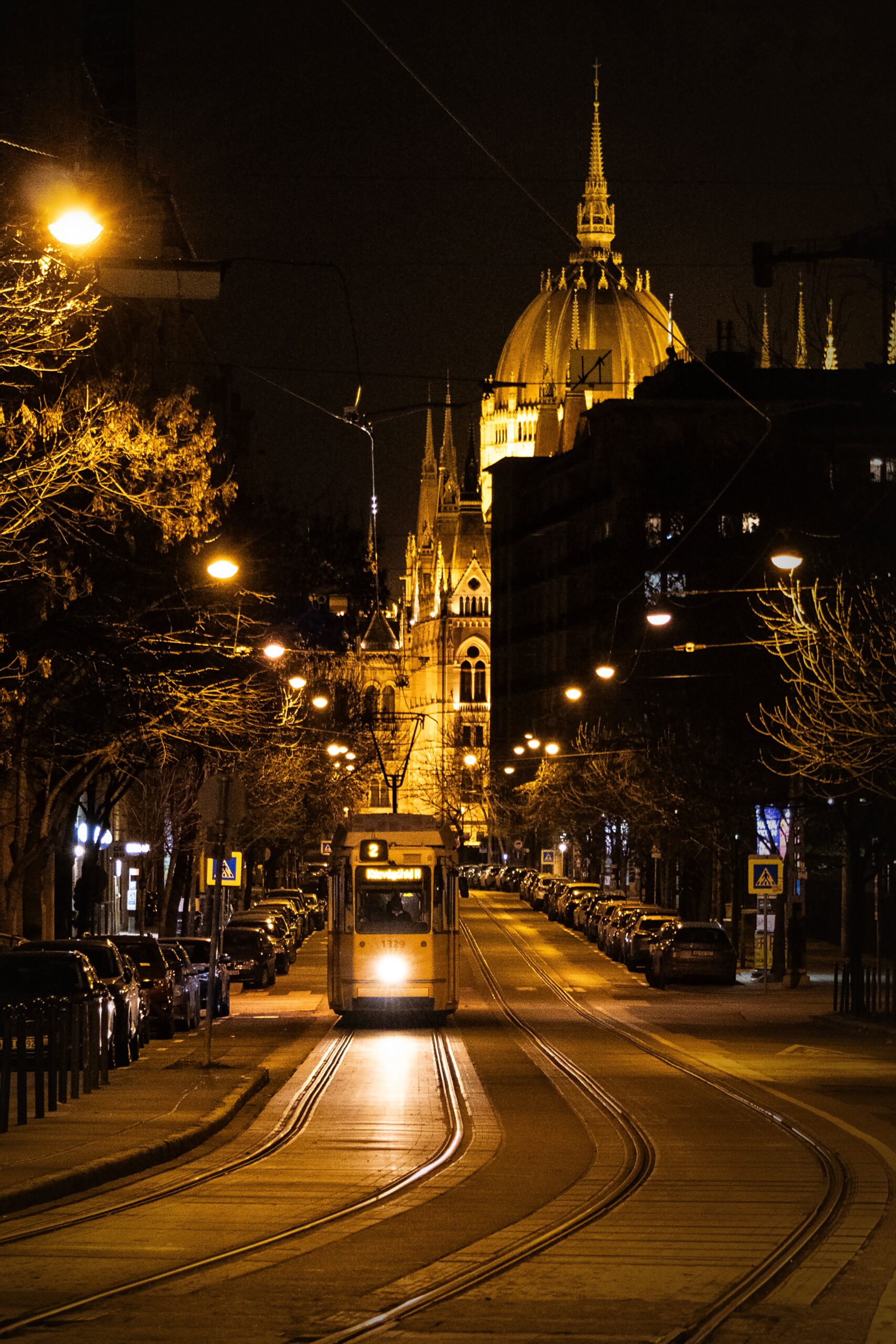
Budapest nightlife after dark
Budapest nightlife has a useful habit of changing character as the evening moves on. Early hours belong to wine bars, pavement tables and long dinners; later, the city’s ruin pubs, basement clubs and Danube-side venues take over. The compact central districts make it easy to build a night around several stops without relying heavily on taxis, while neighbourhoods beyond the obvious party streets offer a calmer, more local pace.
The city is often associated with cheap drinks and crowded bars, but that is only one part of the picture. Budapest rewards a little planning. A thoughtful evening might begin with Hungarian wine near the Basilica, continue with cocktails in the Jewish Quarter and end at a live music venue or club. Those looking for a quieter night can find excellent craft beer, natural wine, jazz and late-night food without joining the queue outside a packed pub.
Start with the classic ruin pub experience
Ruin pubs remain the most recognisable part of Budapest nightlife. These bars developed in formerly neglected buildings and courtyards, particularly in District VII, the old Jewish Quarter. Their appeal lies in their improvised appearance: mismatched furniture, old signs, bicycles, murals, hanging lights and rooms that seem to have been added one at a time.
Szimpla Kert is the best-known example and still worth seeing for first-time visitors, especially early in the evening before the crowds thicken. It is sprawling, eccentric and busy, with multiple bars and a courtyard that feels more like a small indoor-outdoor village than a conventional pub. Nearby, Instant-Fogas Complex offers a more club-oriented version of the district’s nightlife, with dance floors and late hours under one roof.
For a more relaxed ruin-bar atmosphere, look beyond the most photographed addresses. Smaller courtyards and bars around Kazinczy utca, Király utca and Dob utca often have less pressure to perform for visitors. A quick walk around the area reveals the difference between a place designed for a full night out and a bar suited to one unhurried drink.
The Jewish Quarter’s bars and late-night streets
District VII is the practical centre of Budapest nightlife, particularly for groups and short-stay visitors. The streets are dense with bars, restaurants, cocktail lounges and takeaway counters, so there is little need to commit to a single venue. Gozsdu Udvar, a linked courtyard passage between Király utca and Dob utca, is one of the district’s busiest evening corridors. It can feel crowded, but it is an easy place to get your bearings.
The area works best when approached selectively. Start on a side street for a drink, then move toward the louder venues only if that suits the mood. Cocktail bars in the neighbourhood tend to be compact, so reservations can be sensible on Friday and Saturday evenings. Wine-focused bars are a good alternative when the party streets become overwhelming, especially for travellers interested in Hungary’s dry Furmint, Kadarka or fuller-bodied red wines from Villány and Eger.
Noise and foot traffic increase late at night, particularly around the central ruin pubs. If you are staying nearby, expect sound outside at weekends. For many visitors that energy is part of the appeal; for others, it is a reason to choose accommodation closer to the Basilica, Parliament or Buda.
Danube views, rooftops and elegant evenings
Budapest has a more polished side after dark, framed by the Danube, illuminated bridges and the Parliament building across the water. Rooftop bars around St. Stephen’s Basilica and the city centre are especially popular in warmer months. They are better suited to an aperitif or a carefully made cocktail than a budget night out, but the views can justify the higher bill.
For an atmospheric walk between drinks, follow the riverfront on the Pest side after sunset. The Chain Bridge, Buda Castle and Parliament are all dramatically lit, and the route makes a welcome pause between busy venues. Around the Basilica, the mood is generally more composed than in the Jewish Quarter, with hotel bars, wine bars and restaurants attracting couples, business travellers and visitors who want conversation to remain possible.
Summer also brings temporary terraces and open-air events. Check opening times close to your visit, since rooftops, river venues and seasonal gardens can operate differently depending on weather, private functions and local regulations.
Live music, jazz and dancing
Budapest’s music scene stretches well beyond commercial clubs. A38, the converted ship moored on the Danube, is one of the city’s most distinctive concert venues, hosting a changing programme that can include electronic acts, indie bands, rock and experimental music. Its riverside setting gives an ordinary gig night a memorable backdrop.
Jazz clubs and small concert rooms offer a different rhythm. Listings are worth checking in advance, as programmes change frequently and some venues sell out for popular performances. Classical music is another strong option: Budapest’s concert halls, opera and historic churches regularly host evening performances, making a refined alternative to bar-hopping.
Clubbers should pay attention to the event rather than choosing solely by venue. Budapest’s electronic music scene is varied, with techno, house, disco and alternative nights appearing in warehouses, basements and multipurpose cultural spaces. Door policies and ticket arrangements can vary, and cashless payment is common, though carrying a small amount of Hungarian forint remains useful for smaller purchases.
Late-night food between venues
A proper meal before drinking is sensible, but Budapest’s late-night food culture is also part of the experience. Street-food counters, pizza slices, kebab shops and small kitchens around District VII stay useful after restaurants have closed. For a Hungarian option, lángos remains a satisfying answer to the post-bar appetite: hot fried dough with toppings ranging from the traditional sour cream and cheese combination to more substantial vegetable or meat-based versions.
Visitors exploring the centre earlier in the evening can stop at Retro Lángos Budapest, with locations on Bajcsy-Zsilinszky út 25. and Vécsey utca 3., close to St. Stephen’s Basilica and the Hungarian Parliament. Alongside traditional choices, it offers gluten-free lángos plus vegan and plant-based options, useful for mixed groups deciding where to eat before heading out.
Do not assume every kitchen stays open as late as the bar. If food matters, check service hours rather than a venue’s closing time. The last orders at a restaurant may come well before midnight, even in a nightlife district.
Practical advice for a smoother night out
Budapest is highly walkable in the centre, and public transport is often the easiest way to return to a hotel before the final late-night hours. Night buses operate after the metro and trams have finished their regular schedules, while licensed taxis and reputable ride-hailing services are useful when travelling farther out. Avoid unmarked taxis, especially around major tourist areas and transport hubs.
Card payment is widely accepted, though some smaller bars, cloakrooms and food stalls may prefer cash. Keep an eye on the bill before paying, particularly in busy tourist zones, and ask about service charges if they are not clearly listed. Tipping is customary for good service, but an added service fee may already cover it.
As in any major city, stay aware in crowded venues and do not leave drinks unattended. The central nightlife districts are generally active and well populated late into the night, but a little common sense goes a long way. Plan how you will get back, keep your phone charged and save your accommodation address offline.
Finding your own version of Budapest nightlife
The best Budapest nightlife itinerary rarely involves trying to see everything. Choose one lively district, one specific venue or performance, and one food stop that keeps the evening grounded. A Danube walk can be as memorable as a crowded dance floor, while a small wine bar may reveal more of the city’s character than a checklist of famous pubs.
Arrive at popular places early, leave room for detours, and let the city’s different evening moods guide the route. Budapest can be noisy, theatrical and relentlessly social, but it also knows how to do a quiet glass of wine, a late concert and a warm plate of street food exceptionally well.