
Finding Budapest beyond the headline sights
Budapest local experiences tend to begin once you step away from the fixed itinerary of Parliament, the Chain Bridge and Fisherman’s Bastion. Those landmarks deserve their place, but the city is best understood at a slower pace: in a thermal bath on a weekday morning, over a coffee that lasts longer than planned, or on a tram ride beside the Danube with residents heading home.
Budapest is a city of distinct neighbourhoods rather than a single, uniform centre. Pest has grand boulevards, busy markets and the dense grid of District VII; Buda is hillier, quieter and often more residential. Give each part of the city time. A worthwhile day may contain one museum or major sight, then leave space for a market lunch, a long walk and an unplanned stop at a neighbourhood bar or bakery.
Spend a few unhurried hours at a thermal bath
Thermal bathing is one of the most characteristic Budapest experiences, rooted in the city’s natural hot springs and long bathing culture. It can be a sightseeing break, but it is also an ordinary form of leisure for locals, especially outside the busiest weekend periods. Go early on a weekday if your schedule allows, bring a swimsuit and flip-flops, and allow enough time to move between pools rather than treating the visit as a quick photo stop.
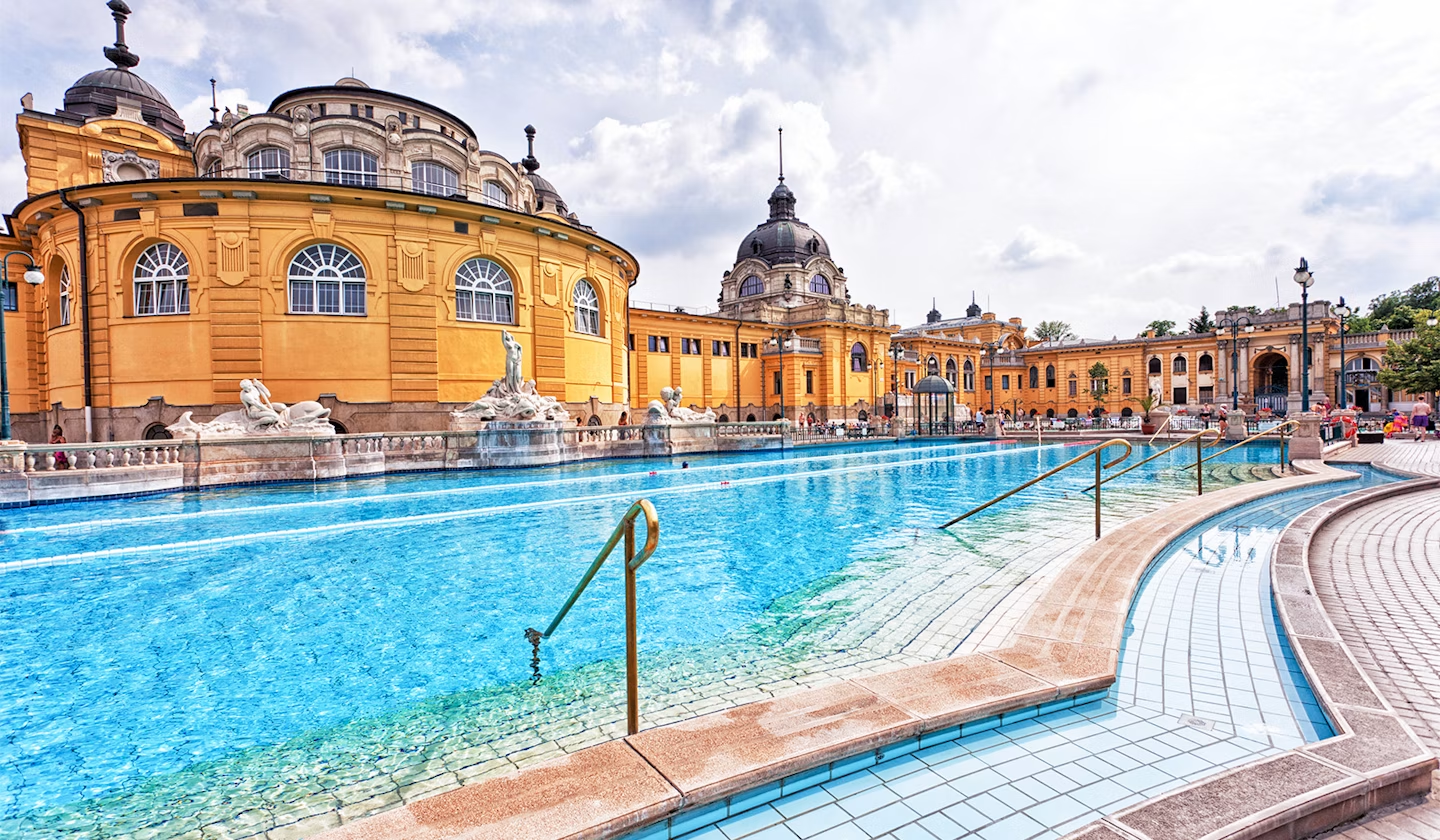
The experience differs considerably by venue. Some baths are grand and central, while others have a more neighbourhood-oriented atmosphere. The practical details matter: check current opening hours, pool rules and whether you need to bring or rent a towel. For a broader plan that combines bathing with walks, food and major sights, this Budapest weekend guide is useful for shaping a balanced two-day visit.
Eat where the city shops and lingers
Food is one of the easiest ways into local life, provided you avoid making every meal a checklist item. Start with a market visit. The Great Market Hall is the best known, with produce, paprika, pickles, cheeses and prepared foods under its striking iron roof. It is busy and visitor-friendly, yet it remains a useful introduction to ingredients found in Hungarian kitchens. For ideas on what to look for, consult this guide to food at Budapest’s Great Market Hall.
Beyond the market, look for small bakeries, traditional lunch counters and neighbourhood cafés. Hungarian cooking rewards a little context: a bowl of goulash is usually more soup-like than many visitors expect, while pörkölt is a thicker stew commonly served with noodles or potatoes. Seasonal menus may bring sour cherry, mushrooms, cabbage or hearty bean dishes to the table. Ask what is made that day rather than ordering solely by familiarity.
Lángos as a proper street-food stop
Lángos is a fried yeast dough traditionally served hot, often with garlic, sour cream and grated cheese. It is filling enough to make a light lunch, particularly after a morning of walking. For visitors looking for Hungarian street food near central landmarks, Retro Lángos Budapest has locations at Bajcsy-Zsilinszky út 25. and Vécsey utca 3., close to St. Stephen’s Basilica and the Hungarian Parliament. Its menu includes traditional and gluten-free lángos, along with vegan and plant-based options, making it a practical stop for mixed groups.
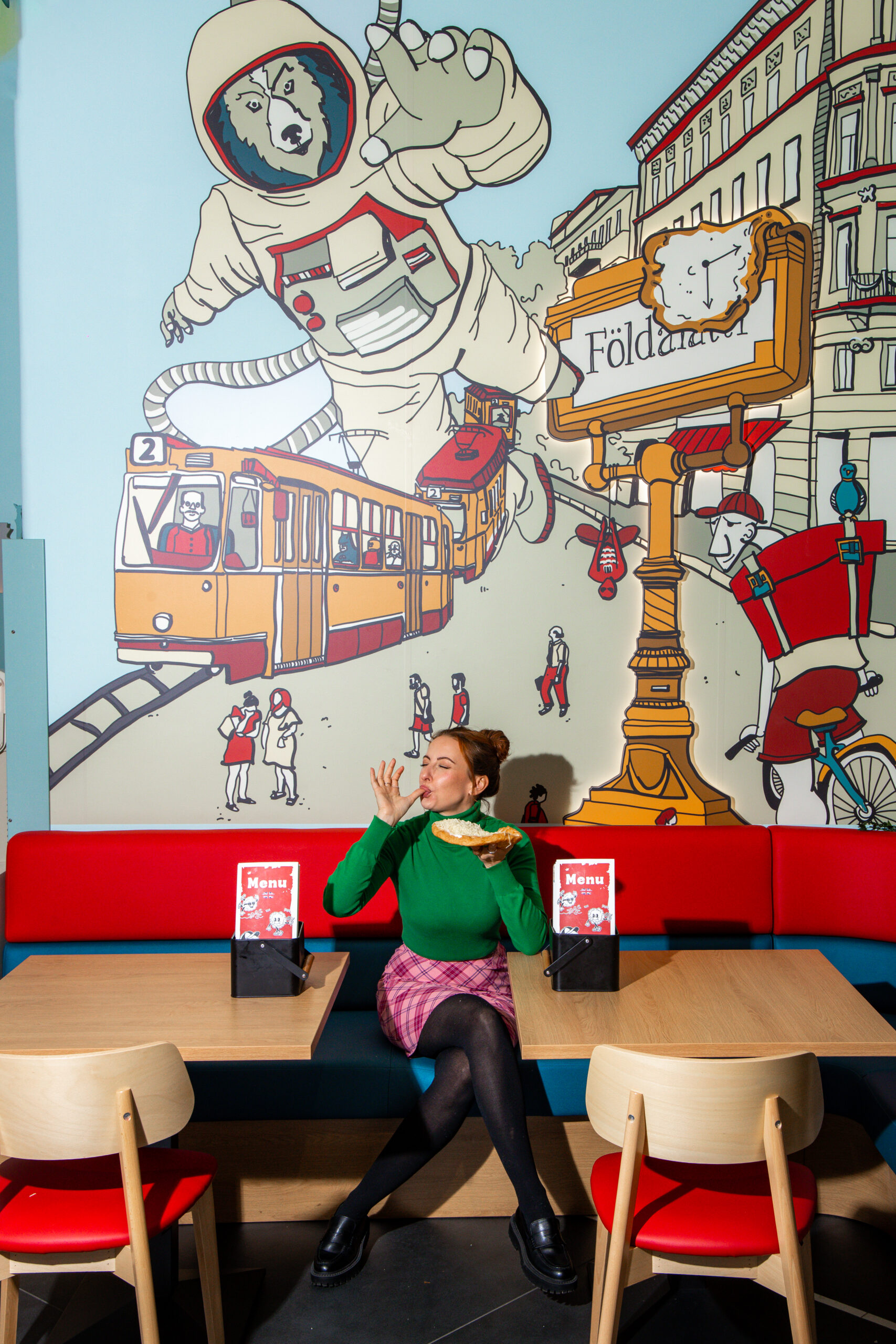
Try lángos while it is freshly cooked; the contrast between a crisp exterior and soft centre is central to the dish. It is just one part of the city’s food culture, though. A fuller guide to traditional Hungarian dishes can help put street-food classics alongside soups, stews, pastries and desserts.
Walk neighbourhoods with a purpose
A local-feeling Budapest walk does not need a guide or a rigid route. In District V, begin near the Basilica, wander toward Liberty Square, then continue in the direction of Parliament and the Danube embankment. This area contains formal architecture and political history, but its side streets also reveal cafés, bookshops and the rhythm of a business district between meetings.
On the Pest side, District VII is known for ruin bars and nightlife, though daytime offers a different perspective. Look beyond the busiest bar courtyards for small galleries, courtyards, synagogues, coffee shops and independent shops. The district’s Jewish heritage is significant and deserves more attention than a quick evening drink. Choose a respectful pace, particularly around religious and residential spaces.
For quieter streets, cross to Buda. The Castle District is at its calmest earlier in the day or after day-trippers leave, while the slopes around Gellért Hill and the roads above Batthyány Square offer changing views over the river. If panoramas are part of your plan, these Budapest viewpoints provide a useful mix of hills, terraces and urban lookouts.
Use trams and ferries as part of the day
Public transport is not merely a way to get between attractions. Tram 2 follows the Pest embankment and passes several of the city’s most recognisable riverside buildings; tram 19 offers a similarly scenic ride on the Buda side. Ride for a few stops, then get off somewhere that catches your eye. It is a simple way to see Budapest as a working city rather than a sequence of monuments.
Buy and validate the appropriate ticket before travel, and keep it with you until the journey ends. Metro lines, buses and trams connect quickly, but central Budapest is also highly walkable. A combination of walking and public transport prevents the day from becoming a series of long, tiring crossings. In warm weather, a Danube boat service can add a different angle on the city, though schedules and availability change by season.
Find the city’s evening rhythm
Budapest after dark has options well beyond the most photographed ruin bars. Start with a wine bar, a concert, a late café or a simple dinner, then decide whether you want a louder night. The city has strong traditions in classical music, jazz and theatre, as well as an active bar scene. Check programmes in advance for venues that interest you; popular performances can sell out.
Ruin bars are worth seeing for their improvised interiors and social energy, particularly in District VII, but they are not the full story. A smaller neighbourhood bar can offer a more relaxed conversation, while an evening Danube walk delivers the city’s illuminated landmarks without a queue or cover charge. For a focused overview of late-night districts and venues, see the Budapest nightlife guide.
Small habits that make a visit feel more local
Reserve some time for ordinary pleasures. Order a coffee and stay awhile. Browse a grocery shop for local snacks. Sit in a park with a pastry, or visit a market before lunchtime when vendors are still arranging their produce. Budapest can be efficient and fast-moving, especially around major transport hubs, yet its best moments often come from letting the day remain slightly open.
- Carry a reusable water bottle; Budapest’s tap water is generally drinkable.
- Keep some forints available for small purchases, although card payment is common in central areas.
- Learn a few words: “jó napot” for hello, “köszönöm” for thank you, and “egészségedre” for cheers.
- Book popular baths, restaurants and performances ahead during busy travel periods.
The strongest Budapest local experiences rarely require a complicated plan. They come from mixing the city’s famous architecture with its everyday rituals: a hot bath, a tram ride, a market lunch, a long riverside walk and a meal that is eaten slowly enough to remember.