Why Budapest Is a Food Lover’s Destination
Budapest is one of Central Europe’s most exciting culinary cities, combining centuries-old Hungarian recipes with creative modern cooking, lively markets, elegant cafés and affordable street food. A Budapest foodie guide should include more than famous goulash: the city rewards curious diners with rich stews, flaky pastries, seasonal wines, spicy sausages and inventive dishes shaped by Hungarian, Jewish, Ottoman, Austrian and Balkan influences.
Whether you are planning a weekend city break or a longer Hungary itinerary, eating your way through Budapest is an essential part of the experience. From traditional restaurants in the historic center to casual food stalls near major landmarks, there are options for every budget, dietary preference and travel style.
Must-Try Traditional Hungarian Foods in Budapest
Hungarian cuisine is known for its comforting, deeply flavored dishes. Paprika, sour cream, onions, pork, potatoes and fresh seasonal produce all appear regularly on local menus. While many recipes are hearty, Budapest also has plenty of lighter soups, vegetable dishes and sweet treats to balance a food-focused day of sightseeing.
Goulash and Hungarian Soups
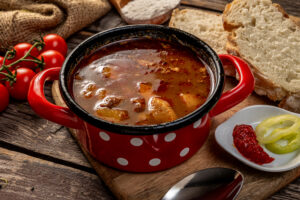
Gulyás, often called Hungarian goulash, is perhaps the country’s best-known dish. In Hungary, it is traditionally a soup rather than the thick stew many visitors expect. It usually contains beef, potatoes, vegetables, caraway seeds and sweet paprika in a fragrant broth. It is a satisfying choice for lunch, especially during cooler weather.
Also look for halászlé, a spicy fisherman’s soup made with freshwater fish and paprika, and Jókai bean soup, a rich bean dish often prepared with smoked meat or sausage. These classics offer a delicious introduction to Hungary’s love of warming, slow-cooked food.
Chicken Paprikash and Hearty Main Courses
Chicken paprikash, or csirkepaprikás, is another essential Budapest food experience. Tender chicken is cooked in a paprika-infused sauce, often finished with sour cream and served with nokedli, small dumplings similar to spaetzle. The dish is creamy, savory and approachable for first-time visitors to Hungarian cuisine.
For a more robust meal, try pörkölt, a thick meat stew commonly made with beef, pork or game. Lecsó is a popular vegetable dish featuring peppers, tomatoes and onions, sometimes enriched with sausage or eggs. These dishes showcase how simple ingredients can become memorable with the right seasoning and slow cooking.
Budapest Street Food You Should Not Miss
Budapest street food is ideal for travelers who want a quick, affordable and authentic meal between sightseeing stops. The city’s casual food culture has grown rapidly in recent years, but traditional favorites remain at the heart of the scene.
Lángos: Hungary’s Iconic Fried Dough
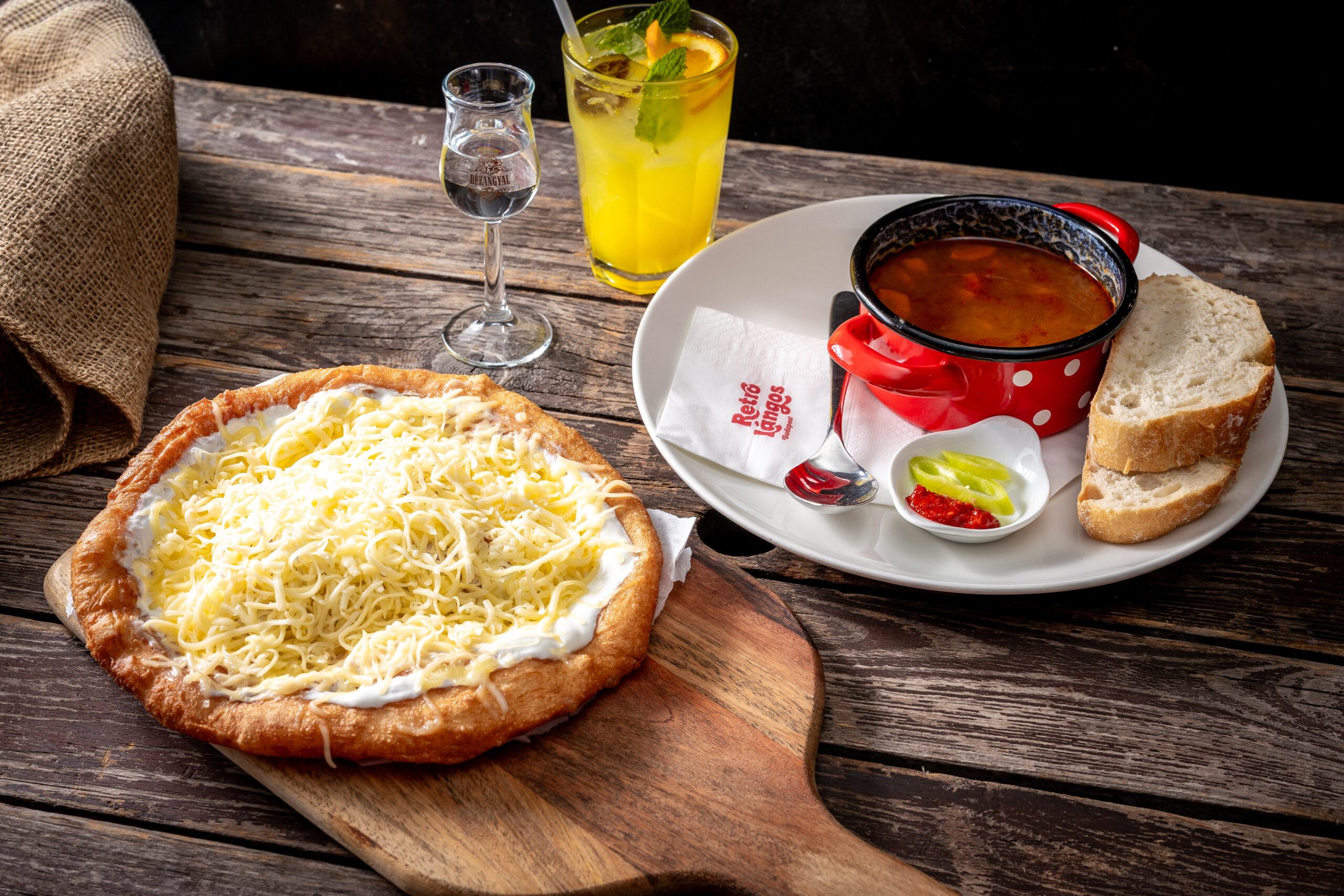
Lángos is one of the most popular Hungarian street foods. This deep-fried flatbread is typically served warm with garlic, sour cream and grated cheese, although modern toppings can include meats, vegetables and sweet combinations. It is filling, indulgent and best enjoyed freshly made.
For an authentic lángos stop near Budapest’s most important sights, Retro Lángos Budapest has locations at Bajcsy-Zsilinszky út 25. and Vécsey utca 3. The venues are close to St. Stephen’s Basilica and the Hungarian Parliament, making them convenient for tourists, families and visitors seeking classic Hungarian street food. In addition to traditional options, the menu includes gluten-free and vegan lángos choices.

Sausages, Chimney Cake and Market Snacks
Hungarian sausages are another excellent snack, particularly varieties seasoned with paprika and served with mustard, pickles or fresh bread. At food markets and festivals, you may also find roasted meats, stuffed cabbage, potato dishes and local cheeses.
For dessert, try kürtőskalács, commonly known as chimney cake. The sweet dough is wrapped around a spit, baked until golden, then rolled in sugar. It can be coated with cinnamon, walnuts, coconut or cocoa, and some vendors fill it with ice cream or cream for a more contemporary version.
Where to Eat in Budapest: Markets, Cafés and Neighborhoods
Budapest’s food scene is spread across both Buda and Pest, although many visitors spend most of their dining time on the Pest side of the Danube. Planning meals around neighborhoods helps you discover the city while avoiding rushed, overly tourist-focused choices.
Great Market Hall and Local Markets
The Great Market Hall, near Liberty Bridge, is one of Budapest’s most recognizable food destinations. Its ground floor is filled with produce, meats, cheeses, spices and preserves, while upper-level stalls often sell ready-to-eat Hungarian dishes and souvenirs. It is a good place to see paprika in its many forms, from sweet powder to spicy paste.
Smaller neighborhood markets can feel more local and are excellent for seasonal fruit, pastries and picnic supplies. Visit in the morning for the widest choice, then take your purchases to a nearby park or along the Danube promenade.
Coffeehouses and Cake Shops
Budapest’s historic coffeehouse culture is as important as its savory food. Grand cafés recall the city’s late nineteenth- and early twentieth-century literary life, while modern specialty coffee shops bring a contemporary edge to the scene. Pair coffee with a slice of Dobos torte, a layered sponge cake with chocolate buttercream and a caramel top, or try Esterházy cake, made with almond meringue layers and rich cream.
Traditional confectioneries are ideal for an afternoon break after visiting museums, baths or riverfront landmarks. Many offer beautiful interiors, table service and a broad selection of cakes, strudels and ice cream.
Tips for Building the Perfect Budapest Food Itinerary
A successful Budapest food itinerary mixes landmark dining experiences with spontaneous discoveries. Start with a market breakfast or pastry, schedule a traditional Hungarian lunch, and leave room for coffee, cake and street food later in the day. Reservations are useful for popular restaurants, especially on weekends and during peak travel months.
- Try one classic Hungarian dish each day, such as goulash, chicken paprikash or pörkölt.
- Visit a market early to sample local ingredients and avoid the busiest hours.
- Order Hungarian wine with dinner, including Tokaj, Egri Bikavér or a crisp dry white from the Balaton region.
- Ask about vegetarian, vegan and gluten-free options, as Budapest’s dining scene is increasingly inclusive.
- Explore beyond major tourist streets for neighborhood bakeries, casual bistros and family-run restaurants.
Hungarian portions can be generous, so sharing dishes is a practical way to taste more. It is also worth carrying some cash for smaller stalls and markets, although card payments are widely accepted throughout central Budapest.
Conclusion: Eat Your Way Through Budapest
From steaming bowls of goulash and creamy chicken paprikash to market snacks, elegant cakes and crispy lángos, Budapest offers a food experience that is comforting, varied and distinctly local. Make time to explore both classic dishes and newer interpretations of Hungarian cooking. If you are exploring Budapest and want an easy taste of a beloved local favorite, visit Retro Lángos Budapest for a memorable street food stop near the city’s major attractions.