How to plan a Budapest food tour that feels local
A good Budapest food tour is built around rhythm rather than a long checklist of famous dishes. Start with a market breakfast, pause for a warm street-food snack while sightseeing, book one proper Hungarian lunch, and leave room for cake and coffee in the afternoon. The city is compact enough for this approach: walkable central districts, historic market halls, grand cafés and casual counters often sit within a short tram or metro ride of one another.
Hungarian cooking is hearty, seasonal and direct. Paprika, sour cream, onions, pork, freshwater fish, poppy seeds and cottage cheese appear again and again, but the food scene is broader than old-school comfort dishes. A well-planned route can include traditional cooking, Jewish-Hungarian baking, contemporary wine bars and vegetarian-friendly street food without turning lunch into a logistical project.
For a useful overview before setting out, consult this Budapest food guide to traditional dishes and local eats. It helps distinguish the foods that genuinely belong on a first visit from the items that are pleasant but less essential.
Start at a market for breakfast and ingredients
Budapest’s markets provide an immediate introduction to the ingredients behind Hungarian cuisine. The Great Market Hall, at the Pest end of Liberty Bridge, is the obvious starting point for many visitors. Its ground floor is best for produce, cured meats, cheese, pickles, paprika and bakery counters; the upper level has cooked food stalls and souvenirs. Go earlier in the day, before sightseeing groups fill the aisles, and treat it as a place to browse as well as eat.
Look for fresh pogácsa, the small savoury scones commonly made with cheese, crackling or potato. A slice of rétes, Hungarian strudel, makes a lighter alternative. Vendors may also sell kolbász, a smoked sausage with a distinctly paprika-led profile, alongside pickled vegetables that cut through its richness.
The Great Market Hall is a practical stop, though it is far from Budapest’s only market. Neighbourhood markets tend to feel more routine and less visitor-oriented, particularly if you want to see local shopping rather than concentrate solely on a meal. This guide to Budapest’s food and local markets is useful for choosing one that suits your route.
Make room for lángos between landmarks
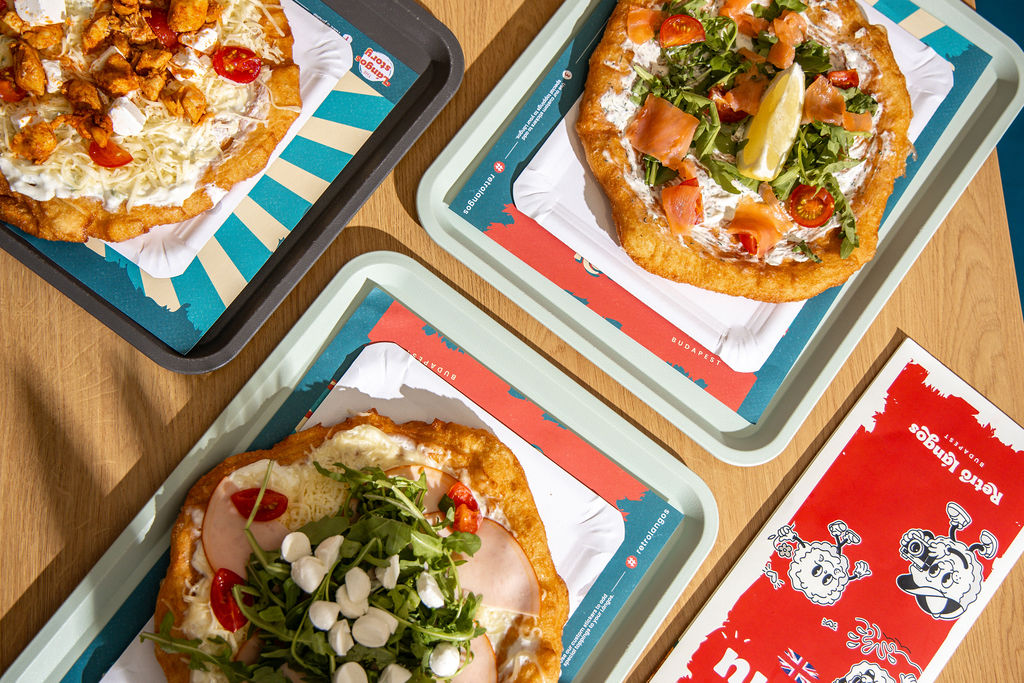
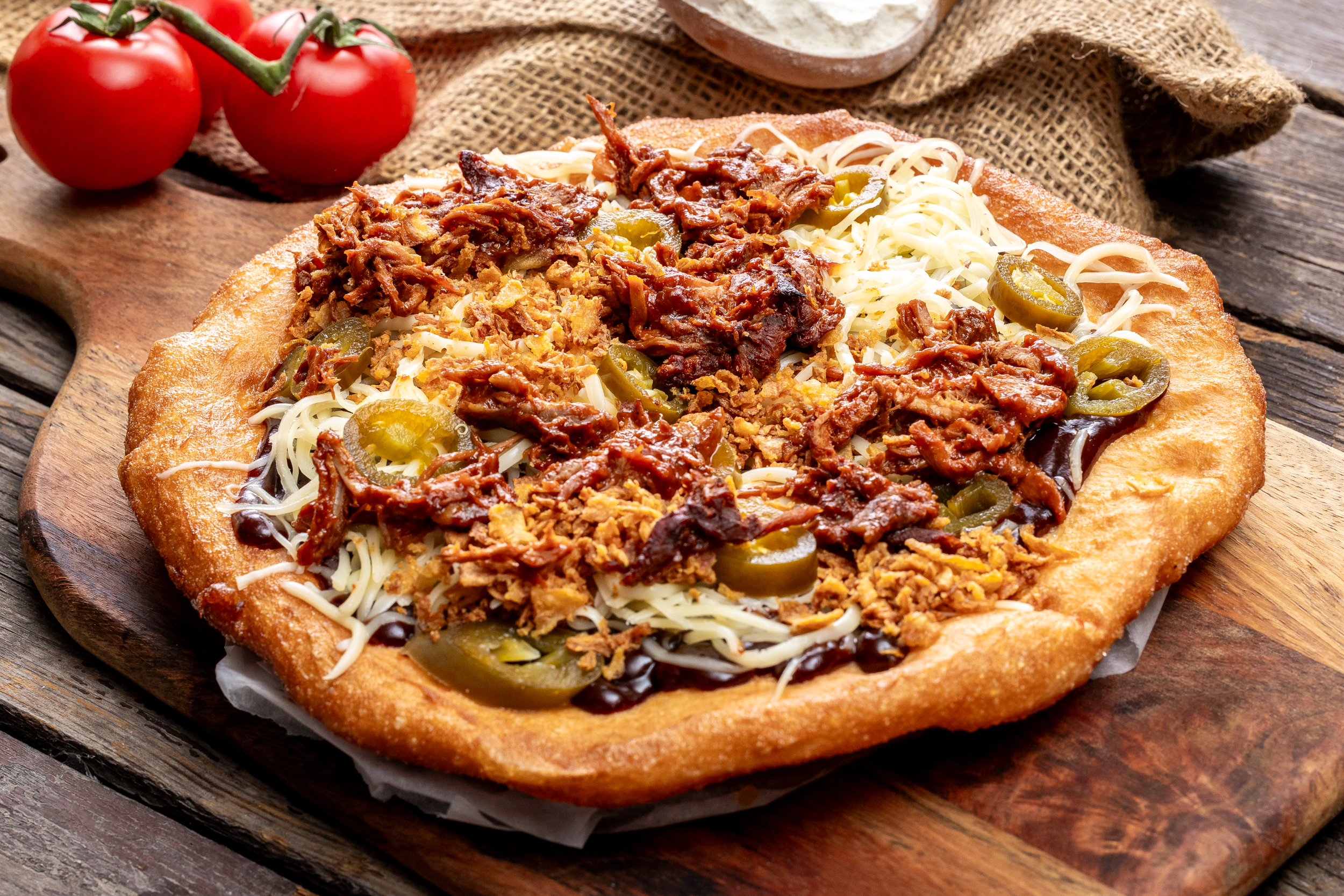
Lángos is one of the defining stops on a Budapest food tour. The basic version is a disc of yeast dough fried until crisp at the edges and tender inside, traditionally finished with garlic, sour cream and grated cheese. It is substantial enough for lunch, so sharing one is sensible if you are planning several stops.
Like pizza or fish and chips, lángos is simple in theory but depends on timing. The best examples arrive hot, with a fresh fried crust rather than one that has been sitting under a heat lamp. Garlic is often applied as a garlicky liquid, so ask for a lighter hand if you are continuing your walk through the city centre.
For visitors exploring St. Stephen’s Basilica or the Parliament area, Retro Lángos Budapest is a convenient choice, with locations at Bajcsy-Zsilinszky út 25. and Vécsey utca 3. Alongside traditional versions, it offers gluten-free lángos and vegan, plant-based options, which can make the stop easier for mixed groups. For more detail on the dish and where to find it, see this guide to eating lángos in Budapest.
Choose one classic Hungarian meal for lunch
A full Hungarian lunch calls for restraint earlier in the day. Gulyás, often called goulash in English, is a soup rather than the thick stew many visitors expect. Beef, vegetables, paprika and caraway give it its unmistakable character, and it is especially satisfying in cooler weather. Pörkölt is the thicker braised meat dish, generally served with nokedli, small soft dumplings, or potatoes.
Chicken paprikash is another classic: chicken cooked in a paprika-rich sauce, usually rounded out with sour cream and served with dumplings. If you see halászlé, or fisherman’s soup, expect a bolder bowl built around river fish and paprika. These dishes reward an unhurried sit-down meal, ideally at a restaurant that makes them to order rather than treating them as permanent displays in a tourist-facing window.
Vegetarian diners should not assume Hungarian cooking begins and ends with meat. Mushroom paprikash, vegetable soups, cheese-filled pasta dishes and seasonal vegetable preparations are widely available, though menus vary considerably. Ask directly about stock, meat drippings and dairy if those matter to you. A broader list of traditional Hungarian dishes to try can help you decide what to order before arriving at the table.
Follow lunch with coffee and cake
Budapest’s café culture provides a natural change of pace after a heavy lunch. Historic coffeehouses are worth visiting for their interiors and sense of occasion, but a smaller neighbourhood confectionery can be just as rewarding for pastries. Order coffee, sit down, and choose one cake rather than trying to sample an entire display case.
Dobos torta is the best-known option: layers of sponge and chocolate buttercream topped with a sheet of caramel. Esterházy torta is a nut-based confection with a recognisable patterned icing. For something less formal, try a slice of flódni, the dense Jewish-Hungarian layered pastry made with fillings such as poppy seed, walnut, apple and plum jam.
Kürtőskalács, often called chimney cake, is another popular sweet, though it is traditionally associated with Transylvania rather than Budapest itself. Its spiral of dough is roasted on a rotating cylinder and rolled in sugar. Buy it where it is made in small batches; the exterior should be warm and caramelised, with a soft interior.

Build your route around neighbourhoods
Trying to cross Budapest repeatedly for individual dishes wastes time and appetite. In central Pest, a food-focused walk can move comfortably between the Great Market Hall, the Jewish Quarter, the Basilica district and the Danube promenade. The Jewish Quarter is especially useful for bakeries, casual restaurants, wine bars and late-night eating, while the area around Parliament offers an easy combination of architecture and a street-food stop.
On the Buda side, a route around Castle Hill pairs better with cafés and a leisurely lunch than with a tightly packed tasting schedule. The hills, viewpoints and cobbled streets make eating slowly feel appropriate. If your itinerary includes long walks, a lighter breakfast and an early lunch will serve you better than several fried snacks in succession.
- Eat market food in the morning, when stalls are most active.
- Schedule your main cooked meal around midday, then walk afterward.
- Share rich dishes such as lángos and cake to preserve room for later stops.
- Check opening times, especially on Sundays, Mondays and public holidays.
What to drink on a Budapest food tour
Wine is the natural companion to a Hungarian meal. Dry Furmint, associated with the Tokaj region, is a good introduction for white-wine drinkers; it can be mineral, brisk and more versatile with food than its fame as the grape behind sweet Tokaji might suggest. Hungary also produces serious reds, including Kékfrankos and Bikavér blends, but ask restaurant staff for a glass that suits the dish rather than ordering by reputation.
For something casual, try fröccs: wine mixed with soda water in proportions that have their own names. It is particularly suited to warm days and outdoor tables. Unicum, the dark herbal bitter, is usually served as an aperitif or digestif and has a far more assertive flavour than many first-time drinkers expect. Coffee, mineral water and fruit syrups are equally familiar parts of the table.
Eat with curiosity, not a rigid scorecard
The strongest Budapest food tours leave space for an unplanned stop: a bakery scent on a side street, a daily lunch menu, a wine bar recommended by a server. Prioritise a few essentials—market browsing, lángos, a proper paprika-based dish and cake—then let the neighbourhood determine the rest. Budapest is best tasted in portions, with time between them to notice the city around you.