How to eat well in Budapest
A good Budapest food guide starts with an appetite for contrast. The city’s cooking moves easily between serious restaurant kitchens, century-old coffeehouses, practical market counters and late-night street-food windows. Hungarian food is often described as hearty, which is true, but that shorthand misses the finesse of a well-made soup, the sharpness of pickled vegetables, the importance of seasonal fruit and the deep pastry tradition shaped by Austro-Hungarian history.
For first-time visitors, the best approach is to mix classic dishes with the kinds of everyday meals Budapest residents actually seek out: a bowl of soup at lunch, a flaky pogácsa with coffee, a plate of grilled sausage at a market and a late-afternoon slice of cake. Reservations are wise for popular restaurants, particularly on Friday and Saturday evenings, but some of the city’s most satisfying food comes without a tablecloth.
Hungarian dishes worth ordering
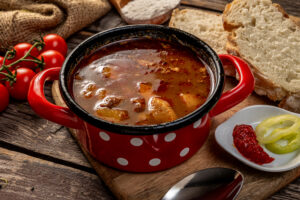
Gulyás, often called goulash outside Hungary, is the dish most visitors recognize. In Budapest, it is generally served as a soup rather than the thick stew many travellers expect. Its base is beef, onions, paprika and vegetables, and a good version should taste rounded and savoury rather than aggressively spicy. It is a sensible lunch choice, especially in cooler weather.
Pörkölt is closer to the stew imagined by many foreign diners: meat slowly cooked with onions and paprika, often served with nokedli, small dumplings similar to spaetzle. Paprikás csirke, or chicken paprikash, uses a creamy paprika sauce and is another reliable introduction to Hungarian home-style cooking. Ask for cucumber salad alongside rich mains; its lightly sweetened, vinegary dressing provides needed brightness.
Other dishes to look for include halászlé, a vivid fish soup associated with Hungary’s river regions; töltött káposzta, cabbage leaves filled with meat and rice; and főzelék, a thick vegetable preparation that falls somewhere between soup, stew and side dish. Főzelék is especially useful for diners wanting a less meat-heavy taste of traditional Hungarian food.
- Lecsó: a summer dish of peppers, tomatoes and onions, sometimes enriched with sausage or egg.
- Hortobágyi palacsinta: savoury pancakes filled with meat and covered in paprika sauce.
- Rakott krumpli: layered potatoes, egg and sausage, usually served as comforting family-style fare.
- Libamáj: goose liver, an important ingredient in Hungarian cuisine and often found on more formal menus.
Markets, bakeries and casual Budapest food
Budapest’s markets offer a quick education in local ingredients. The Great Market Hall at the Pest end of Liberty Bridge is the best-known option, with paprika, cured meats, cheeses, preserves and produce downstairs, plus prepared food stalls above. It can be crowded and tourist-focused, but it remains useful for a first look at the ingredients behind Hungarian cooking. Go earlier in the day for a calmer browse.
For a more everyday rhythm, explore neighbourhood bakeries and smaller markets. Look for pogácsa, the savoury, often cheese-topped biscuit served warm or at room temperature, and kifli, a soft crescent roll that works well for breakfast. Hungarian bakeries also excel at yeast cakes, strudels and poppy-seed pastries. Mák, or poppy seed, appears frequently in local desserts and may be much more prominent than visitors expect.
Street food in Budapest extends beyond the famous dishes. Sausages, roasted meats, sandwiches and fried snacks are common around markets and busy central streets. Quality varies, so choose stalls with a visible turnover of local customers and food being prepared in small batches. A concise menu can be a good sign; it usually means the kitchen has a clear focus.
Lángos and the city’s essential street-food stop
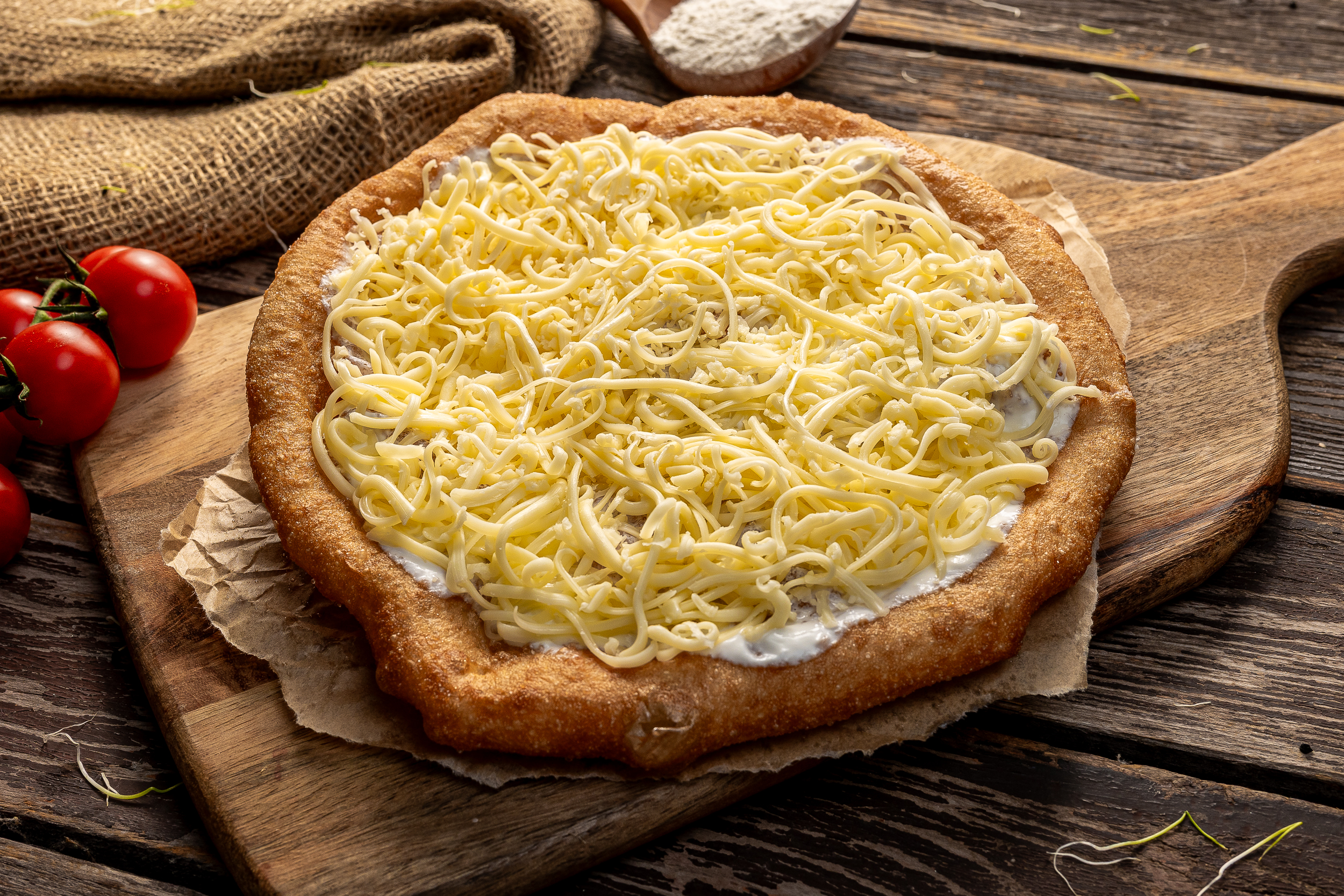
Lángos is Budapest’s most recognisable street-food indulgence: a disc of fried yeast dough, traditionally rubbed with garlic and topped with sour cream and grated cheese. It is best eaten immediately, while the edges are crisp and the centre remains warm and chewy. Versions with sausage, mushrooms, vegetables or sweet toppings are widely available, though the classic garlic-sour-cream-cheese combination remains the benchmark.
For a central option, Retro Lángos Budapest serves traditional and gluten-free lángos, alongside vegan and plant-based choices. Its locations at Bajcsy-Zsilinszky út 25. and Vécsey utca 3. are convenient for visitors near St. Stephen’s Basilica and the Hungarian Parliament. That makes it a practical stop for families and travellers fitting Hungarian street food between major sights, rather than treating lángos as a meal that requires a detour.
Lángos is filling enough to share, particularly if lunch or dinner is still ahead. It also pairs well with a cold drink and a walk rather than a formal restaurant schedule. The key is timing: fried dough loses its appeal quickly once it cools, so eat it at the counter, on a nearby bench or while it is still fresh from the fryer.

Coffeehouses, cakes and sweet Hungarian traditions
Budapest’s coffeehouse culture deserves as much attention as its savoury food. Historic cafés are part of the city’s social fabric, although the grandest rooms can be busy at peak times. Their appeal lies in the ritual: coffee, mineral water, a slice of cake and enough time to linger. For a less ceremonial stop, modern specialty coffee shops and neighbourhood confectioneries are spread across both Buda and Pest.
Dobos torta is the cake most closely associated with Budapest: layered sponge, chocolate buttercream and a glossy caramel top. Eszterházy torta, made with nut-based layers and a distinctive icing pattern, is another classic. Then there is kürtőskalács, chimney cake, a spiralled sweet dough baked over heat and rolled in sugar. Though strongly associated with Transylvanian Hungarian tradition, it has become a familiar Budapest snack.
Try rétes, Hungarian strudel, for a lighter pastry experience. Fillings can include apple, sour cherry, cottage cheese or poppy seed. Somlói galuska, a layered dessert of sponge cake, cream, chocolate sauce and walnuts, is richer and best shared after a modest main course.
Vegetarian and vegan food in Budapest
Budapest has become easier to navigate for vegetarian and vegan diners, particularly in the central districts. Dedicated vegan food Budapest options range from plant-based cafés and international comfort food to modern Hungarian-inspired cooking. Traditional menus can still lean heavily toward meat, but soups, mushroom dishes, cheese-filled pastries, salads and vegetable sides provide useful openings.
It helps to know a few menu words. “Húsmentes” means meat-free, while “vegán” indicates vegan. “Tejföl” is sour cream and appears frequently, including on lángos, so it is worth confirming toppings rather than assuming a vegetable dish is dairy-free. A vegan lángos can be a particularly satisfying answer for travellers who want the classic fried dough experience without sour cream or cheese.
Seasonal produce is strongest in late spring through early autumn, when peppers, tomatoes, cherries, apricots and stone fruit show up more often on menus and at market stalls. In winter, hearty bean soups, potato dishes and cabbage-based meals make Budapest surprisingly accommodating for plant-based eating, provided diners check broths and garnishes.

Choosing where to eat by neighbourhood
District V, around the Basilica, Parliament and the Danube, is convenient for polished restaurants, cafés and quick lunches between sightseeing stops. It is also where visitors need to be most selective: read menus carefully, compare prices and avoid places relying on photographs of every dish rather than clear cooking.
The Jewish Quarter and surrounding District VII offer a busier evening food scene, with casual restaurants, wine bars, bakeries and international choices alongside Hungarian kitchens. District IX, near the Great Market Hall and along Ráday Street, has a more local, student-friendly energy. On the Buda side, neighbourhoods near the castle and around Bartók Béla Boulevard reward travellers willing to step away from the central tourist routes.
A memorable Budapest meal does not need to be elaborate. Order a bowl of gulyás at midday, pause for coffee and cake, then save room for a hot lángos after a walk along the river. That combination captures the city better than chasing a single “best” restaurant ever could.