Eating at Budapest’s Great Market Hall
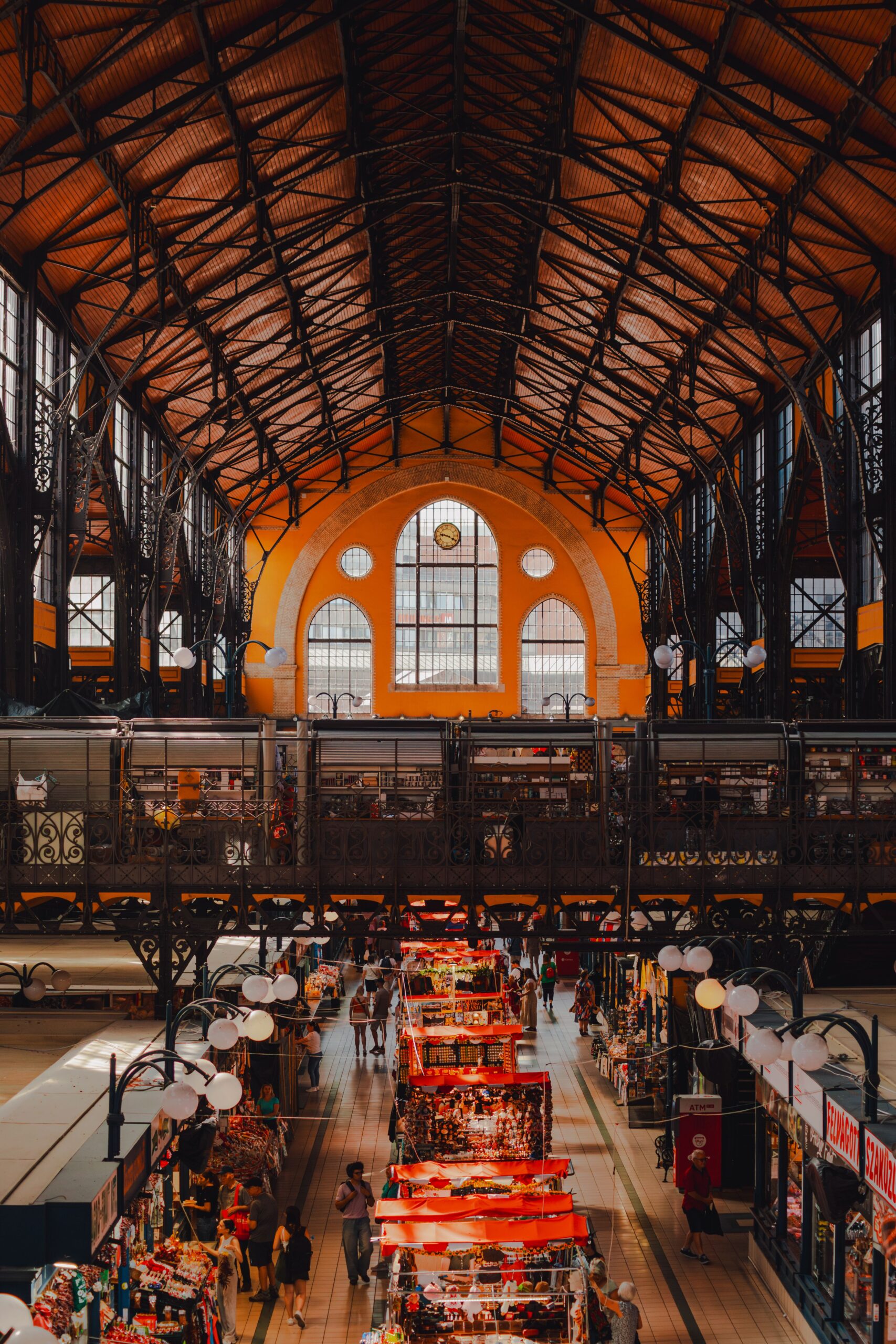
Budapest’s Great Market Hall, known locally as the Central Market Hall or Vásárcsarnok, is one of the city’s most recognisable food stops. Its vast red-and-yellow tiled roof sits at the Pest end of Liberty Bridge, a short walk from Váci Street and the Danube. Inside, the grand iron-framed building is busy with shoppers, visitors, market traders and the particular mix of aromas that defines a working food market: paprika, smoked sausage, fresh bread, pickles, fruit and warm pastry.
For travellers searching for Great Market Hall food, the appeal is straightforward. It is a practical place to see ingredients central to Hungarian cooking, pick up edible souvenirs and try a few classic dishes without planning a formal restaurant meal. The experience can be lively and crowded, especially around lunchtime, but that is part of its character.
The market is also a useful starting point for understanding the wider food culture of the city. For a broader look at places to eat, local dishes and neighbourhood favourites, consult this Budapest food guide before building your itinerary.
What to expect inside the market hall
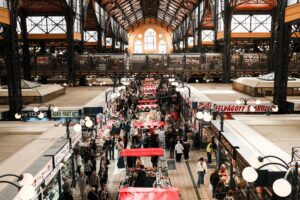
The Great Market Hall is organised across several levels. The ground floor is the strongest choice for market shopping: fruit and vegetables, meat counters, cheese, bread, spices, preserves and other pantry staples fill much of the space. It is the level that feels most connected to daily Budapest life, particularly earlier in the day, when locals come through for ingredients.
Upstairs, the atmosphere shifts towards prepared food, souvenir stalls and casual seating. This is where many visitors go for a quick Hungarian lunch. The upper gallery can be noisy, with limited room to move at busy times, but it gives a clear view over the central hall and its elaborate roof structure.
It helps to arrive with modest expectations. The Great Market Hall is a major tourist landmark as well as a functioning market, so some stalls are geared heavily towards visitors. The best approach is to browse first, compare what is on offer and choose food that is freshly prepared and served hot. A market meal is usually best treated as an informal stop between sightseeing rather than a leisurely, multi-course dining experience.
Classic Hungarian food to look for
The hall offers a useful introduction to the flavours that recur across Hungarian kitchens. Paprika appears in many forms, including sweet and hot ground powder, strings of dried peppers and spice blends. You will also see jars of pickles, honey, jam, fruit brandy, cured meats and cheeses. These are easy souvenirs, though anyone flying should check airline and customs rules before packing liquids or meat products.
For food to eat immediately, several Hungarian staples are worth seeking out.
- Lángos: fried yeast dough, usually served savoury with garlic, sour cream and grated cheese. It is filling, rich and best eaten fresh while the outside is crisp.
- Kolbász: Hungarian sausage, often seasoned with paprika and served grilled or alongside bread and mustard.
- Stuffed cabbage: cabbage leaves filled with a meat-and-rice mixture, commonly served with a tangy, hearty sauce.
- Goulash: a paprika-led soup or stew that varies considerably by kitchen; market versions are often designed for a warming, quick lunch.
- Strudel: thin pastry wrapped around fillings such as apple, sour cherry, poppy seed or cottage cheese.
Visitors sometimes expect every Hungarian dish to be fiery. In reality, paprika often brings sweetness, colour and warmth rather than overwhelming heat. If you prefer mild food, ask before ordering; if you enjoy spice, look for hot paprika or ask whether a dish is csípős, the Hungarian word for spicy.
Lángos at the Great Market Hall and beyond
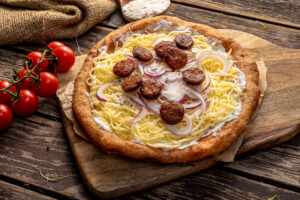
Lángos is among the foods most closely associated with a Budapest market visit. The dough is stretched or rolled into a flat round, fried until golden, then finished with toppings. The traditional garlic, sour cream and cheese combination remains the essential order for first-timers: garlicky, salty, creamy and satisfyingly messy. More elaborate versions can include meat, vegetables or other toppings, but the classic is a good benchmark.
At the Great Market Hall, lángos can be a convenient lunch, particularly if you are exploring the nearby riverside, the Hungarian National Museum or the central streets of District V. Those who want to make a more focused street-food stop later in the day can also explore where to eat lángos in Budapest.
Retro Lángos Budapest is a useful option for visitors spending time around St. Stephen’s Basilica or the Hungarian Parliament. Its locations at Bajcsy-Zsilinszky út 25. and Vécsey utca 3. serve traditional and gluten-free lángos, with vegan and plant-based choices available too. That range can be particularly helpful for groups with different dietary needs, since market stalls may have more limited options.
Shopping for Hungarian ingredients and souvenirs
The market is as good for browsing ingredients as it is for lunch. Paprika is the obvious purchase, but it is worth looking beyond the familiar red tins. Hungarian cooks use different grades and styles, including sweet and hot varieties, and a small packet is easier to carry than fragile jars. Dried mushrooms, fruit preserves, honey, seeds and spice mixes also travel well.
Salami and smoked sausage are another popular choice, although they require some practical thought. Packaged goods are simpler than fresh products, and non-EU travellers should check what food can be brought home. The same applies to pálinka, Hungary’s fruit brandy: it is a distinctive souvenir, but liquids have to be packed in checked luggage if you are flying with only cabin baggage restrictions.
Buying raw ingredients makes the market more rewarding for travellers who are staying in an apartment with a kitchen. Fresh seasonal produce, bread, cheese and cured meats can turn a simple evening meal into a small Hungarian picnic. For context on dishes you may spot on menus elsewhere in the city, this guide to traditional Hungarian dishes is a helpful companion.
Practical tips for a better food visit
Go earlier if you want to browse rather than queue. Mornings tend to be better for produce and a calmer look around the ground floor, while the lunch period brings the greatest pressure upstairs. The hall can become especially crowded during weekends and high tourist season, so allow time if you are trying to fit it between timed attractions.
Bring a little cash alongside a card. Payment practices differ by stall, and having Hungarian forints can make small purchases easier. It is also sensible to carry water, particularly after a salty sausage or a large lángos, and to keep bags close in dense crowds as you would in any busy market.
If you are gluten-free, vegan or managing allergies, ask direct questions about ingredients and preparation. Traditional Hungarian food frequently uses wheat flour, dairy, eggs and meat, while fried foods may share equipment. The city has become easier to navigate for dietary needs, and this guide to gluten-free food in Budapest can help with planning beyond the market hall.
Making the market part of a Budapest food day
The Great Market Hall works well at the beginning of a south-central Budapest walk. Start with coffee and a pastry nearby, browse the hall, then cross Liberty Bridge towards Gellért Hill or continue north along the Danube. Alternatively, pair the market with the National Museum and the cafés around Kálvin Square. It is an efficient stop because it combines architecture, shopping and a taste of Hungarian food in one building.
Do not feel obliged to eat a full meal there simply because it is lunchtime. A slice of strudel, a small sausage or a shared lángos can leave room for a proper dinner elsewhere. The market’s real pleasure lies in its variety: the sight of spice stalls, the clatter of shoppers and the chance to identify foods that later appear on restaurant menus. Come hungry, browse with patience and choose the dishes that are being cooked and served at their freshest.