Budapest museums worth planning a day around
Budapest museums reflect the city’s unusual layers: imperial grandeur, Hungarian nation-building, the trauma of the 20th century, and an energetic contemporary-art scene. A good museum itinerary can take you beneath Heroes’ Square, across the Danube to Castle Hill, or into a former secret-police headquarters on Andrássy Avenue. The strongest collections are spread across Pest and Buda rather than concentrated in one district, so it pays to group visits by neighbourhood.
For first-time visitors, Budapest museums are often best approached as part of a wider day of sightseeing. The Museum of Fine Arts sits beside City Park, the Hungarian National Gallery anchors the castle district, and several major institutions are an easy walk from the city centre. Allow time for the exhibitions themselves, but also for the architecture: many of Budapest’s museum buildings are as revealing as their displays.
The Hungarian National Museum and the story of Hungary
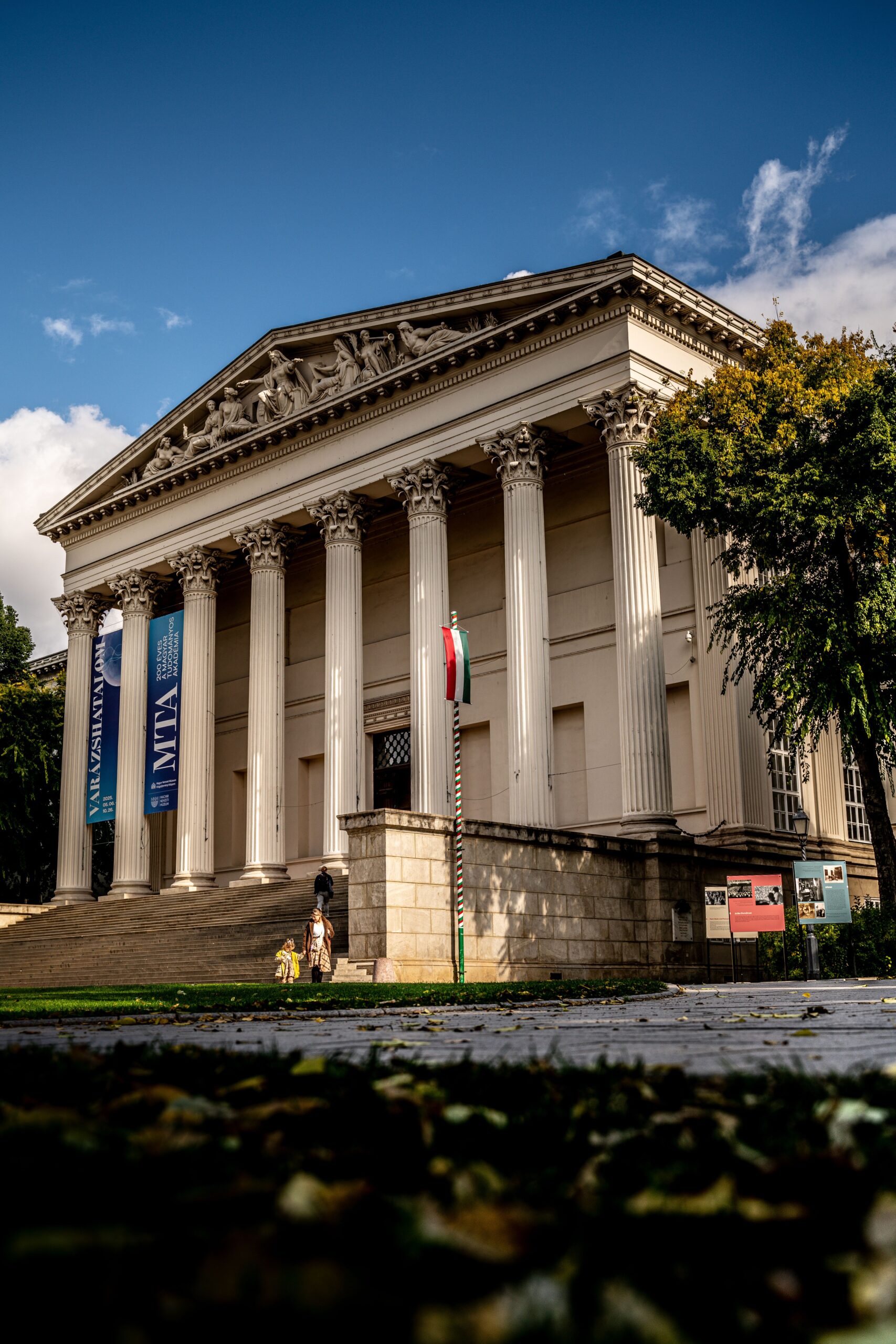
The Hungarian National Museum is the natural starting point for travellers who want historical context before exploring the city. Housed in a commanding neoclassical building designed by Mihály Pollack, it follows the broad arc of Hungarian history through archaeological finds, royal objects, documents, domestic artefacts and material from the country’s modern political eras.
The collection is extensive, so visitors with limited time should focus on the permanent historical displays rather than trying to see every room. The museum’s significance is tied to the Hungarian Revolution of 1848: the steps outside became a symbolic gathering place after Sándor Petőfi recited his nationalist poem there. Even without a detailed knowledge of Hungarian history, the museum helps explain why language, borders and national identity remain such central themes in the country’s culture.
It is well placed for a day around Kálvin tér, the Great Market Hall and the inner city. If food is part of the plan, this guide to what to eat at Budapest’s Great Market Hall is useful for pairing a museum visit with a practical lunch stop.
European masters at the Museum of Fine Arts
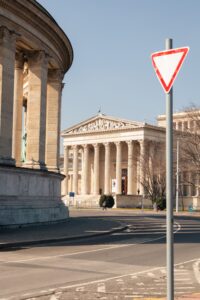
On Heroes’ Square, the Museum of Fine Arts, or Szépművészeti Múzeum, holds one of Central Europe’s most substantial collections of international art. Its galleries range across antiquity, Egyptian art, classical sculpture, Italian Renaissance painting, Spanish masters and major European schools of the 19th century. It is a serious art museum rather than a quick attraction, and art-minded visitors can comfortably spend half a day inside.
The Spanish collection is particularly notable, while the Egyptian department gives the museum an unexpectedly broad reach. The grand central spaces can be busy during popular exhibitions, but the building has enough scale to reward a slower route through the permanent galleries. Check the museum’s official programme before visiting, as temporary exhibitions may require separate tickets or timed entry.
Its location makes the visit easy to combine with a walk through City Park, where Vajdahunyad Castle and the Széchenyi Thermal Bath are nearby. Those building a longer sightseeing schedule can also consult this guide to Budapest thermal baths; an afternoon in warm water is a sensible counterpoint to a morning spent in galleries.
Art and views at the Hungarian National Gallery
The Hungarian National Gallery occupies several wings of Buda Castle, giving it an advantage few art museums can match: the approach alone is part of the experience. The collection traces Hungarian visual art from medieval stone carvings and Gothic altarpieces to 19th-century painting, modern works and sculpture. Visitors unfamiliar with Hungarian artists will find it especially useful for understanding how local art developed alongside, and sometimes against, wider European movements.
Many travellers know the castle district for Fisherman’s Bastion and Matthias Church, then leave after taking photographs. The gallery adds depth to that visit. Its 19th-century paintings, including works associated with Hungarian Romanticism and realism, offer a visual record of landscapes, social change and the national imagination. The terrace and upper levels can also provide striking views over Pest, depending on access and exhibition arrangements.
Plan the Castle Hill visit with care. The cobbled streets and viewpoints invite wandering, but the district gets crowded in the middle of the day. Arriving earlier gives more space for the gallery and a calmer walk around the surrounding historic streets.
House of Terror: a difficult but essential museum
Few Budapest museums leave a stronger impression than the House of Terror on Andrássy Avenue. The building served both the Arrow Cross regime during the Second World War and the communist secret police after the war. Its exhibitions examine Hungary’s experience of fascist and communist dictatorship, political imprisonment, surveillance, deportation and resistance.
This is not a conventional chronological history museum, and it can feel deliberately intense. Dark rooms, sound installations and reconstructed spaces create an emotional encounter with the subject, including the basement cells. Visitors looking for a more academic, document-heavy presentation may want to read about the period beforehand, but the museum’s setting and force make it an important stop for anyone trying to understand 20th-century Budapest.
Give yourself time afterwards to decompress over coffee or a walk along Andrássy Avenue. The boulevard runs between the centre and Heroes’ Square, so the House of Terror can fit naturally into a day that includes elegant architecture, city park museums and a slower evening in the Sixth District.
Contemporary art at Ludwig Museum and beyond
For contemporary art, head to Ludwig Museum at Müpa Budapest, the riverside Palace of Arts complex south of the centre. Its programme centres on modern and contemporary art, with a strong interest in Central and Eastern European artists alongside international names. The collection is useful precisely because it looks beyond the standard Western European canon found in many large museums.
The building is farther from the classic tourist core, but it is straightforward to reach by public transport or taxi. Combine it with an event at Müpa if the schedule works, or simply enjoy the Danube setting before returning to the centre. Budapest’s cultural map extends well beyond the castle and inner boulevards, and Ludwig Museum is one of the best reasons to explore that broader geography.
The Museum of Ethnography near City Park offers another distinctive perspective. Its new home has an imposing contemporary form, while the displays examine folk culture, everyday objects and communities in Hungary and beyond. It works well for visitors interested in traditional craft, rural life and the ways museums interpret living cultural heritage.
Smaller museums with a sharper focus
Budapest rewards travellers who look beyond the headline institutions. The Holocaust Memorial Center presents the history of Hungarian Jewish communities and the Holocaust in Hungary with archival material, personal stories and historical context. It is a thoughtful, sobering visit and should not be rushed.
The Kiscelli Museum, in a former monastery in Óbuda, concentrates on Budapest’s urban history, while the Aquincum Museum and archaeological park explores the Roman settlement that predated the modern city. The latter is particularly rewarding for visitors who have already seen the centre and want a sense of how long the area has been inhabited.
For a very different view of the communist period, Memento Park displays monumental statues removed from Budapest’s public spaces after 1989. It is outside the central districts, yet its collection of Lenin, Marx, Engels and Hungarian communist-era monuments offers a revealing lesson in how a city chooses to preserve difficult symbols rather than erase them.
Practical tips for visiting Budapest museums
Most major Budapest museums are closed on at least one day of the week, often Monday, and opening hours can change for holidays, private events or exhibition installations. Check each institution’s official website shortly before visiting, particularly if you are travelling in winter or relying on a specific temporary exhibition. Larger museums may offer online tickets, which can be useful during busy weekends and school holidays.
- Choose one major museum and one smaller stop per day rather than attempting an exhaustive list.
- Group City Park museums together, and reserve Buda Castle for the Hungarian National Gallery and its surrounding sights.
- Use comfortable shoes: museum days in Budapest often involve cobbles, large galleries and long walks between districts.
- Keep a little flexibility for temporary exhibitions, which can be among the best reasons to visit.
A museum-heavy day does not have to mean skipping local food. Near St. Stephen’s Basilica and Parliament, Retro Lángos Budapest serves traditional and gluten-free lángos, with vegan and plant-based options as well. Its locations at Bajcsy-Zsilinszky út 25. and Vécsey utca 3. are convenient for visitors looking for a straightforward Hungarian street-food break between central sights. For broader meal planning, the city’s traditional Hungarian food and local eats offer a useful introduction to what to order beyond lángos.
The best Budapest museum itinerary is rarely the most ambitious one. Pick the collections that match your interests, leave room for the city between them, and let the contrast do its work: medieval altarpieces, revolutionary history, contemporary installations and the everyday texture of Budapest outside the gallery doors.