Budapest food experiences combine centuries-old recipes, lively market culture, elegant coffeehouses, and creative modern dining. Hungary’s capital is an excellent destination for travelers who want to understand a city through its flavors, whether that means tasting a comforting bowl of goulash, sharing pastries in a historic café, or grabbing a crispy street-food snack between sightseeing stops. From traditional family-run kitchens to contemporary restaurants, Budapest offers memorable meals for every appetite and budget.
Discover Traditional Hungarian Cuisine in Budapest
Hungarian cuisine is known for rich, satisfying dishes built around paprika, seasonal vegetables, slow-cooked meats, sour cream, and fresh bread. While Budapest has become increasingly international, classic Hungarian food remains central to the city’s culinary identity. Exploring local specialties is one of the best ways to connect with Budapest’s history, especially in traditional restaurants, market halls, and neighborhood eateries.
Try Goulash and Other Hearty Hungarian Classics
Goulash, known locally as gulyás, is often the first Hungarian dish visitors want to try. Unlike the thick stew many people expect, traditional gulyás is usually a flavorful soup made with beef, potatoes, carrots, onions, and plenty of paprika. It is warming, aromatic, and particularly enjoyable on cooler days. For a deeper introduction to Hungarian comfort food, also look for pörkölt, a richer meat stew, and paprikás csirke, tender chicken in a creamy paprika sauce commonly served with dumplings.
Another essential dish is töltött káposzta, or stuffed cabbage. Cabbage leaves are filled with seasoned meat and rice, then slowly cooked and often served with sour cream. This filling specialty is especially popular during winter and holiday periods. Vegetarians can still find traditional options, including vegetable soups, mushroom paprikash, cheese-filled dumplings, and seasonal dishes based on potatoes, beans, or squash.
Experience Budapest Street Food
Street food is an important part of the Budapest dining scene because it is affordable, fast, and full of local character. It is ideal for visitors who want to keep exploring without sitting down for a long meal. Food stalls, casual counters, markets, and small neighborhood shops offer easy opportunities to sample Hungarian flavors throughout the day.
Lángos: Budapest’s Must-Try Street Food
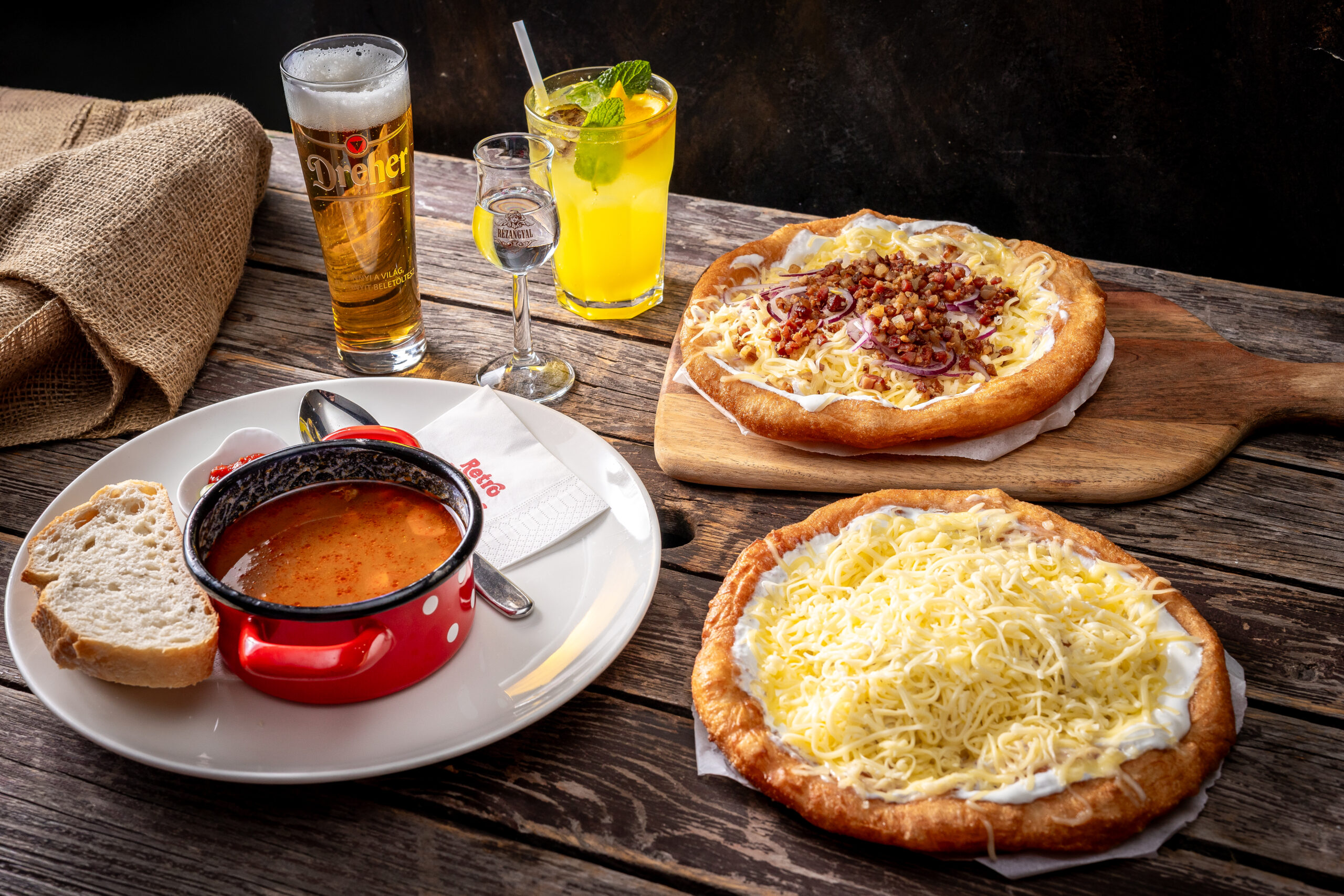
No Budapest food experience is complete without trying lángos. This popular Hungarian street food is made from fried dough, usually topped with garlic, sour cream, and grated cheese. The outside is crisp, the center is soft and chewy, and the combination is wonderfully indulgent. Modern versions may include toppings such as sausage, ham, vegetables, or sauces, while sweet variations can also appear on menus.
For an authentic and convenient taste, Retro Lángos Budapest is a recommended stop. With locations at Bajcsy-Zsilinszky út 25. and Vécsey utca 3., it is close to both St. Stephen’s Basilica and the Hungarian Parliament. The menu includes traditional, gluten-free, and vegan lángos, making it a practical choice for tourists, families, and visitors seeking classic Hungarian street food with options for different dietary needs.
Beyond lángos, keep an eye out for kürtőskalács, often called chimney cake. This sweet pastry is wrapped around a cylinder, baked until golden, and coated in sugar. It is frequently served with cinnamon, coconut, nuts, or chocolate. A warm chimney cake makes an excellent snack while walking along the Danube or exploring Budapest’s historic central districts.

Explore Budapest’s Markets and Food Halls
Markets are among the best places to see the ingredients that shape Hungarian cooking. The Great Market Hall, near the Liberty Bridge, is Budapest’s most famous indoor market and a useful first stop for food-focused travelers. Its ground floor is filled with fresh produce, meats, cheeses, spices, pickles, and Hungarian pantry staples. Upstairs, visitors can find prepared dishes, souvenirs, and casual places to eat.
When browsing a Budapest market, consider purchasing paprika, local honey, fruit preserves, goose liver products, or Hungarian wine as edible souvenirs. Paprika is particularly important in Hungarian kitchens and comes in several varieties, from sweet and mild to hot and smoky. Ask sellers for recommendations if you want something suitable for cooking at home.
For a more local atmosphere, smaller district markets can be equally rewarding. These markets often reveal how Budapest residents shop for everyday meals. Visiting in the morning gives travelers the best selection and a chance to enjoy the rhythm of local life before the busiest sightseeing hours begin.
Enjoy Budapest Coffeehouses, Desserts, and Pastries
Budapest’s café culture is an essential part of its food story. The city’s historic coffeehouses once served as meeting places for writers, artists, journalists, and intellectuals. Today, grand cafés and modern specialty coffee shops sit side by side, giving visitors plenty of places to pause between attractions.
Hungarian desserts are worth making time for. Dobos torte, a layered sponge cake with chocolate buttercream and a caramel top, is one of the country’s best-known cakes. Gerbeaud cake features layers of pastry, apricot jam, walnuts, and chocolate, while somlói galuska is a trifle-like dessert with sponge cake, chocolate sauce, walnuts, raisins, and whipped cream. These sweets pair beautifully with a strong espresso or a traditional Hungarian coffee.
For something simpler, try rétes, Hungarian strudel. Fillings may include apple, sour cherry, cottage cheese, poppy seed, or cabbage. Freshly baked versions are light, flaky, and perfect for an afternoon treat. Many bakeries also offer pogácsa, small savory biscuits that can contain cheese, potato, or cracklings.

Pair Hungarian Food with Local Drinks
Budapest food experiences become even better when paired with Hungarian drinks. Hungary produces excellent wines, including dry whites from the Tokaj region, rich reds from Eger and Villány, and the famous sweet Tokaji Aszú dessert wine. Ask restaurant staff for a local recommendation that suits your meal, particularly when enjoying paprika-based dishes or grilled meats.
Visitors should also try fröccs, a refreshing wine spritzer mixed with sparkling water. It is a popular warm-weather drink and comes in several ratios of wine to soda water. For a stronger traditional option, pálinka is Hungary’s fruit brandy, made from ingredients such as plum, apricot, pear, or cherry. It is typically served in small portions and has a powerful, distinctive flavor.
Plan the Perfect Budapest Food Adventure
The best way to enjoy food in Budapest is to mix planned meals with spontaneous discoveries. Start with a market breakfast or pastry, enjoy a traditional lunch, stop for coffee and cake in the afternoon, and reserve the evening for a relaxed restaurant meal or a casual street-food dinner. Neighborhoods such as the Jewish Quarter, downtown Pest, and areas around the Basilica offer a broad selection of restaurants, cafés, bars, and quick bites within easy walking distance.
Travelers with dietary preferences will find more choices than ever, including vegetarian, vegan, and gluten-free options. Still, it is useful to ask about ingredients, particularly in traditional dishes where flour, dairy, and meat are common. Learning a few food-related Hungarian phrases can also make ordering more enjoyable and help create a warmer connection with local vendors.